THE ADVENTURE COLLECTIVE® · Independent discovery and booking for outdoor travel

Traverse a classic Supramonte gorge on a guided canyoning route that mixes walking, scrambling and abseils, finishing on the wild pebble shore of Cala Fuili. Suitable for beginners with moderate fitness, it’s a half-day introduction to Sardinia’s karst landscape.
Traverse a classic Supramonte gorge on a guided canyoning route that mixes walking, scrambling and abseils, finishing on the wild pebble shore of Cala Fuili. Suitable for beginners with moderate fitness, it’s a half-day introduction to Sardinia’s karst landscape.
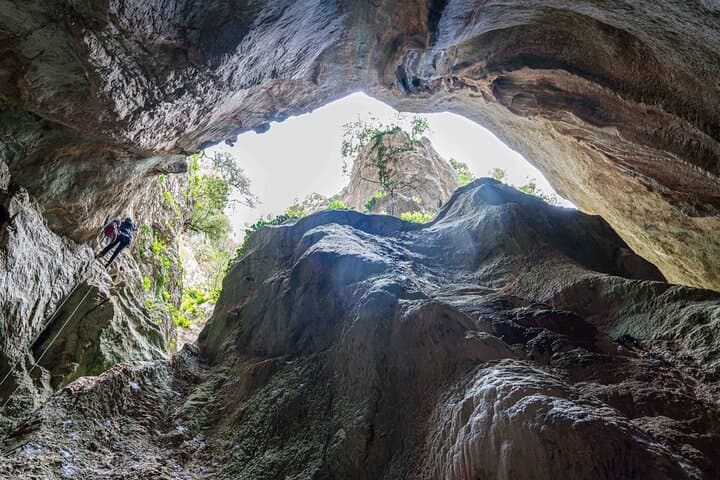
Sunlight slices through the Supramonte as the party steps into Codula Fuili’s narrow throat — a dry limestone canyon that was carved by millennia of rain and time. Stones are smoothed into handholds, vertical grooves catch cool shadow, and the route threads between tunnels and tall trees that lean like audience members watching each abseil.
Verified experiences and guided adventures in the surrounding area.
Operated by Wild Project Sardinia · Cala Gonone, Sardinia
Sunlight slices through the Supramonte as the party steps into Codula Fuili’s narrow throat — a dry limestone canyon that was carved by millennia of rain and time. Stones are smoothed into handholds, vertical grooves catch cool shadow, and the route threads between tunnels and tall trees that lean like audience members watching each abseil.
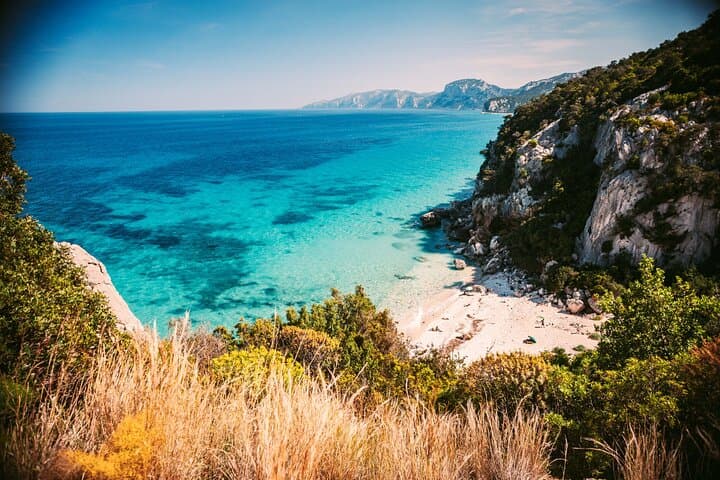
Geologically, the Supramonte is pure karst: soluble limestone shaped into gorges, caves and plunging choke points. Codula Fuili highlights that history, ending at a raw, pebble beach — Cala Fuili — where the canyon finally surrenders to the Gulf of Orosei. Culturally the area carries pastoral and maritime layers: shepherding tracks climb above the canyon while nearby sea caves were navigated by fishermen for centuries.
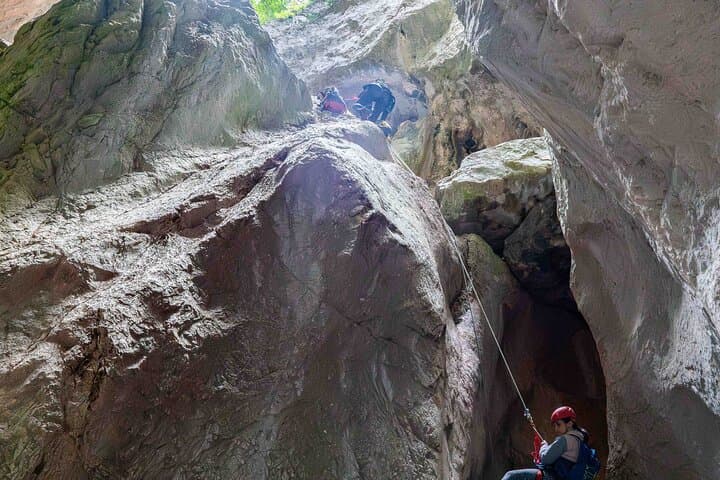
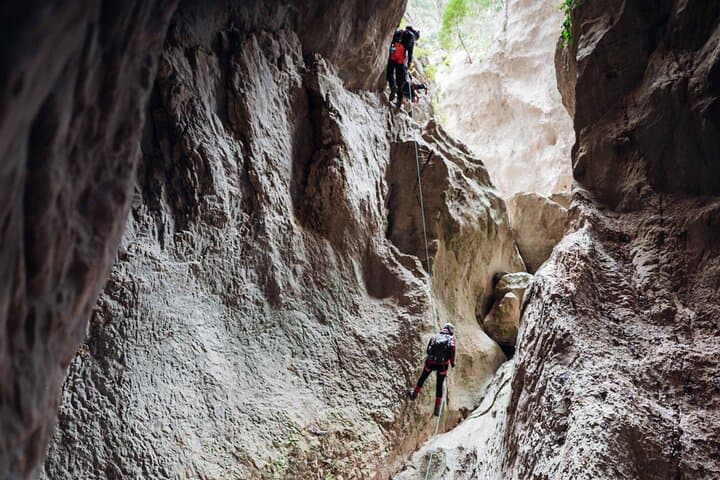
The descent is practical and compact: roughly a half-day loop of walking, scrambling and several guided abseils (the tallest near 20 m). Guides provide harnesses and helmets; the route is accessible to beginners and children from about eight years old, provided they have no vertigo and decent fitness. Expect narrow passages, exposed drops, and moments where route-finding follows bolts and natural anchors.
Practical tips: arrive with grippy footwear and a light daypack, hydrate before you start, and choose morning or late-afternoon slots in high summer to avoid the hottest sun on exposed limestone. Leave time afterwards to rinse off in Cala Fuili’s clear water — the sea is the final reward. Groups are typically small; when managed responsibly this canyon offers a concentrated, exhilarating taste of Sardinia’s rugged interior and coast.
moderate.
4 hours.
Moderate fitness: able to hike uneven terrain, handle short scrambles and 20 m guided abseils without severe vertigo.
No — this route is guided and suitable for beginners; guides teach basic rope procedures and provide technical gear.
Codula Fuili is primarily dry on standard itineraries, though shallow water can collect after heavy rain; the exit is a seaside dip at Cala Fuili.
Most operators accept children from about 8 years old if they meet fitness and non-vertigo requirements; check weight and height limits with the provider.
Bring sturdy shoes, a towel and change of clothes, a refillable water bottle, sunscreen and any necessary medications; harness and helmet are provided.
The Supramonte’s karst formed over millions of years; human use ranges from ancient Nuragic shepherding to modern coastal fishing traditions.
Stick to established paths, avoid trampling fragile karst vegetation, and pack out waste; small guided groups help reduce impact on the canyon and beach.
Wild Project Sardinia operates guided outdoor trips and adventures with an emphasis on safety, stewardship, and memorable experiences.
Sunlight slices through the Supramonte as the party steps into Codula Fuili’s narrow throat — a dry limestone canyon that was carved by millennia of rain and time. Stones are smoothed into handholds, vertical grooves catch cool shadow, and the route threads between tunnels and tall trees that lean like audience members watching each abseil.
Sunlight slices through the Supramonte as the party steps into Codula Fuili’s narrow throat — a dry limestone canyon that was carved by millennia of rain and time. Stones are smoothed into handholds, vertical grooves catch cool shadow, and the route threads between tunnels and tall trees that lean like audience members watching each abseil.
Geologically, the Supramonte is pure karst: soluble limestone shaped into gorges, caves and plunging choke points. Codula Fuili highlights that history, ending at a raw, pebble beach — Cala Fuili — where the canyon finally surrenders to the Gulf of Orosei. Culturally the area carries pastoral and maritime layers: shepherding tracks climb above the canyon while nearby sea caves were navigated by fishermen for centuries.
The descent is practical and compact: roughly a half-day loop of walking, scrambling and several guided abseils (the tallest near 20 m). Guides provide harnesses and helmets; the route is accessible to beginners and children from about eight years old, provided they have no vertigo and decent fitness. Expect narrow passages, exposed drops, and moments where route-finding follows bolts and natural anchors.
Practical tips: arrive with grippy footwear and a light daypack, hydrate before you start, and choose morning or late-afternoon slots in high summer to avoid the hottest sun on exposed limestone. Leave time afterwards to rinse off in Cala Fuili’s clear water — the sea is the final reward. Groups are typically small; when managed responsibly this canyon offers a concentrated, exhilarating taste of Sardinia’s rugged interior and coast.