THE ADVENTURE COLLECTIVE® · Independent discovery and booking for outdoor travel

Walk the routes where England’s conversion began: a guided loop through Canterbury Cathedral Precincts, the ruins of St Augustine’s Abbey and the ancient St Martin’s Church. This 2–3 hour tour combines compact city walking with deep history—ideal for curious travellers ready to trade crowds for context.
Walk the routes where England’s conversion began: a guided loop through Canterbury Cathedral Precincts, the ruins of St Augustine’s Abbey and the ancient St Martin’s Church. This 2–3 hour tour combines compact city walking with deep history—ideal for curious travellers ready to trade crowds for context.
You step from a narrow medieval lane into the cool shadow of the Cathedral Precincts, the stones underfoot worn smooth by centuries of pilgrims. The tour threads through quiet cloisters, past the surviving medieval gates of St Augustine’s Abbey, and uphill to St Martin’s Church where a steep flight of steps rewards you with the most iconic outlook over the cathedral and abbey.
Verified experiences and guided adventures in the surrounding area.
Operated by Canterbury Guided Tours · Canterbury, Kent
You step from a narrow medieval lane into the cool shadow of the Cathedral Precincts, the stones underfoot worn smooth by centuries of pilgrims. The tour threads through quiet cloisters, past the surviving medieval gates of St Augustine’s Abbey, and uphill to St Martin’s Church where a steep flight of steps rewards you with the most iconic outlook over the cathedral and abbey.
Canterbury sits at the heart of England’s early Christian story: Queen Bertha’s 6th‑century devotion and Augustine’s mission in 597 AD forged the city’s role as a religious centre. The exposed masonry of the abbey ruins speaks to Norman and medieval stonework; the cathedral’s façade and cloisters show architectural layers added over a millennium. Local life still orbits these places—markets, riverside walks along the River Stour, and tucked‑away lanes with independent shops.
Practical guidance: the guided walk runs about 2–3 hours and covers roughly 1–2 miles on paved city streets, cobbles and a short uphill climb to St Martin’s. Admission to the cathedral and abbey is not included; interior access to St Martin’s depends on opening hours and may request a small donation. Wear sturdy shoes for uneven ground and be prepared for stairs and narrow passages. Public transport is convenient—Canterbury West and East stations lie within easy reach—and tours typically start near the city centre. Bring a waterproof layer in changeable weather, a filled water bottle, and allow time after the tour to explore the precincts or riverside Westgate Gardens.
moderate.
2–3 hours.
Moderate fitness: able to walk 1–2 miles on uneven surfaces and manage stairs unassisted.
No. This walking tour views the Cathedral Precincts and abbey ruins from outside; admission to the interiors is not included and must be purchased separately when available.
Possibly—access depends on opening times and services. If available, your guide can arrange entry and the church asks for a small donation (often around £5).
Large parts of St Martin’s and some uneven churchyard sections are inaccessible; overall, the tour involves cobbles and steps that make full wheelchair access difficult.
Canterbury West and East train stations both serve the city centre; arriving 15–20 minutes early gives time to navigate lanes and find the meeting spot.
Canterbury’s prominence rose when Queen Bertha’s Christian worship and Augustine’s mission (597 AD) established the city as the centre of English Christianity, later reflected in medieval cathedral building and pilgrimage routes.
These World Heritage sites are vulnerable to wear—stick to marked paths, respect opening hours, and support conservation with donations or by following site guidelines.
Canterbury Guided Tours operates guided outdoor trips and adventures with an emphasis on safety, stewardship, and memorable experiences.
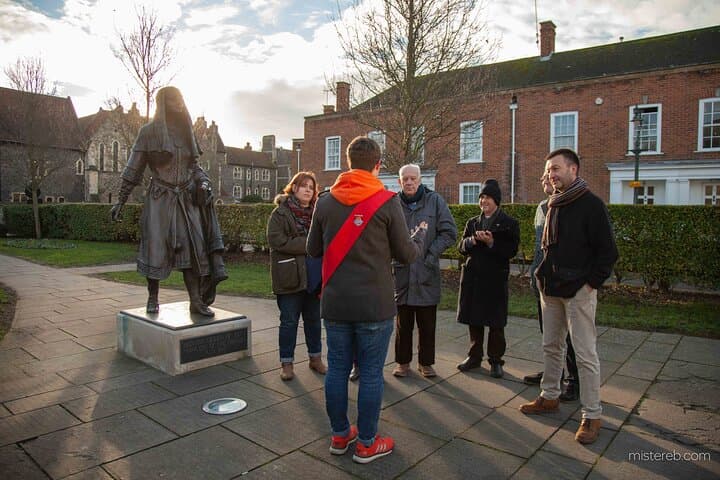
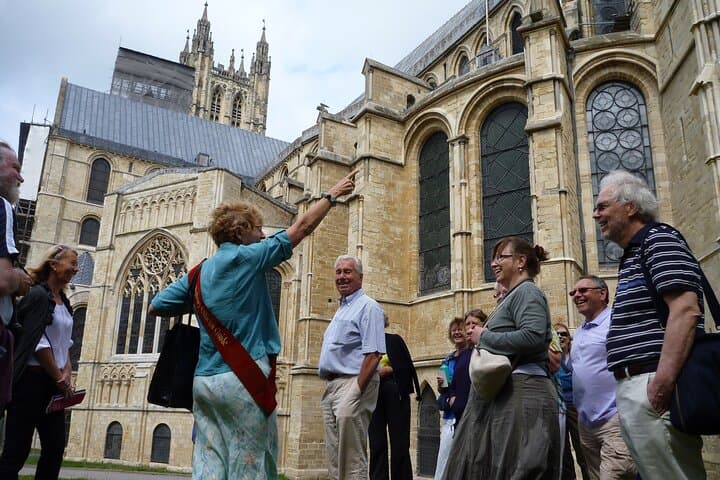
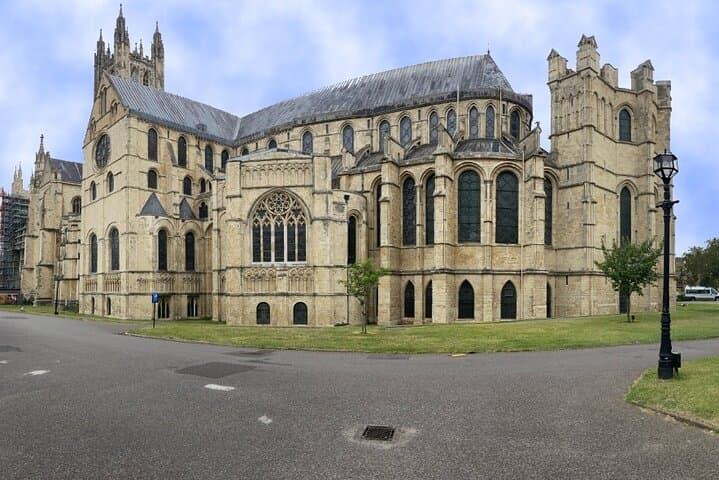
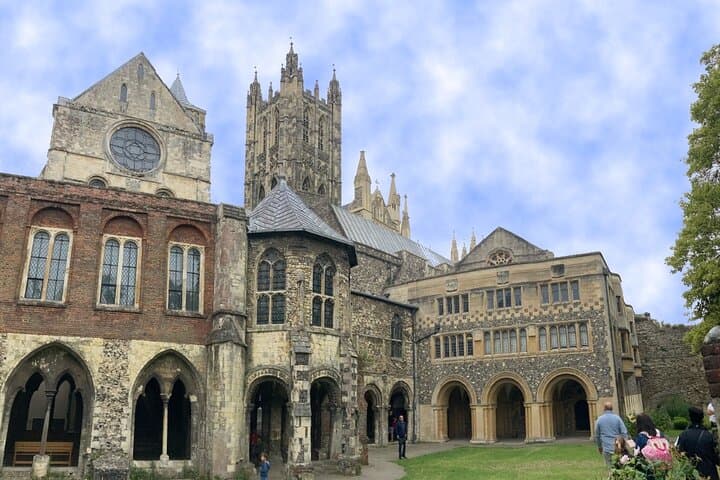
You step from a narrow medieval lane into the cool shadow of the Cathedral Precincts, the stones underfoot worn smooth by centuries of pilgrims. The tour threads through quiet cloisters, past the surviving medieval gates of St Augustine’s Abbey, and uphill to St Martin’s Church where a steep flight of steps rewards you with the most iconic outlook over the cathedral and abbey.
You step from a narrow medieval lane into the cool shadow of the Cathedral Precincts, the stones underfoot worn smooth by centuries of pilgrims. The tour threads through quiet cloisters, past the surviving medieval gates of St Augustine’s Abbey, and uphill to St Martin’s Church where a steep flight of steps rewards you with the most iconic outlook over the cathedral and abbey.
Canterbury sits at the heart of England’s early Christian story: Queen Bertha’s 6th‑century devotion and Augustine’s mission in 597 AD forged the city’s role as a religious centre. The exposed masonry of the abbey ruins speaks to Norman and medieval stonework; the cathedral’s façade and cloisters show architectural layers added over a millennium. Local life still orbits these places—markets, riverside walks along the River Stour, and tucked‑away lanes with independent shops.
Practical guidance: the guided walk runs about 2–3 hours and covers roughly 1–2 miles on paved city streets, cobbles and a short uphill climb to St Martin’s. Admission to the cathedral and abbey is not included; interior access to St Martin’s depends on opening hours and may request a small donation. Wear sturdy shoes for uneven ground and be prepared for stairs and narrow passages. Public transport is convenient—Canterbury West and East stations lie within easy reach—and tours typically start near the city centre. Bring a waterproof layer in changeable weather, a filled water bottle, and allow time after the tour to explore the precincts or riverside Westgate Gardens.