THE ADVENTURE COLLECTIVE® · Independent discovery and booking for outdoor travel

Climb 200–300-foot old-growth giants above Silver Falls’ mossy floor for a one-of-a-kind, instructor-led canopy experience. Learn ropes, rappel, and move among ancient firs while guides teach the forest’s ecology and history.
Climb 200–300-foot old-growth giants above Silver Falls’ mossy floor for a one-of-a-kind, instructor-led canopy experience. Learn ropes, rappel, and move among ancient firs while guides teach the forest’s ecology and history.
The first step off the forest floor feels like stepping into another element. Damp air clings to your jacket, and the trunks around you are wide as pickup trucks — ringed in moss, scarred by decades of wind and lightning. Instructors fit harnesses, tighten carabiners, and with calm, practiced voices they teach you the knots and commands that will take you 200–300 feet above where you began. As you ascend, the understory shrinks, the creek below becomes a silver thread, and the canopy opens like a secret city you’ve been invited into.
Verified experiences and guided adventures in the surrounding area.
Operated by AdventureTerra LLC · Silverton, Oregon
The first step off the forest floor feels like stepping into another element. Damp air clings to your jacket, and the trunks around you are wide as pickup trucks — ringed in moss, scarred by decades of wind and lightning. Instructors fit harnesses, tighten carabiners, and with calm, practiced voices they teach you the knots and commands that will take you 200–300 feet above where you began. As you ascend, the understory shrinks, the creek below becomes a silver thread, and the canopy opens like a secret city you’ve been invited into.
Silver Falls State Park grew out of basalt flows and the slow patience of water. The same geology that carved the park’s famous waterfalls created the deep, moist soils that allowed Douglas-fir, western hemlock, and redcedar to reach ancient sizes. The land has been home to Kalapuya and Molalla peoples for millennia; in the 1930s, Civilian Conservation Corps crews built many of the trails visitors still use. Climbing these giants is a physical act and a close-up lesson in forest ecology — lichen, epiphytic ferns, and the soft drip of fog all tell the story of a temperate rainforest that insists on resilience.
The climb is taught for beginners: the group spends the first hour practicing on smaller trees, learning rope-ascent techniques, basic rappelling, and rescue procedures. From there, a short hike on Howard Creek Trail brings you to the giants. Once aloft, the forest changes persona — branches become handholds and platforms, wind becomes a conversation that nudges the crown. Birdsong shifts; you may find yourself eye-to-eye with raptors circling the ridge. Guides weave natural history into instruction, pointing out growth patterns, nurse logs, and the slow architecture that makes old-growth unique.
Practicalities matter. The experience is roughly four hours, is offered year-round subject to weather, and requires a minimum age of seven. Wear sturdy, closed-toe shoes and layers: the understory is cool even on warm days, and climbs are paused in heavy rain, high winds, or lightning. The company provides all technical gear and adaptive ascenders for guests who need them, but bring a small daypack with water, snacks, and a camera or helmet-mounted mount for stable photos.
For travelers staying in nearby Silverton or Salem, the climb is an accessible half-day diversion that pairs well with waterfall hikes or a full park day. Respect for these trees matters: stay on instructed routes, avoid damaging bark or branches, and follow guides’ directions — the forest has been standing long before you arrived and should be left standing long after.
When you descend, boots back on the leaf litter, the forest feels both unchanged and larger. You leave with a different reference for height, an appreciation for ancient wood, and the clear memory of sunlight slicing through a cathedral of green.
moderate.
4 hours.
Moderate fitness: able to hike short distances and tolerate heights; instruction is provided so advanced climbing skills are not required.
No — guides teach all necessary techniques during the introductory hour; adaptive ascenders are available for low-effort ascents.
Minimum age is 7 years old; youth should be comfortable following directions and wearing a harness.
Light rain may not cancel, but heavy rain, winds over ~20 mph, lightning, or unsafe conditions will result in rescheduling or a full refund.
Groups climb trees roughly 200–300 feet into the canopy depending on group ability and time.
Only service animals are permitted; pets should be left at lodging due to safety and logistics.
The meeting area and some park surfaces are wheelchair accessible, but the climb itself is not wheelchair-based; adaptive equipment can assist some participants.
The park sits on lands long used by Kalapuya and Molalla peoples; much of the modern trail network and park infrastructure was developed by the Civilian Conservation Corps in the 1930s.
Old-growth stands are rare and sensitive — operators follow strict protocols to avoid bark damage and soil compaction; visitors are asked to practice Leave No Trace.
AdventureTerra LLC operates guided outdoor trips and adventures with an emphasis on safety, stewardship, and memorable experiences.
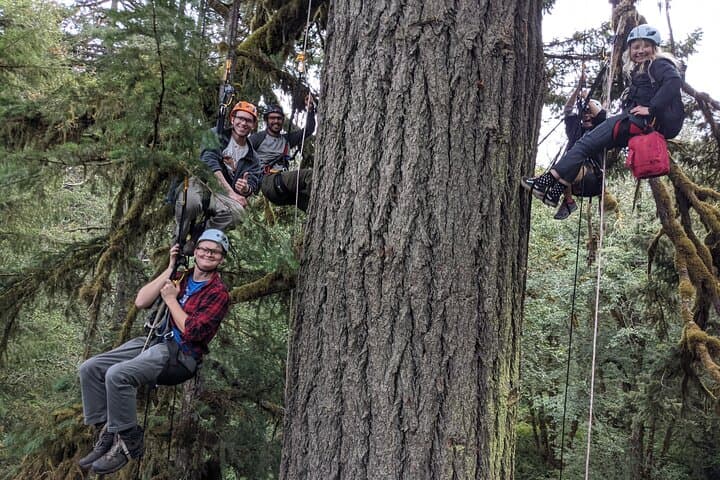
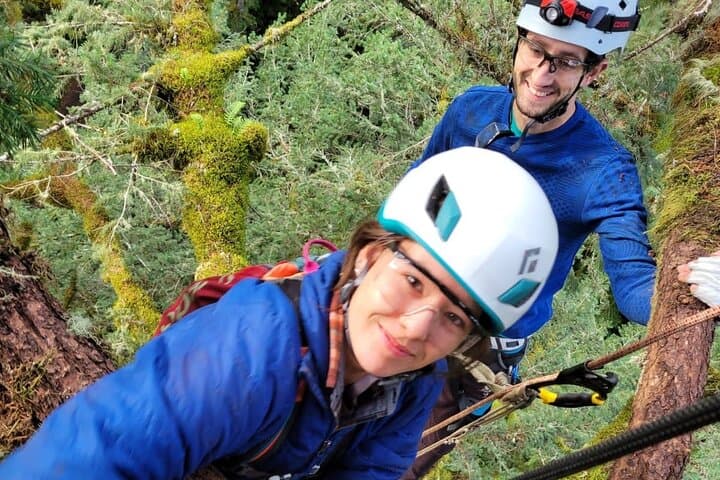
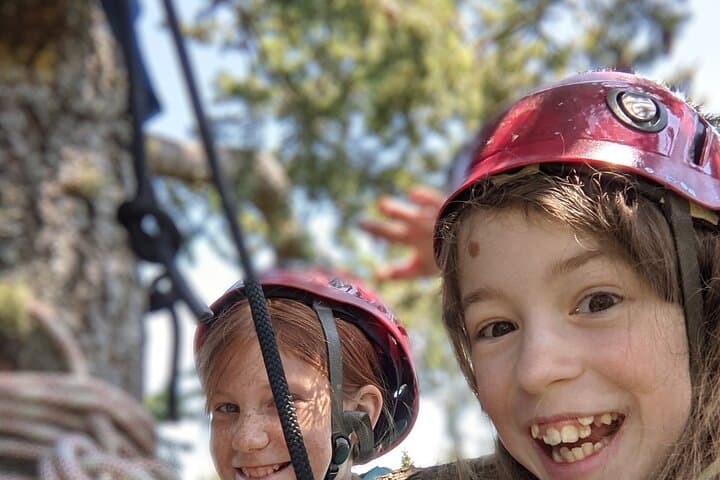
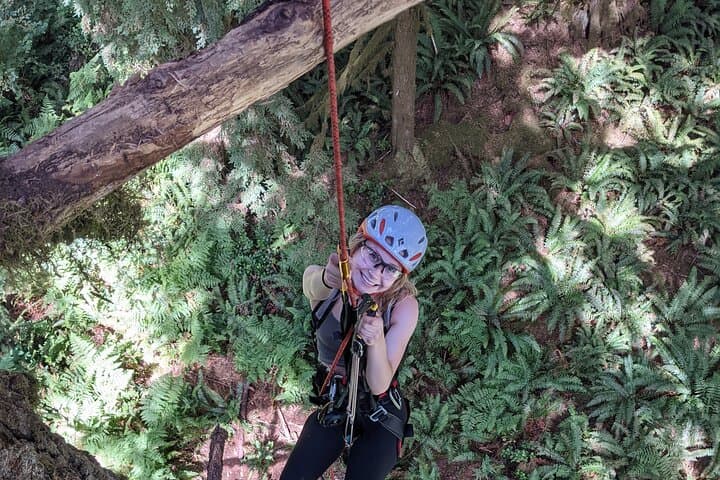
The first step off the forest floor feels like stepping into another element. Damp air clings to your jacket, and the trunks around you are wide as pickup trucks — ringed in moss, scarred by decades of wind and lightning. Instructors fit harnesses, tighten carabiners, and with calm, practiced voices they teach you the knots and commands that will take you 200–300 feet above where you began. As you ascend, the understory shrinks, the creek below becomes a silver thread, and the canopy opens like a secret city you’ve been invited into.
The first step off the forest floor feels like stepping into another element. Damp air clings to your jacket, and the trunks around you are wide as pickup trucks — ringed in moss, scarred by decades of wind and lightning. Instructors fit harnesses, tighten carabiners, and with calm, practiced voices they teach you the knots and commands that will take you 200–300 feet above where you began. As you ascend, the understory shrinks, the creek below becomes a silver thread, and the canopy opens like a secret city you’ve been invited into.
Silver Falls State Park grew out of basalt flows and the slow patience of water. The same geology that carved the park’s famous waterfalls created the deep, moist soils that allowed Douglas-fir, western hemlock, and redcedar to reach ancient sizes. The land has been home to Kalapuya and Molalla peoples for millennia; in the 1930s, Civilian Conservation Corps crews built many of the trails visitors still use. Climbing these giants is a physical act and a close-up lesson in forest ecology — lichen, epiphytic ferns, and the soft drip of fog all tell the story of a temperate rainforest that insists on resilience.
The climb is taught for beginners: the group spends the first hour practicing on smaller trees, learning rope-ascent techniques, basic rappelling, and rescue procedures. From there, a short hike on Howard Creek Trail brings you to the giants. Once aloft, the forest changes persona — branches become handholds and platforms, wind becomes a conversation that nudges the crown. Birdsong shifts; you may find yourself eye-to-eye with raptors circling the ridge. Guides weave natural history into instruction, pointing out growth patterns, nurse logs, and the slow architecture that makes old-growth unique.
Practicalities matter. The experience is roughly four hours, is offered year-round subject to weather, and requires a minimum age of seven. Wear sturdy, closed-toe shoes and layers: the understory is cool even on warm days, and climbs are paused in heavy rain, high winds, or lightning. The company provides all technical gear and adaptive ascenders for guests who need them, but bring a small daypack with water, snacks, and a camera or helmet-mounted mount for stable photos.
For travelers staying in nearby Silverton or Salem, the climb is an accessible half-day diversion that pairs well with waterfall hikes or a full park day. Respect for these trees matters: stay on instructed routes, avoid damaging bark or branches, and follow guides’ directions — the forest has been standing long before you arrived and should be left standing long after.
When you descend, boots back on the leaf litter, the forest feels both unchanged and larger. You leave with a different reference for height, an appreciation for ancient wood, and the clear memory of sunlight slicing through a cathedral of green.