THE ADVENTURE COLLECTIVE® · Independent discovery and booking for outdoor travel

Soar above the Naranjo Biological Corridor near Manuel Antonio on a short, high-adrenaline canopy route featuring 10 lines, a rappel and a Tarzan swing. Quick transfers from Quepos mean more time in the trees and an easy half-day adventure for families and active travelers.
Soar above the Naranjo Biological Corridor near Manuel Antonio on a short, high-adrenaline canopy route featuring 10 lines, a rappel and a Tarzan swing. Quick transfers from Quepos mean more time in the trees and an easy half-day adventure for families and active travelers.
You step onto the first platform and the forest leans in — the canopy seems to watch as you clip in. Toward the Pacific the trees open occasionally to reveal the glint of ocean; beneath, toucans call and capuchins move like small, curious ghosts. This is the Naranjo Biological Corridor, the green bridge that threads inland cloud forests to Manuel Antonio’s coastal reserves.
Verified experiences and guided adventures in the surrounding area.
Operated by Titi Canopy Tour - Manuel Antonio, Costa Rica · Quepos, Puntarenas
You step onto the first platform and the forest leans in — the canopy seems to watch as you clip in. Toward the Pacific the trees open occasionally to reveal the glint of ocean; beneath, toucans call and capuchins move like small, curious ghosts. This is the Naranjo Biological Corridor, the green bridge that threads inland cloud forests to Manuel Antonio’s coastal reserves.
The corridor exists because landowners, biologists and local communities prioritized connectivity decades after Manuel Antonio National Park was established in the early 1970s. Geologically, the coastal foothills here are low, weathered volcanic slopes; soils feed dense, fast-growing secondary forest that attracts a striking range of wildlife. Culturally, the Quepos–Manuel Antonio region blends Afro-Caribbean and Central Valley influences — local sodas (small restaurants) serve casado and fresh fruit after a morning in the trees.
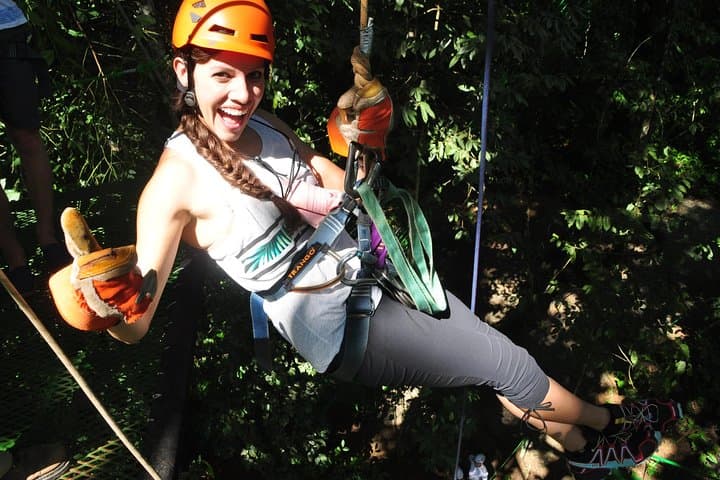
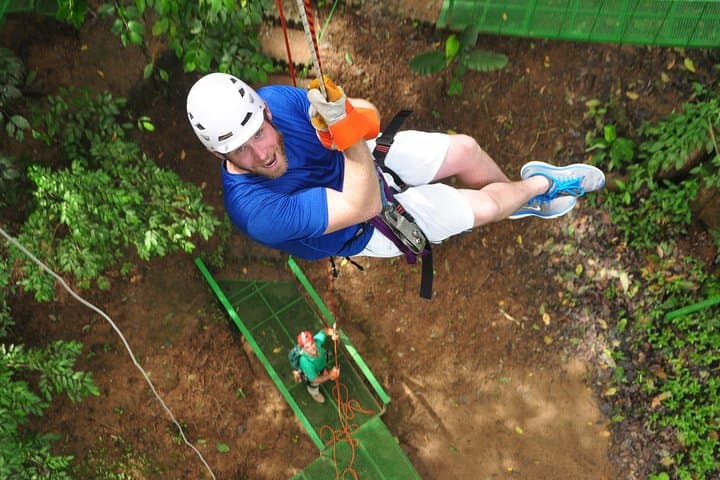
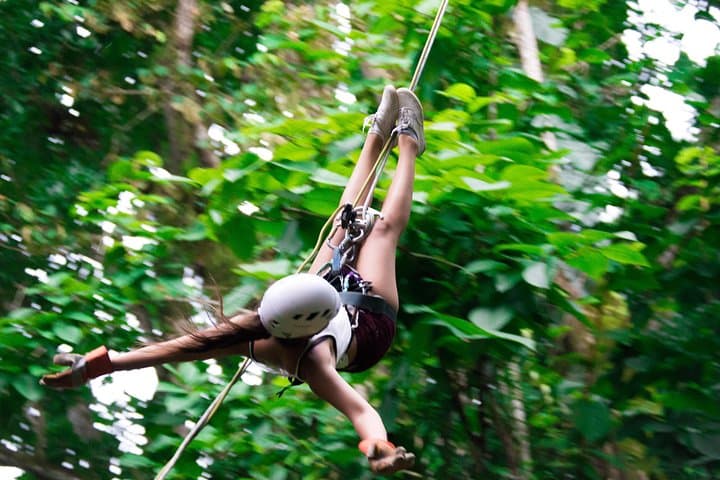
Practical guidance: the tour runs about 2–3 hours, with 10 lines, a dual cable, suspension bridge, one rappel and a Tarzan swing. Lines sit on private reserve terrain with short, easy walks between platforms; expect modest elevation changes and occasional muddy patches in wet weather. Guides handle technical rigging and safety briefings, so you need no prior experience, but a moderate fitness level and the ability to step on and off platforms is required.
Dress in closed-toe shoes, quick-dry clothing and insect repellent. Bring water and a small camera with a secure strap — wildlife sightings are common but never guaranteed. Respect the guides’ safety calls, avoid feeding animals, and you’ll leave with the adrenaline and a clearer sense of how these forests keep coastal wildlife moving.
moderate.
2–3 hours.
Suitable for people with moderate fitness — able to climb short ladders, step on/off platforms and handle brief hikes between stations.
Children as young as 5 can join but must be accompanied by an adult; staff will assess readiness during the safety briefing.
Most operators set a maximum weight around 220–250 lbs (100–113 kg) and reserve the right to refuse participation for safety; provide your weight when booking if requested.
Yes — the tour advertises short hotel pickup and drop-off from Quepos and Manuel Antonio, reducing transfer time.
Yes if secured with a strap or chest mount; guides may restrict handheld use on certain cables for safety reasons.
The reserve sits inside the Naranjo Biological Corridor, created to reconnect fragmented forest patches after coastal development pressured habitats around Manuel Antonio National Park (established in the 1970s).
Operators work on private reserve land that benefits from sustainable tourism revenue; visitors should avoid feeding wildlife, stick to paths and follow guide instructions to minimize impact.
Titi Canopy Tour - Manuel Antonio, Costa Rica operates guided outdoor trips and adventures with an emphasis on safety, stewardship, and memorable experiences.
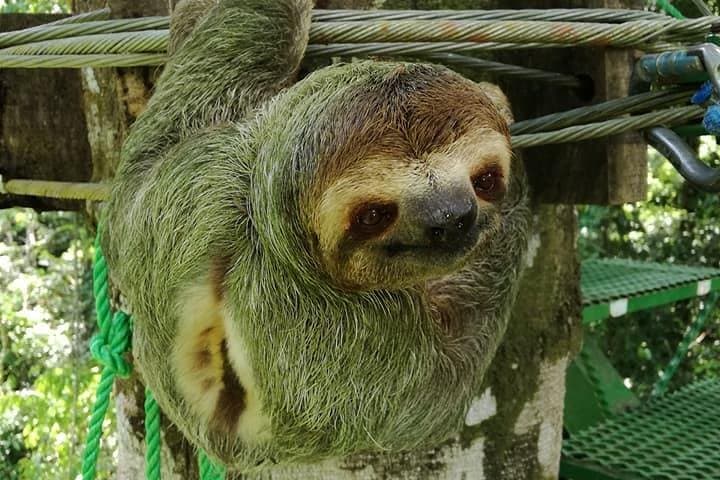
You step onto the first platform and the forest leans in — the canopy seems to watch as you clip in. Toward the Pacific the trees open occasionally to reveal the glint of ocean; beneath, toucans call and capuchins move like small, curious ghosts. This is the Naranjo Biological Corridor, the green bridge that threads inland cloud forests to Manuel Antonio’s coastal reserves.
You step onto the first platform and the forest leans in — the canopy seems to watch as you clip in. Toward the Pacific the trees open occasionally to reveal the glint of ocean; beneath, toucans call and capuchins move like small, curious ghosts. This is the Naranjo Biological Corridor, the green bridge that threads inland cloud forests to Manuel Antonio’s coastal reserves.
The corridor exists because landowners, biologists and local communities prioritized connectivity decades after Manuel Antonio National Park was established in the early 1970s. Geologically, the coastal foothills here are low, weathered volcanic slopes; soils feed dense, fast-growing secondary forest that attracts a striking range of wildlife. Culturally, the Quepos–Manuel Antonio region blends Afro-Caribbean and Central Valley influences — local sodas (small restaurants) serve casado and fresh fruit after a morning in the trees.
Practical guidance: the tour runs about 2–3 hours, with 10 lines, a dual cable, suspension bridge, one rappel and a Tarzan swing. Lines sit on private reserve terrain with short, easy walks between platforms; expect modest elevation changes and occasional muddy patches in wet weather. Guides handle technical rigging and safety briefings, so you need no prior experience, but a moderate fitness level and the ability to step on and off platforms is required.
Dress in closed-toe shoes, quick-dry clothing and insect repellent. Bring water and a small camera with a secure strap — wildlife sightings are common but never guaranteed. Respect the guides’ safety calls, avoid feeding animals, and you’ll leave with the adrenaline and a clearer sense of how these forests keep coastal wildlife moving.