THE ADVENTURE COLLECTIVE® · Independent discovery and booking for outdoor travel

Float a quiet hour on Sri Lanka’s longest river, watching kingfishers and riverside life from a canoe. This short guided paddle from Polgolla offers close wildlife viewing and a different view of Kandy’s outskirts—best at dawn or dusk.
Float a quiet hour on Sri Lanka’s longest river, watching kingfishers and riverside life from a canoe. This short guided paddle from Polgolla offers close wildlife viewing and a different view of Kandy’s outskirts—best at dawn or dusk.
The canoe slips forward and the city’s sounds peel away—only water and the current remain. Early light paints the Mahaweli in iron and green; riverbanks rise in thick scrub, tall trees marking the boundary between cultivated land and wild.
Verified experiences and guided adventures in the surrounding area.
Operated by Lakpura LLC · Kandy, Central Province
The canoe slips forward and the city’s sounds peel away—only water and the current remain. Early light paints the Mahaweli in iron and green; riverbanks rise in thick scrub, tall trees marking the boundary between cultivated land and wild.
This one-hour float begins at the Polgolla stretch outside Kandy and moves upriver toward Katugasthota and Haloluwa before turning back. The Mahaweli is Sri Lanka’s longest river, carved through basalt and alluvial plains; where the flow slows it deposits broad sandbars and creates shallow feeding grounds for kingfishers, herons and other waders. The people who live along its banks have used the river for irrigation and transport for centuries, and you’ll see small-scale agriculture and local life from a perspective road traffic never affords.
Expect flat-water paddling with occasional deeper pools—guides provide helmets, life jackets and an on-water briefing. Wildlife is active at dawn and dusk: keep an eye for monitor lizards sunning on logs and troops of monkeys in the canopy. Photography is best facing upstream when light hits birds feeding along the margin.
Practical notes: the trip is private and about 60 minutes total; bring a towel and a dry change of clothes, wear water-friendly shoes, and pack sunscreen and a small waterproof bag. Follow the guide’s instructions—currents can shift and submerged obstacles are common. Aim for early morning or late afternoon for cooler temperatures and better wildlife viewing. A moderate level of fitness helps with steady paddling and remounting the canoe if needed.
moderate.
1 hour.
Moderate fitness recommended: able to paddle continuously for short bursts and re-enter a canoe if needed.
The guided canoeing experience is approximately 60 minutes round-trip from the Polgolla starting point.
No—guides provide a safety briefing and basic paddling instruction; a moderate level of fitness is recommended.
Yes; life jackets, helmets, canoes and paddles are provided by the operator.
Early morning and late afternoon offer the best chance to see wading birds, kingfishers, monitor lizards and foraging monkeys along the banks.
The Mahaweli has been central to inland Sri Lankan settlement and irrigation for centuries; its valley supported rice cultivation and linked communities around Kandy.
Operate with minimal impact—avoid feeding wildlife, pack out any trash, and follow guides’ route choices to protect fragile riverbank vegetation.
Lakpura LLC operates guided outdoor trips and adventures with an emphasis on safety, stewardship, and memorable experiences.
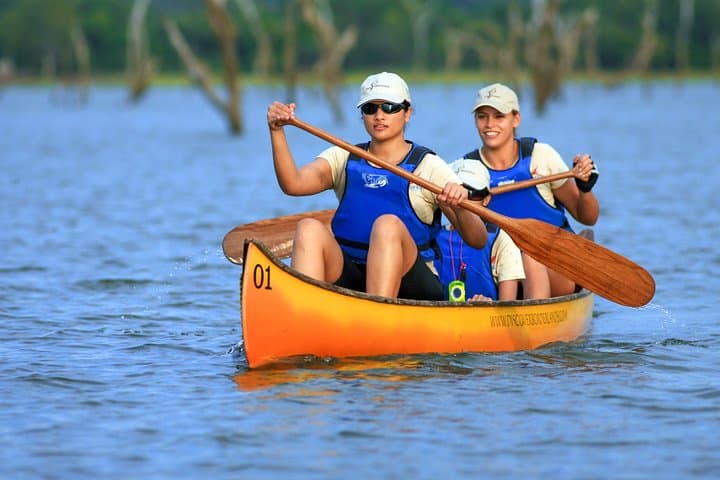
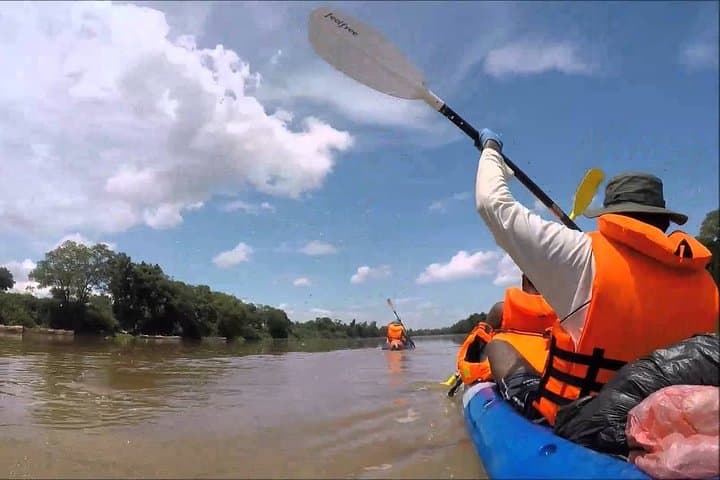
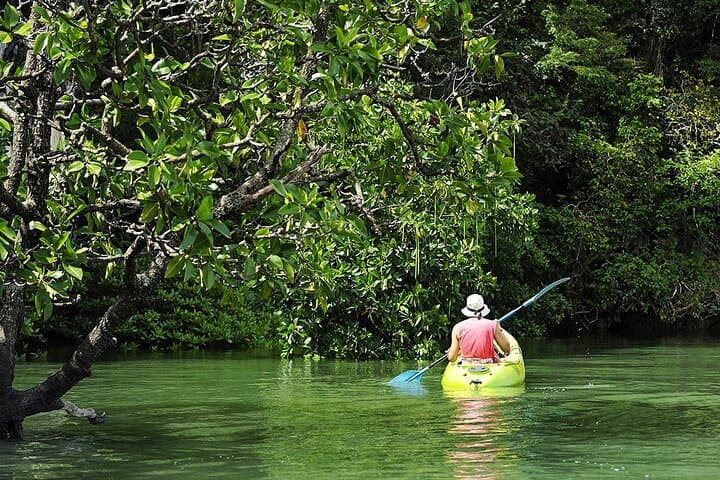
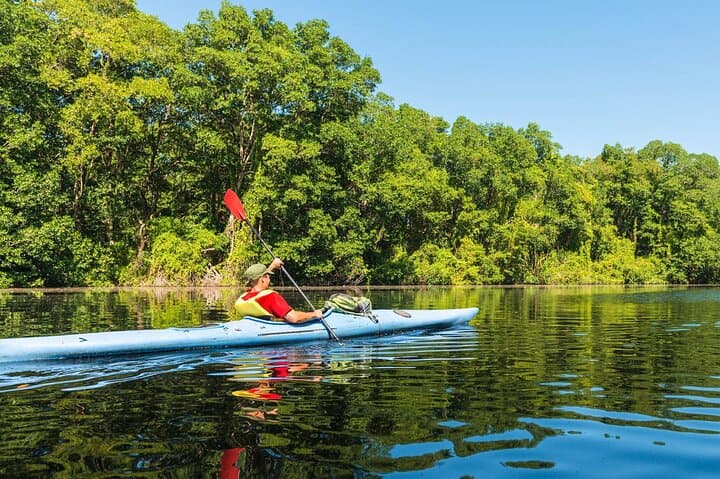
The canoe slips forward and the city’s sounds peel away—only water and the current remain. Early light paints the Mahaweli in iron and green; riverbanks rise in thick scrub, tall trees marking the boundary between cultivated land and wild.
The canoe slips forward and the city’s sounds peel away—only water and the current remain. Early light paints the Mahaweli in iron and green; riverbanks rise in thick scrub, tall trees marking the boundary between cultivated land and wild.
This one-hour float begins at the Polgolla stretch outside Kandy and moves upriver toward Katugasthota and Haloluwa before turning back. The Mahaweli is Sri Lanka’s longest river, carved through basalt and alluvial plains; where the flow slows it deposits broad sandbars and creates shallow feeding grounds for kingfishers, herons and other waders. The people who live along its banks have used the river for irrigation and transport for centuries, and you’ll see small-scale agriculture and local life from a perspective road traffic never affords.
Expect flat-water paddling with occasional deeper pools—guides provide helmets, life jackets and an on-water briefing. Wildlife is active at dawn and dusk: keep an eye for monitor lizards sunning on logs and troops of monkeys in the canopy. Photography is best facing upstream when light hits birds feeding along the margin.
Practical notes: the trip is private and about 60 minutes total; bring a towel and a dry change of clothes, wear water-friendly shoes, and pack sunscreen and a small waterproof bag. Follow the guide’s instructions—currents can shift and submerged obstacles are common. Aim for early morning or late afternoon for cooler temperatures and better wildlife viewing. A moderate level of fitness helps with steady paddling and remounting the canoe if needed.