THE ADVENTURE COLLECTIVE® · Independent discovery and booking for outdoor travel

Paddle the Llangollen Canal and cross the Pontcysyllte Aqueduct—307m long and 38m high—on a two‑hour, instructor‑led canoe trip. Beginner‑friendly with buoyancy aids provided, this session offers unique views of the Dee Valley and a hands‑on canal experience.
Paddle the Llangollen Canal and cross the Pontcysyllte Aqueduct—307m long and 38m high—on a two‑hour, instructor‑led canoe trip. Beginner‑friendly with buoyancy aids provided, this session offers unique views of the Dee Valley and a hands‑on canal experience.
Gliding off from a grassy towpath, the canoe settles into the steady ribbon of the Llangollen Canal. The water nudges the hull forward and the aqueduct appears—a narrow stone spine rising 38 metres above the Dee Valley, its arch daring you to cross the gap between two Welsh hills.
Verified experiences and guided adventures in the surrounding area.
Operated by TNR · Llangollen, Wales
Gliding off from a grassy towpath, the canoe settles into the steady ribbon of the Llangollen Canal. The water nudges the hull forward and the aqueduct appears—a narrow stone spine rising 38 metres above the Dee Valley, its arch daring you to cross the gap between two Welsh hills.
This guided two‑hour session threads history and landscape. Built in the early 19th century by engineers including Thomas Telford, the Pontcysyllte Aqueduct carries the canal across a deep glacial valley; its iron trough and masonry reflect the Industrial Era’s push to link markets by water. Around it, limestone crags and pasture give way to pockets of willow and alder along the river below, and the canal’s towpath still hums with the cadence of horses that once hauled barges.
Culturally, the aqueduct is part of a living route—the Llangollen Canal—popular with narrowboats, walkers and photographers. The instructor-led format here is beginner-friendly: expect technique coaching, safety briefings, buoyancy aids supplied and options for relaxed paddling or light games. Dogs are allowed; minimum age is six.
Practical notes: wear quick‑dry layers and shoes that grip when wet, carry a light waterproof and a small dry bag for valuables. Mornings are quieter for wildlife and photos; late summer fills with tourists and hire boats. The route is short and low‑risk but respect the water, follow the instructor’s commands, and leave no trace on the towpath. In two hours you’ll learn paddling basics and get a rare angle on a UNESCO World Heritage structure—up close, over the valley, moving with the current.
easy.
2 hours.
Suitable for most fitness levels; participants should be able to sit and paddle for short bursts and manage stepping in/out of a canoe.
No—sessions are instructor‑led and designed for beginners; you’ll get basic paddling and safety instruction before launch.
Yes, dogs are welcome but must be controllable and able to sit in the canoe; bring a towel and consider a life jacket for nervous dogs.
Minimum age is 6; please inform the operator of any under‑18s at booking.
The tour can be cancelled if conditions are unsafe—operators typically reschedule or cancel for strong winds, heavy rain or low temperatures; check booking terms.
The aqueduct was completed in the early 1800s under engineer Thomas Telford and carried the canal across a deep glacial valley—an important feat of canal‑era engineering.
As a UNESCO World Heritage site, the aqueduct and surrounding canal are managed to protect historic fabric and riverine habitats—stick to paths, avoid bank erosion and pack out waste.
TNR operates guided outdoor trips and adventures with an emphasis on safety, stewardship, and memorable experiences.
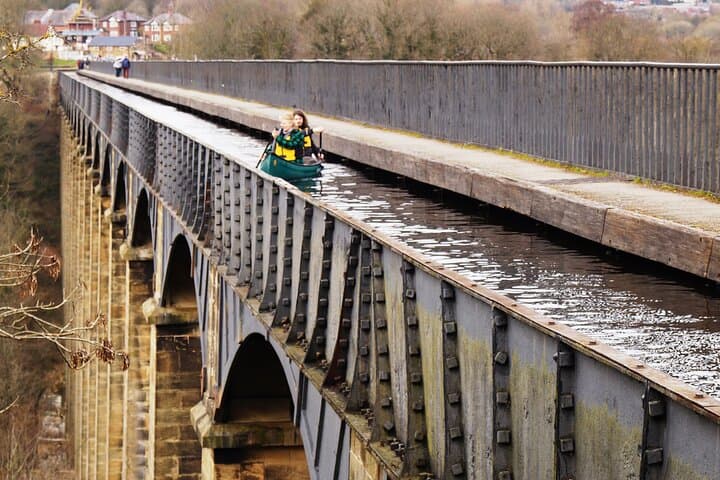
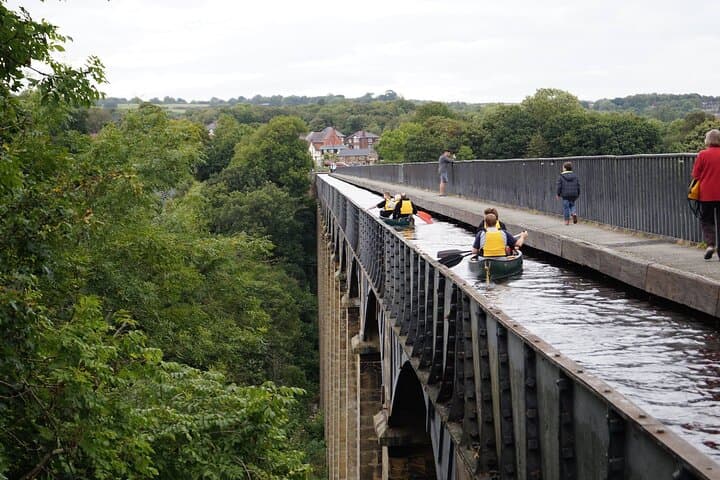
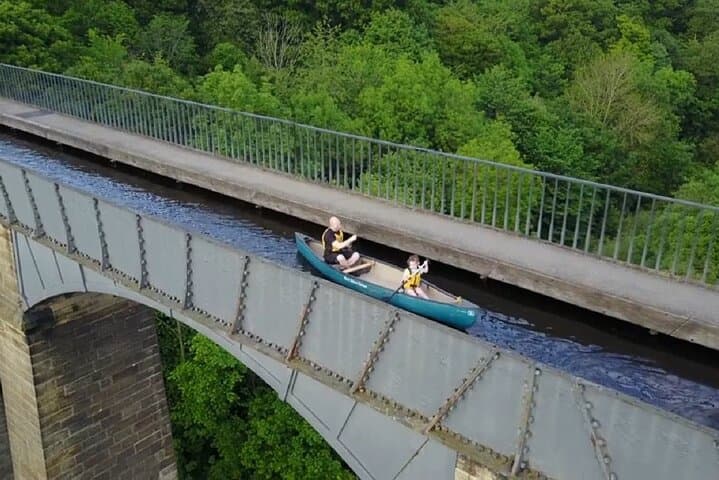
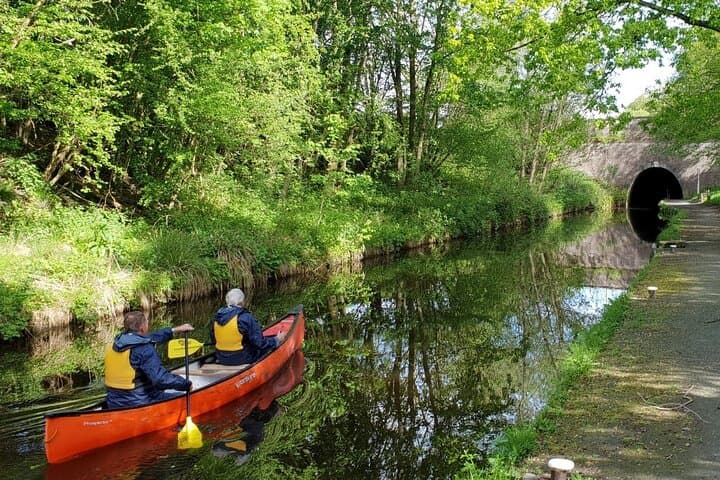
Gliding off from a grassy towpath, the canoe settles into the steady ribbon of the Llangollen Canal. The water nudges the hull forward and the aqueduct appears—a narrow stone spine rising 38 metres above the Dee Valley, its arch daring you to cross the gap between two Welsh hills.
Gliding off from a grassy towpath, the canoe settles into the steady ribbon of the Llangollen Canal. The water nudges the hull forward and the aqueduct appears—a narrow stone spine rising 38 metres above the Dee Valley, its arch daring you to cross the gap between two Welsh hills.
This guided two‑hour session threads history and landscape. Built in the early 19th century by engineers including Thomas Telford, the Pontcysyllte Aqueduct carries the canal across a deep glacial valley; its iron trough and masonry reflect the Industrial Era’s push to link markets by water. Around it, limestone crags and pasture give way to pockets of willow and alder along the river below, and the canal’s towpath still hums with the cadence of horses that once hauled barges.
Culturally, the aqueduct is part of a living route—the Llangollen Canal—popular with narrowboats, walkers and photographers. The instructor-led format here is beginner-friendly: expect technique coaching, safety briefings, buoyancy aids supplied and options for relaxed paddling or light games. Dogs are allowed; minimum age is six.
Practical notes: wear quick‑dry layers and shoes that grip when wet, carry a light waterproof and a small dry bag for valuables. Mornings are quieter for wildlife and photos; late summer fills with tourists and hire boats. The route is short and low‑risk but respect the water, follow the instructor’s commands, and leave no trace on the towpath. In two hours you’ll learn paddling basics and get a rare angle on a UNESCO World Heritage structure—up close, over the valley, moving with the current.