THE ADVENTURE COLLECTIVE® · Independent discovery and booking for outdoor travel

Trace elk beds, compare fox and coyote prints, and learn how winter shapes life in the Bow Valley on this guided 2-hour nature walk near Canmore. Ideal for curious hikers wanting close-up natural history with a knowledgeable guide.
Trace elk beds, compare fox and coyote prints, and learn how winter shapes life in the Bow Valley on this guided 2-hour nature walk near Canmore. Ideal for curious hikers wanting close-up natural history with a knowledgeable guide.
You step out into cold air that pinches at your cheeks and watch a trail of tiny prints disappear under a knot of spruce—Canmore’s winter reads like a ledger of movement, and your guide is the translator.
Verified experiences and guided adventures in the surrounding area.
Operated by Banff & Canmore Tours · Canmore, Alberta
You step out into cold air that pinches at your cheeks and watch a trail of tiny prints disappear under a knot of spruce—Canmore’s winter reads like a ledger of movement, and your guide is the translator.
This two-hour, roughly 3.5-mile guided walk follows quieter side trails around Canmore, where snow muffles sound and animal tracks tell stories of elk bedding down, hares sprinting, and coyotes circling. The Bow Valley’s sculpted foothills are young in geological terms—glacial action and recent uplift carved the valleys; coal mining and ranching shaped the human history. Local Indigenous communities, particularly the Stoney Nakoda, have long-held knowledge of these routes and seasonal behaviors.
Your guide points out tree bark stripped by moose, winter buds on willows, and subtle differences between fox and coyote prints, weaving natural history with practical fieldcraft. Wind dares you around exposed ridgelines; a frozen creek pushes a quiet current of reflections under its ice.
Practical guidance is straightforward: dress in layered, waterproof clothing, wear grippy footwear or carry microspikes, and expect uneven, sometimes icy terrain. Guides carry bear spray and know how to read hotspots; wildlife sightings are possible but never guaranteed—this is observation, not a zoo. The group size is small, and the pace is deliberate to let you examine tracks and plants.
Plan for 2–3 hours, bring water, high-energy snacks, and a camera with spare batteries (cold drains them fast). This walk is an education in winter survival strategies—both animal and human—offering close-up ecology without needing backcountry experience.
moderate.
2–3 hours.
Suitable for travelers with moderate fitness—able to walk 3–4 miles on uneven, snowy terrain and stand during stops.
Wildlife sightings aren’t guaranteed; guides take you to hotspots and interpret signs—tracks, droppings, bedding areas—to illustrate animal presence.
The tour is family-friendly but requires moderate fitness; check with the operator for specific age limits—small children may find the distance and cold challenging.
Tours may be canceled or rescheduled for severe weather; operators typically allow a full refund if canceled at least 24 hours prior or for unsafe conditions.
Service animals are permitted, but pets are generally discouraged since they can disturb wildlife and other participants.
Canmore grew from a 19th-century coal-mining settlement into an outdoor gateway; the landscape also holds long-standing significance for Stoney Nakoda and other Indigenous peoples.
Stick to trails, avoid approaching wildlife, and follow Leave No Trace principles—winter habitats are especially sensitive because animals have limited energy reserves.
Banff & Canmore Tours operates guided outdoor trips and adventures with an emphasis on safety, stewardship, and memorable experiences.
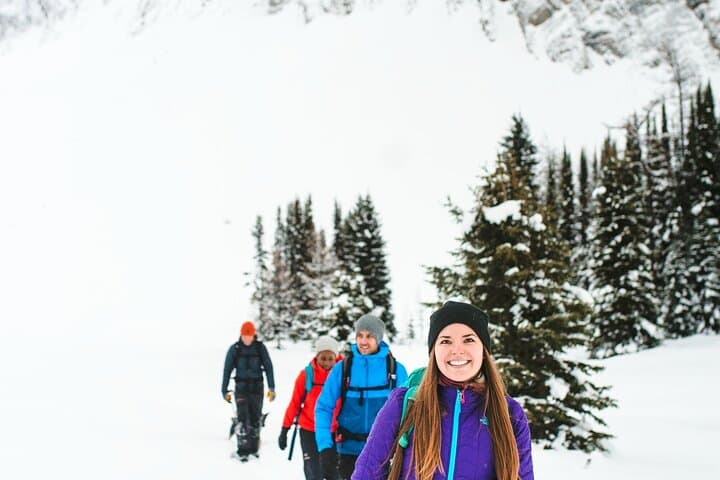
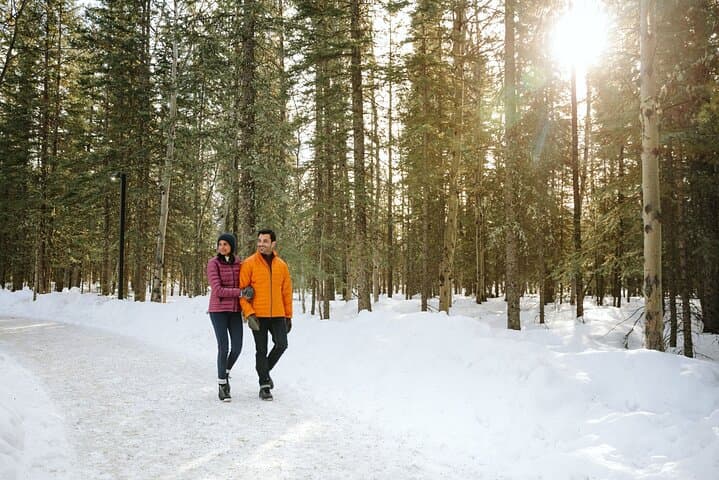
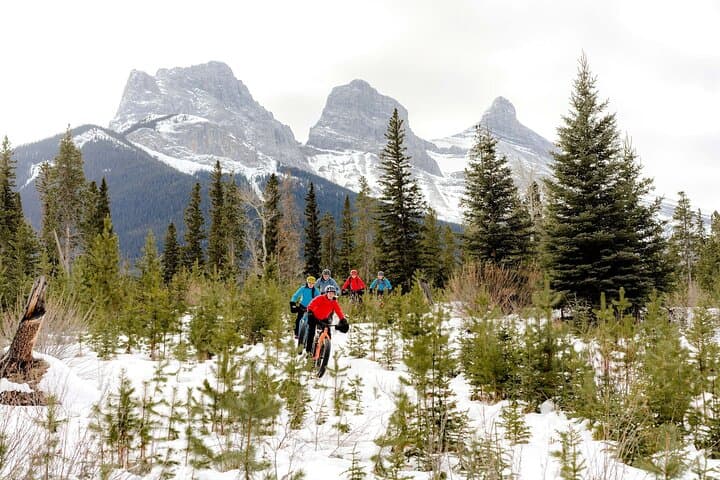

You step out into cold air that pinches at your cheeks and watch a trail of tiny prints disappear under a knot of spruce—Canmore’s winter reads like a ledger of movement, and your guide is the translator.
You step out into cold air that pinches at your cheeks and watch a trail of tiny prints disappear under a knot of spruce—Canmore’s winter reads like a ledger of movement, and your guide is the translator.
This two-hour, roughly 3.5-mile guided walk follows quieter side trails around Canmore, where snow muffles sound and animal tracks tell stories of elk bedding down, hares sprinting, and coyotes circling. The Bow Valley’s sculpted foothills are young in geological terms—glacial action and recent uplift carved the valleys; coal mining and ranching shaped the human history. Local Indigenous communities, particularly the Stoney Nakoda, have long-held knowledge of these routes and seasonal behaviors.
Your guide points out tree bark stripped by moose, winter buds on willows, and subtle differences between fox and coyote prints, weaving natural history with practical fieldcraft. Wind dares you around exposed ridgelines; a frozen creek pushes a quiet current of reflections under its ice.
Practical guidance is straightforward: dress in layered, waterproof clothing, wear grippy footwear or carry microspikes, and expect uneven, sometimes icy terrain. Guides carry bear spray and know how to read hotspots; wildlife sightings are possible but never guaranteed—this is observation, not a zoo. The group size is small, and the pace is deliberate to let you examine tracks and plants.
Plan for 2–3 hours, bring water, high-energy snacks, and a camera with spare batteries (cold drains them fast). This walk is an education in winter survival strategies—both animal and human—offering close-up ecology without needing backcountry experience.