THE ADVENTURE COLLECTIVE® · Independent discovery and booking for outdoor travel

Catch the Rockies’ last light on a guided evening walk in Canmore. This two-hour tour combines easy trails, photo vantages and local stories about the land’s geology and cultural history.
Catch the Rockies’ last light on a guided evening walk in Canmore. This two-hour tour combines easy trails, photo vantages and local stories about the land’s geology and cultural history.
The trail opens like a page as the town exhales—the last sun threading the Bow Valley between granite ridges. On this two-hour evening walk around Canmore, you follow a guide along level paths and short rises, arriving at a handful of vantage points chosen for the light as much as the view. Pines lean toward the glow; the river seems to hurry the shadows along.
Verified experiences and guided adventures in the surrounding area.
Operated by Banff & Canmore Tours · Canmore, Alberta
The trail opens like a page as the town exhales—the last sun threading the Bow Valley between granite ridges. On this two-hour evening walk around Canmore, you follow a guide along level paths and short rises, arriving at a handful of vantage points chosen for the light as much as the view. Pines lean toward the glow; the river seems to hurry the shadows along.
This landscape is carved by ice and river: the Canadian Rockies here are folded sedimentary rock worn by glaciers that once filled the valley. Indigenous peoples have traveled these corridors for millennia, and the town’s recent history includes coal-mining footholds that shaped Canmore into a mountain community turned outdoor hub. Guides often weave First Nations stories, local ecology and the town’s mining past into short, accessible narratives as you walk.
Expect roughly 3–4 km of trail with modest elevation gain (under 150 m), a mix of packed dirt, gravel and short wooden crossings. The guide carries bear spray and keeps group sizes small to minimize disturbance—wildlife sightings are possible but brief. Photographers appreciate the quickly shifting color; plan to move between points rather than linger in one spot.
Practical notes: arrive 10–15 minutes early, dress in layered clothing for rapidly cooling air, bring a headlamp or flashlight for the return, and wear sturdy walking shoes suitable for uneven terrain. Hydrate before you go and keep phones on low-power to save battery—the best frames come fast and you’ll want light to get back down safely.
easy.
2 hours.
Suitable for most fitness levels; require ability to walk 3–4 km on uneven ground
Most departures meet in central Canmore near the main commercial strip; the exact meeting point and directions are provided on booking confirmation.
Children under 8 are not permitted; older kids who can walk 3–4 km at an easy pace are fine when supervised by guardians.
Tours may be cancelled for heavy rain, high winds, or unsafe conditions—full refunds are available if cancelled 24 hours prior or for severe weather.
Wildlife sightings are possible—deer, coyotes or small mammals—but not guaranteed; guides minimize disturbance and maintain safe viewing distances.
Canmore sits in the Bow Valley; Indigenous groups used these corridors for thousands of years and the town grew around 19th–20th century coal mining before pivoting to recreation.
Small-group, guided walks reduce trail impact and noise; stay on designated paths and pack out trash to protect fragile alpine and riparian zones.
Banff & Canmore Tours operates guided outdoor trips and adventures with an emphasis on safety, stewardship, and memorable experiences.
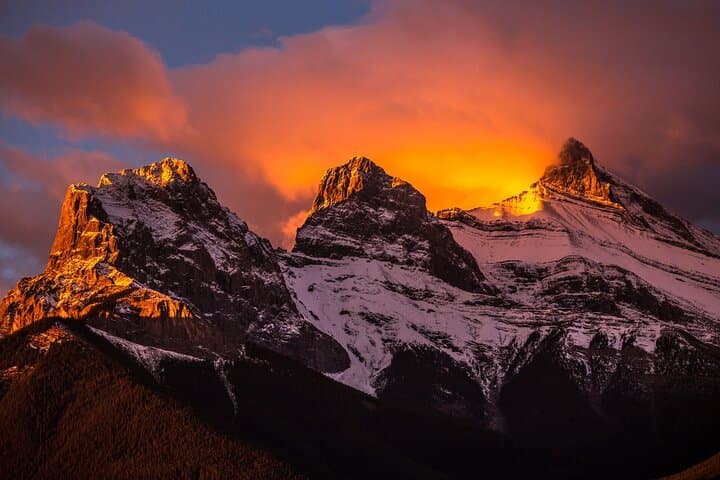
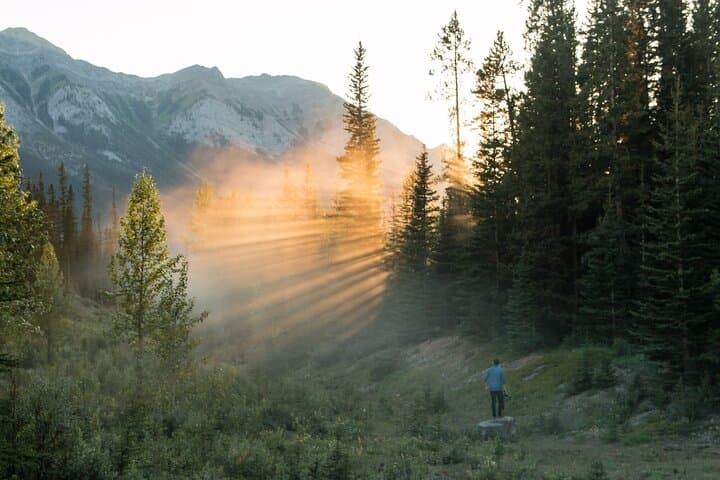
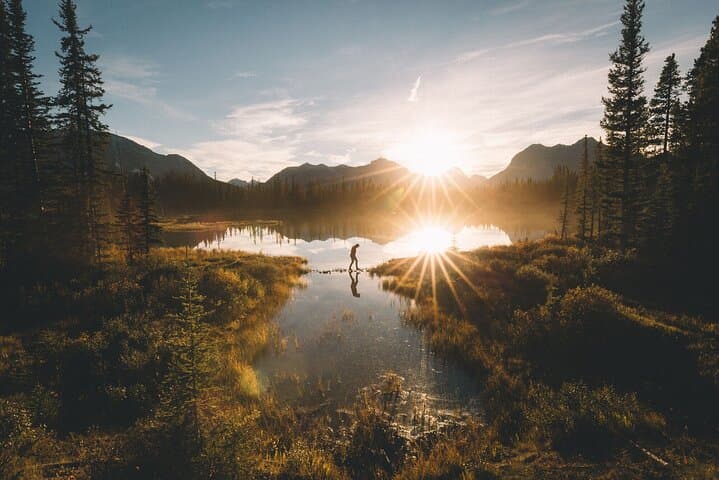
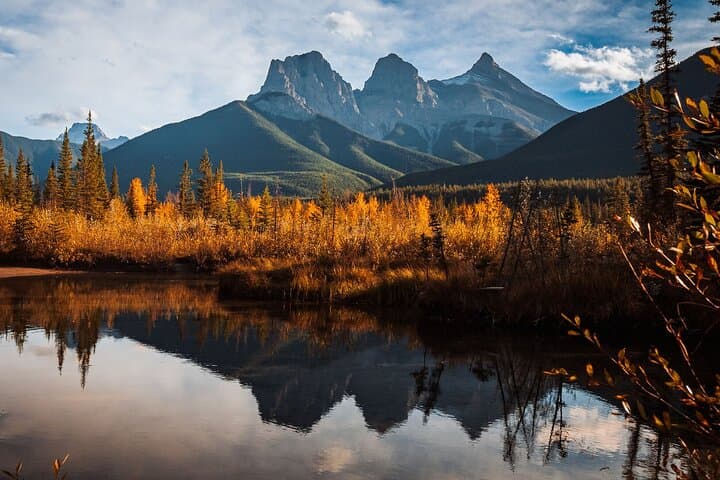
The trail opens like a page as the town exhales—the last sun threading the Bow Valley between granite ridges. On this two-hour evening walk around Canmore, you follow a guide along level paths and short rises, arriving at a handful of vantage points chosen for the light as much as the view. Pines lean toward the glow; the river seems to hurry the shadows along.
The trail opens like a page as the town exhales—the last sun threading the Bow Valley between granite ridges. On this two-hour evening walk around Canmore, you follow a guide along level paths and short rises, arriving at a handful of vantage points chosen for the light as much as the view. Pines lean toward the glow; the river seems to hurry the shadows along.
This landscape is carved by ice and river: the Canadian Rockies here are folded sedimentary rock worn by glaciers that once filled the valley. Indigenous peoples have traveled these corridors for millennia, and the town’s recent history includes coal-mining footholds that shaped Canmore into a mountain community turned outdoor hub. Guides often weave First Nations stories, local ecology and the town’s mining past into short, accessible narratives as you walk.
Expect roughly 3–4 km of trail with modest elevation gain (under 150 m), a mix of packed dirt, gravel and short wooden crossings. The guide carries bear spray and keeps group sizes small to minimize disturbance—wildlife sightings are possible but brief. Photographers appreciate the quickly shifting color; plan to move between points rather than linger in one spot.
Practical notes: arrive 10–15 minutes early, dress in layered clothing for rapidly cooling air, bring a headlamp or flashlight for the return, and wear sturdy walking shoes suitable for uneven terrain. Hydrate before you go and keep phones on low-power to save battery—the best frames come fast and you’ll want light to get back down safely.