THE ADVENTURE COLLECTIVE® · Independent discovery and booking for outdoor travel

Step off the trail as dusk falls in Canmore and trade daytime peaks for constellations, nocturnal wildlife, and—on the right night—the northern lights. This guided 2‑hour walk pairs local natural history with dark‑sky viewing and practical tips for photographing the heavens.
Step off the trail as dusk falls in Canmore and trade daytime peaks for constellations, nocturnal wildlife, and—on the right night—the northern lights. This guided 2‑hour walk pairs local natural history with dark‑sky viewing and practical tips for photographing the heavens.
A cool Alberta dusk drops behind the Three Sisters as the group moves off the trailhead, headlamps cutting cones through whispering lodgepole pines. The guide pauses where the trees open and the valley exhales — overhead the Milky Way takes shape, constellations climb, and if conditions allow the aurora may ripple green across the Rockies.
Verified experiences and guided adventures in the surrounding area.
Operated by Banff & Canmore Tours · Canmore, Alberta
A cool Alberta dusk drops behind the Three Sisters as the group moves off the trailhead, headlamps cutting cones through whispering lodgepole pines. The guide pauses where the trees open and the valley exhales — overhead the Milky Way takes shape, constellations climb, and if conditions allow the aurora may ripple green across the Rockies.
Canmore sits on traditional Stoney Nakoda and Métis territory and grew from 19th-century coal towns into an outdoor gateway to Banff National Park. Geologically, the area is carved from stacked Paleozoic limestones and sculpted by glacial valleys; at night those ridgelines become silhouettes against the stars. The walk follows uneven forest paths and short ridge sections used by locals for evening wildlife viewing — expect deer, hoary owls, and the occasional elk to appear at the tree line.
Practical rhythm: this 2-hour, 3.5-mile loop is paced for photographs and short stops, with a professional guide narrating constellations and local lore. Headlamps and basic hiking poles can make footing on roots and rocks easier; microspikes may be advised in icy months. Bring a warm layer, a thermos, and a camera with manual settings if you want star photos. Guides monitor cloud cover and may cancel for heavy clouds or rain; they contact participants 12–24 hours ahead for timing adjustments.
This experience balances easy hiking with the patience of skywatching — it’s a short, accessible way to step into nocturnal Rockies culture and learn how to read a cold, clear night.
moderate.
2 hours.
Suitable for most people who can walk 3–4 miles on uneven terrain; expect short standing stops and slow paced walking.
Guides monitor conditions and may cancel or reschedule within 24 hours; decisions balance safety and viewing quality and you'll be contacted ahead of departure.
Yes — headlamps are provided, but bringing your own (with red mode) is helpful for personal use and preserving night vision.
Children 8 and older can participate; the tour isn’t designed for very young kids and requires the ability to walk on uneven trails for up to 3.5 miles.
Yes, with the right settings (manual focus, long exposures) and sufficient activity you can capture aurora, but results depend on solar activity and clear skies.
Canmore evolved from 19th-century coal mining and sits on traditional Stoney Nakoda land; its evening trails have long been routes for hunters and guides.
Canmore participates in dark‑sky friendly lighting practices; stick to trails, avoid light pollution from phones, and pack out all trash to protect nocturnal habitats.
Banff & Canmore Tours operates guided outdoor trips and adventures with an emphasis on safety, stewardship, and memorable experiences.
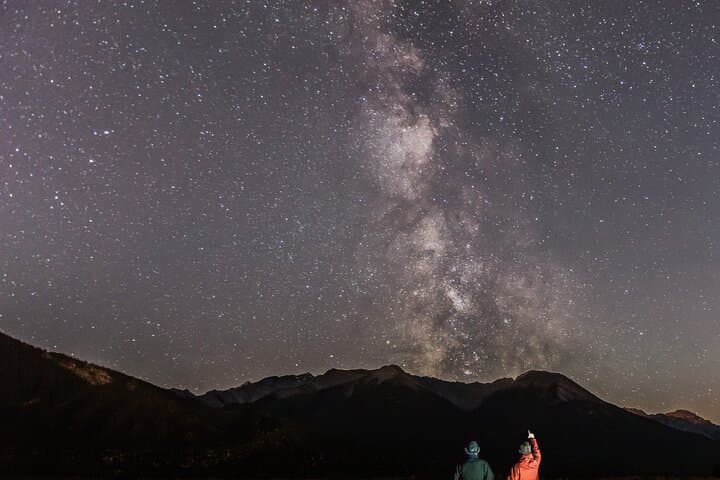

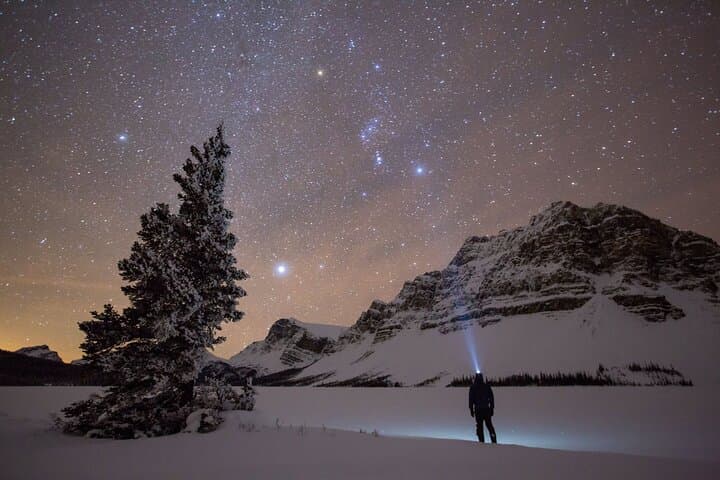

A cool Alberta dusk drops behind the Three Sisters as the group moves off the trailhead, headlamps cutting cones through whispering lodgepole pines. The guide pauses where the trees open and the valley exhales — overhead the Milky Way takes shape, constellations climb, and if conditions allow the aurora may ripple green across the Rockies.
A cool Alberta dusk drops behind the Three Sisters as the group moves off the trailhead, headlamps cutting cones through whispering lodgepole pines. The guide pauses where the trees open and the valley exhales — overhead the Milky Way takes shape, constellations climb, and if conditions allow the aurora may ripple green across the Rockies.
Canmore sits on traditional Stoney Nakoda and Métis territory and grew from 19th-century coal towns into an outdoor gateway to Banff National Park. Geologically, the area is carved from stacked Paleozoic limestones and sculpted by glacial valleys; at night those ridgelines become silhouettes against the stars. The walk follows uneven forest paths and short ridge sections used by locals for evening wildlife viewing — expect deer, hoary owls, and the occasional elk to appear at the tree line.
Practical rhythm: this 2-hour, 3.5-mile loop is paced for photographs and short stops, with a professional guide narrating constellations and local lore. Headlamps and basic hiking poles can make footing on roots and rocks easier; microspikes may be advised in icy months. Bring a warm layer, a thermos, and a camera with manual settings if you want star photos. Guides monitor cloud cover and may cancel for heavy clouds or rain; they contact participants 12–24 hours ahead for timing adjustments.
This experience balances easy hiking with the patience of skywatching — it’s a short, accessible way to step into nocturnal Rockies culture and learn how to read a cold, clear night.