THE ADVENTURE COLLECTIVE® · Independent discovery and booking for outdoor travel

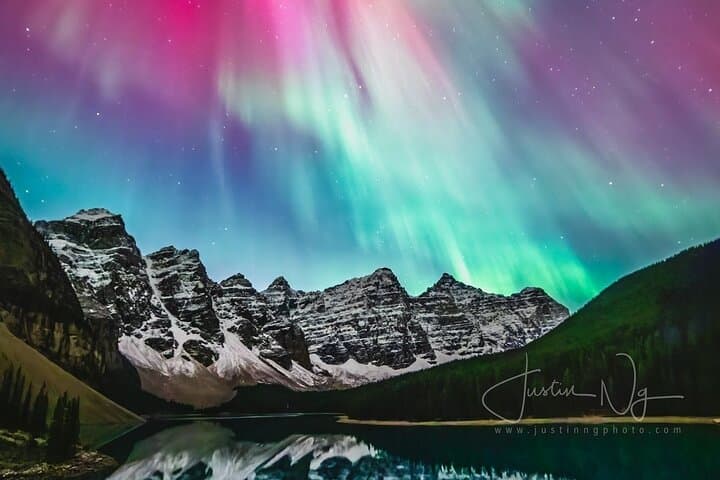
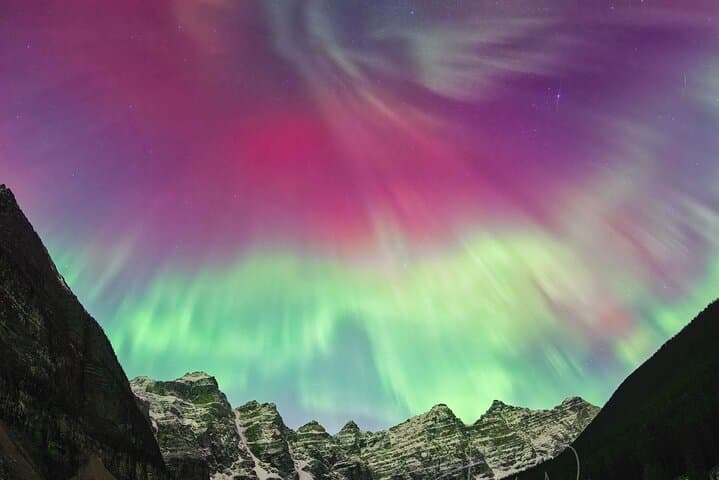
Leave the town lights behind and let experienced guides set up a cozy observation base in the Canadian Rockies. Sip hot chocolate, peer through a telescope and—if conditions align—watch the Northern Lights dance above rugged peaks.
Leave the town lights behind and let experienced guides set up a cozy observation base in the Canadian Rockies. Sip hot chocolate, peer through a telescope and—if conditions align—watch the Northern Lights dance above rugged peaks.
The van pulls away from soft town lights and the mountains grow taller in the windows, black silhouettes against a deepening sky. Guides move with quiet confidence—scouting parking pullouts, checking sky clarity, and arranging inflatable loungers so you can tilt back and watch the dome of night unfold.
Verified experiences and guided adventures in the surrounding area.
Operated by Canmore Travel-Moraine Lake and Lake Louise shuttle/bus · Canmore, Alberta
The van pulls away from soft town lights and the mountains grow taller in the windows, black silhouettes against a deepening sky. Guides move with quiet confidence—scouting parking pullouts, checking sky clarity, and arranging inflatable loungers so you can tilt back and watch the dome of night unfold.
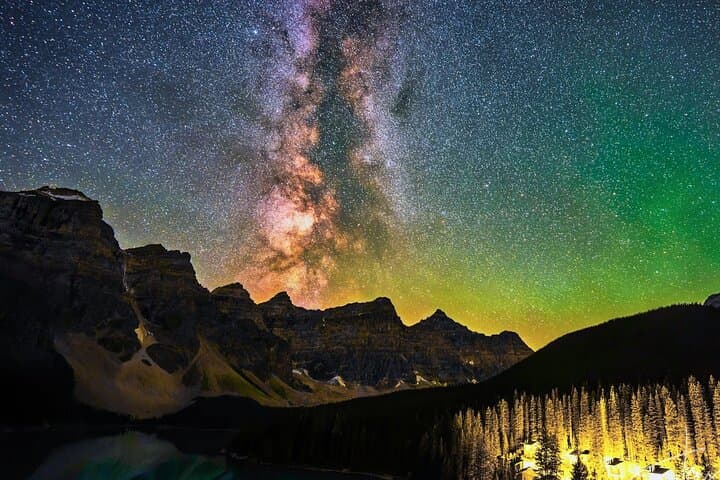
This night adventure sits on the leeward side of the Canadian Rockies where limestone peaks and glacial valleys shape local weather and create pockets of dark sky. The area has long been home to the Stoney Nakoda and other Indigenous peoples; later, railway and mining crews opened early routes that now double as scenic dark-sky corridors.
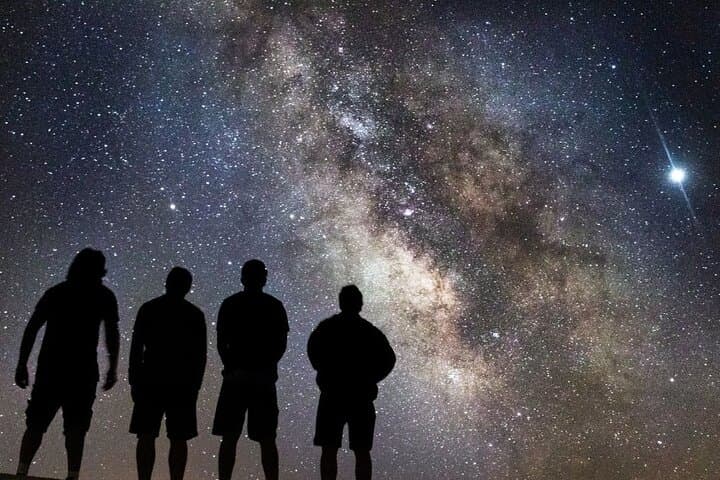
Geology here reads like a ledger of ice and stone: cliffs of Paleozoic limestone carved by glaciers into sweeping bowls and ridgelines. Culture in Canmore and Banff leans practical—people who ski, climb and camp year-round—and guides mirror that practicality, bringing chairs, blankets, hot drinks, headlamps and a telescope for up-close views of planets and star clusters.
Practical side: this is not a hike—expect brief, easy walks from vehicle to set-up. Tours run in a wide temperature band (about −20 °C to +20 °C), so layered thermal clothing, insulated boots and hand warmers are essential in colder months. Aurora appearances depend on solar activity and clear skies; guides maximize your chance by moving between dark spots but sightings are never guaranteed.
Bring a camera with a tripod and know basic long-exposure settings if you want to photograph the Milky Way or aurora. The payoff is elemental: a night that slows the city pulse and hands the sky back to you.
easy.
2–4 hours.
Suitable for all fitness levels; minimal walking on uneven ground for short distances.
Sightings depend on solar activity and clear skies; guides improve odds by choosing dark, high-visibility locations, but aurora is never guaranteed.
Not recommended for children under 8; children under 6 must use a proper child safety seat that guests provide in advance.
In heavy rain or snow the operator will offer rescheduling, an alternate service, or a refund; tours run in light snow and variable sky conditions.
No—this is not a hiking tour. Expect short, easy walks from the vehicle to the viewing site with low elevation change.
The Bow Valley was used for millennia by Indigenous peoples such as the Stoney Nakoda; later railway and mining activity opened the same corridors now used to access dark-sky sites.
Light pollution is a growing concern—use minimal lights, avoid flash photography near wildlife, and follow Leave No Trace principles to protect fragile alpine environments.
Canmore Travel-Moraine Lake and Lake Louise shuttle/bus operates guided outdoor trips and adventures with an emphasis on safety, stewardship, and memorable experiences.
The van pulls away from soft town lights and the mountains grow taller in the windows, black silhouettes against a deepening sky. Guides move with quiet confidence—scouting parking pullouts, checking sky clarity, and arranging inflatable loungers so you can tilt back and watch the dome of night unfold.
The van pulls away from soft town lights and the mountains grow taller in the windows, black silhouettes against a deepening sky. Guides move with quiet confidence—scouting parking pullouts, checking sky clarity, and arranging inflatable loungers so you can tilt back and watch the dome of night unfold.
This night adventure sits on the leeward side of the Canadian Rockies where limestone peaks and glacial valleys shape local weather and create pockets of dark sky. The area has long been home to the Stoney Nakoda and other Indigenous peoples; later, railway and mining crews opened early routes that now double as scenic dark-sky corridors.
Geology here reads like a ledger of ice and stone: cliffs of Paleozoic limestone carved by glaciers into sweeping bowls and ridgelines. Culture in Canmore and Banff leans practical—people who ski, climb and camp year-round—and guides mirror that practicality, bringing chairs, blankets, hot drinks, headlamps and a telescope for up-close views of planets and star clusters.
Practical side: this is not a hike—expect brief, easy walks from vehicle to set-up. Tours run in a wide temperature band (about −20 °C to +20 °C), so layered thermal clothing, insulated boots and hand warmers are essential in colder months. Aurora appearances depend on solar activity and clear skies; guides maximize your chance by moving between dark spots but sightings are never guaranteed.
Bring a camera with a tripod and know basic long-exposure settings if you want to photograph the Milky Way or aurora. The payoff is elemental: a night that slows the city pulse and hands the sky back to you.