THE ADVENTURE COLLECTIVE® · Independent discovery and booking for outdoor travel

Walk into Grotto Canyon on a 2.5‑hour guided hike from Canmore to see towering cliffs, creek-polished rock and ancient pictographs. This small-group tour combines geology and Indigenous history with practical trail tips and on‑trail interpretation.
Walk into Grotto Canyon on a 2.5‑hour guided hike from Canmore to see towering cliffs, creek-polished rock and ancient pictographs. This small-group tour combines geology and Indigenous history with practical trail tips and on‑trail interpretation.
A narrow cleft of limestone opens like a wound in the Rockies as the group steps off the trailhead and into Grotto Canyon. Wind threads through stacked cliffs, water whispers over polished bedrock, and the canyon walls close in until the world feels pared to rock, pigment and sky. The guide moves deliberately, pointing out stratified layers that record ancient seas and the fissures where retreating ice shaped the gorge.
Verified experiences and guided adventures in the surrounding area.
Operated by Banff & Canmore Tours · Canmore, Alberta
A narrow cleft of limestone opens like a wound in the Rockies as the group steps off the trailhead and into Grotto Canyon. Wind threads through stacked cliffs, water whispers over polished bedrock, and the canyon walls close in until the world feels pared to rock, pigment and sky. The guide moves deliberately, pointing out stratified layers that record ancient seas and the fissures where retreating ice shaped the gorge.
Grotto Canyon’s red and black pictographs sit under a sheltered overhang — echoes of Indigenous presence that predate the park system. Geologically, the canyon is carved into Paskapoo and limestone formations, with occasional talus slopes and ice-etched pools in winter. Locals use the canyon for short technical training, seasonal ice routes, and interpretive walks that connect natural history with human stories.
Practical guidance is straightforward: the route is short but uneven — expect loose shale, a few slick slab crossings, and shallow creek crossings after rain or snowmelt. Small-group guiding keeps the pace conversational and educational; permits and Kananaskis fees are typically included by operators. Bring traction if temperatures dip, and allow 2–3 hours for the outing including stops at the pictographs.
This hike pairs visual geology with cultural context and is ideal for travelers who want a compact, interpretive mountain walk rather than a long summit push. Respect the rock art: observe from a distance, don’t touch pigments, and pack out everything you bring in.
easy.
2–3 hours.
Suitable for those in moderate physical condition; able to manage uneven ground and short rock scrambles.
The guided outing is about 2.5 hours round‑trip and rated easy — short distance with uneven terrain and a few low scrambles.
Yes, the pictographs are historic rock art; touching or attempting to clean them is prohibited to protect the pigments.
Tours commonly include Kananaskis park fees; confirm with your operator but expect parking or conservation fees to be covered on this itinerary.
Suitable for families and older adults with reasonable mobility, but not recommended for those with significant spinal or cardiovascular conditions.
The canyon contains rock art from Indigenous peoples of the Bow Valley region; guides typically provide context about traditional uses and cultural significance.
Stay on durable surfaces, pack out waste, and view pictographs from a distance to avoid damaging fragile pigments; group sizes are kept small to reduce impact.
Banff & Canmore Tours operates guided outdoor trips and adventures with an emphasis on safety, stewardship, and memorable experiences.
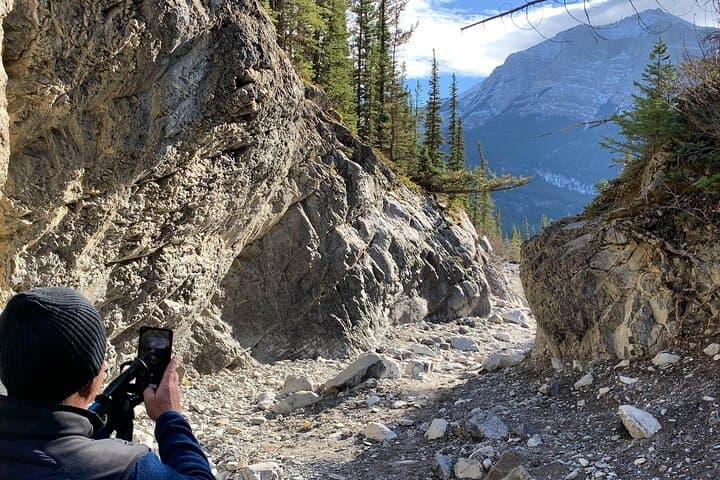
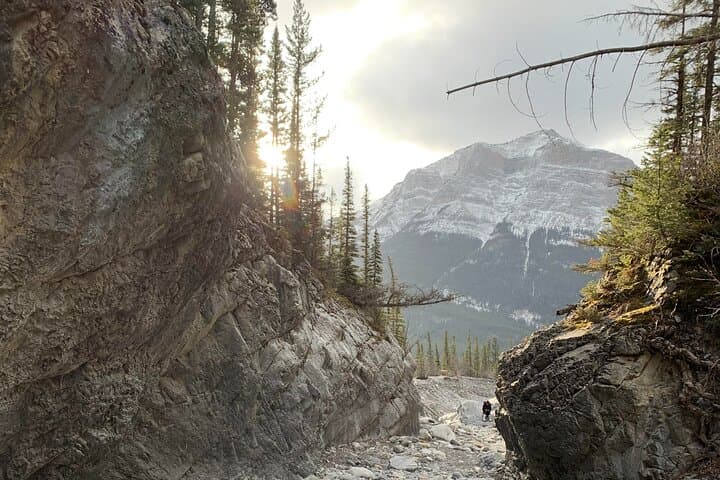
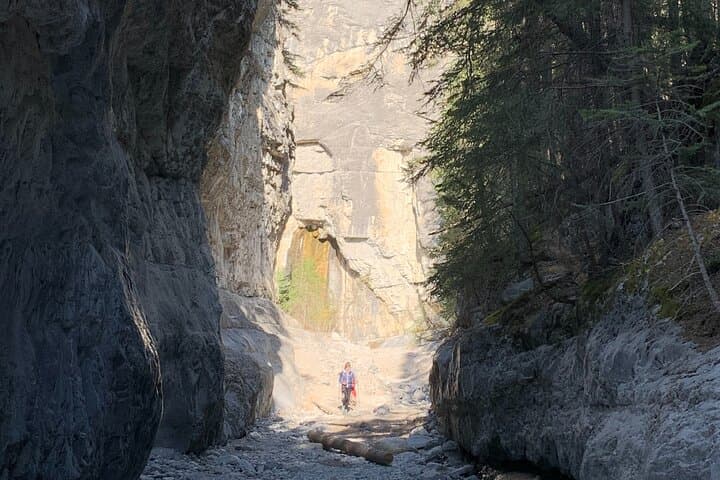
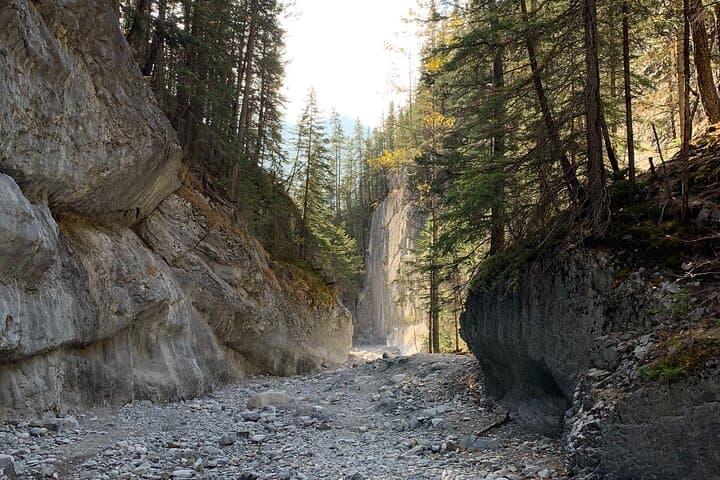
A narrow cleft of limestone opens like a wound in the Rockies as the group steps off the trailhead and into Grotto Canyon. Wind threads through stacked cliffs, water whispers over polished bedrock, and the canyon walls close in until the world feels pared to rock, pigment and sky. The guide moves deliberately, pointing out stratified layers that record ancient seas and the fissures where retreating ice shaped the gorge.
A narrow cleft of limestone opens like a wound in the Rockies as the group steps off the trailhead and into Grotto Canyon. Wind threads through stacked cliffs, water whispers over polished bedrock, and the canyon walls close in until the world feels pared to rock, pigment and sky. The guide moves deliberately, pointing out stratified layers that record ancient seas and the fissures where retreating ice shaped the gorge.
Grotto Canyon’s red and black pictographs sit under a sheltered overhang — echoes of Indigenous presence that predate the park system. Geologically, the canyon is carved into Paskapoo and limestone formations, with occasional talus slopes and ice-etched pools in winter. Locals use the canyon for short technical training, seasonal ice routes, and interpretive walks that connect natural history with human stories.
Practical guidance is straightforward: the route is short but uneven — expect loose shale, a few slick slab crossings, and shallow creek crossings after rain or snowmelt. Small-group guiding keeps the pace conversational and educational; permits and Kananaskis fees are typically included by operators. Bring traction if temperatures dip, and allow 2–3 hours for the outing including stops at the pictographs.
This hike pairs visual geology with cultural context and is ideal for travelers who want a compact, interpretive mountain walk rather than a long summit push. Respect the rock art: observe from a distance, don’t touch pigments, and pack out everything you bring in.