THE ADVENTURE COLLECTIVE® · Independent discovery and booking for outdoor travel

Walk Canmore’s streets and trails with a local guide who unpacks cowboy tales, coal-mining history, and the geology of the Bow Valley. This 1.5-hour guided tour combines archival photos, landmark stops, and easy trails for an accessible mountain-history experience.
Walk Canmore’s streets and trails with a local guide who unpacks cowboy tales, coal-mining history, and the geology of the Bow Valley. This 1.5-hour guided tour combines archival photos, landmark stops, and easy trails for an accessible mountain-history experience.
You step off Main Street into a wind that carries the smell of spruce and coal smoke from a century ago. The guide leads you past the turn-of-the-century Canmore Hotel and along a low ridge where the Bow River moves with purpose, pushing the valley’s stories downstream.
Verified experiences and guided adventures in the surrounding area.
Operated by Banff & Canmore Tours · Canmore, Alberta
You step off Main Street into a wind that carries the smell of spruce and coal smoke from a century ago. The guide leads you past the turn-of-the-century Canmore Hotel and along a low ridge where the Bow River moves with purpose, pushing the valley’s stories downstream.
This 1.5-hour walk stitches together human history and mountain geology. Canmore grew where coal seams met accessible timber and water — the mines that once powered prairie railways and the cowboys who drove stock through alpine meadows left physical and cultural marks: miner’s union halls, boarding-house façades, and ranch roads that became informal trails.
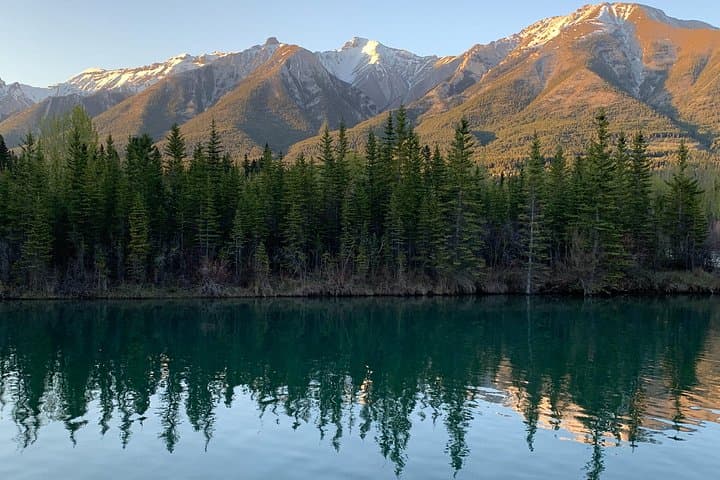
Geologically the Bow Valley exposes folded sedimentary rock, with ridgelines of limestone and shale that shaped both settlement patterns and local industry. Culturally the tour highlights the mix of Indigenous presence, immigrant miners, and ranching families whose labor forged community institutions still visible on town maps and historical photos.
Practical guidance: the route covers roughly 3–5 km on mixed pavement and maintained trails with minimal elevation gain; suitable for most walkers. Wear grippy footwear—rock and boardwalk sections can be slick after rain—and layer for rapid mountain-weather shifts. Bring water and a small camera; the guide often points out building plaques and photo stops.
The pace is conversational, with frequent stops for stories and archival images, so it’s easy to follow even if you’re new to the mountains. Public transit reaches downtown Canmore; the tour is compact enough to pair with a longer hike or a day trip to nearby Banff. Expect historic context, accessible trails, and a sharper sense of how industry and landscape shaped this mountain town.
easy.
1.5 hours.
Suitable for most fitness levels; involves 3–5 km of walking on mixed surfaces with minimal elevation gain
The guided experience lasts about 1.5 hours and covers approximately 3–5 km on a combination of streets and maintained trails.
Yes—infants and small children can use strollers on most sections; some short trail segments may be uneven but are generally stroller-accessible.
Service animals are permitted; general pets are not listed as included—check with the operator before booking.
Tours may be canceled for significant inclement weather; for a full refund cancel at least 24 hours prior as per the operator’s policy.
Canmore’s growth accelerated in the early 20th century when coal mining and ranching drew workers; many landmark buildings date to that boom and reflect miners’ and cowboys’ lives.
Canmore sits in the Bow Valley watershed; visitors are encouraged to stick to trails, pack out waste, and follow seasonal closures to protect wildlife habitat and riparian areas.
Banff & Canmore Tours operates guided outdoor trips and adventures with an emphasis on safety, stewardship, and memorable experiences.
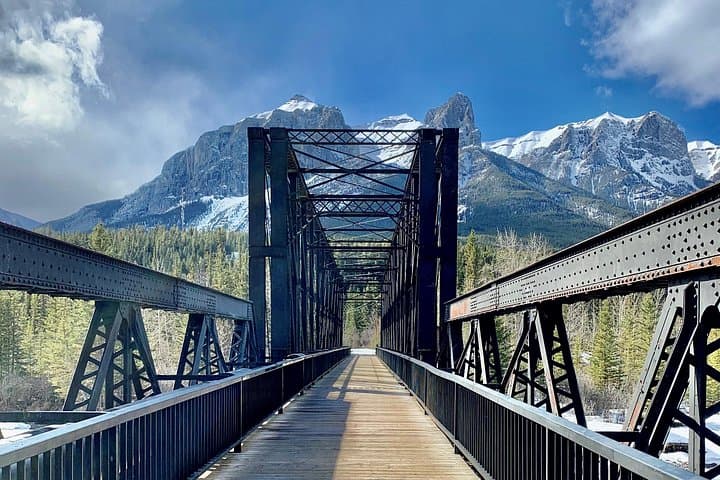
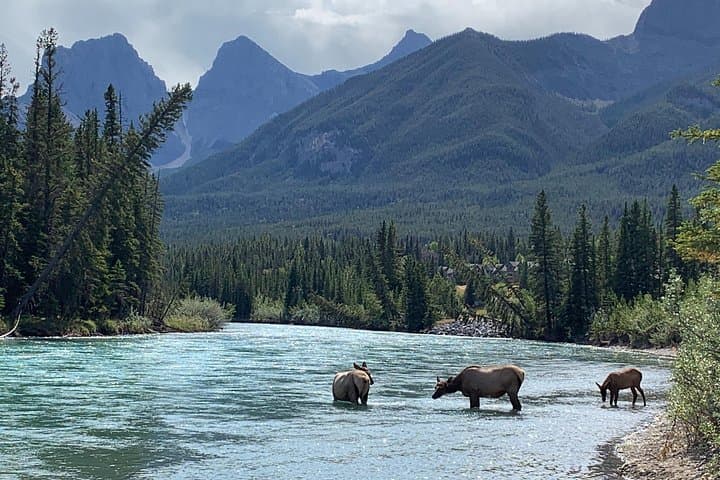
You step off Main Street into a wind that carries the smell of spruce and coal smoke from a century ago. The guide leads you past the turn-of-the-century Canmore Hotel and along a low ridge where the Bow River moves with purpose, pushing the valley’s stories downstream.
You step off Main Street into a wind that carries the smell of spruce and coal smoke from a century ago. The guide leads you past the turn-of-the-century Canmore Hotel and along a low ridge where the Bow River moves with purpose, pushing the valley’s stories downstream.
This 1.5-hour walk stitches together human history and mountain geology. Canmore grew where coal seams met accessible timber and water — the mines that once powered prairie railways and the cowboys who drove stock through alpine meadows left physical and cultural marks: miner’s union halls, boarding-house façades, and ranch roads that became informal trails.
Geologically the Bow Valley exposes folded sedimentary rock, with ridgelines of limestone and shale that shaped both settlement patterns and local industry. Culturally the tour highlights the mix of Indigenous presence, immigrant miners, and ranching families whose labor forged community institutions still visible on town maps and historical photos.
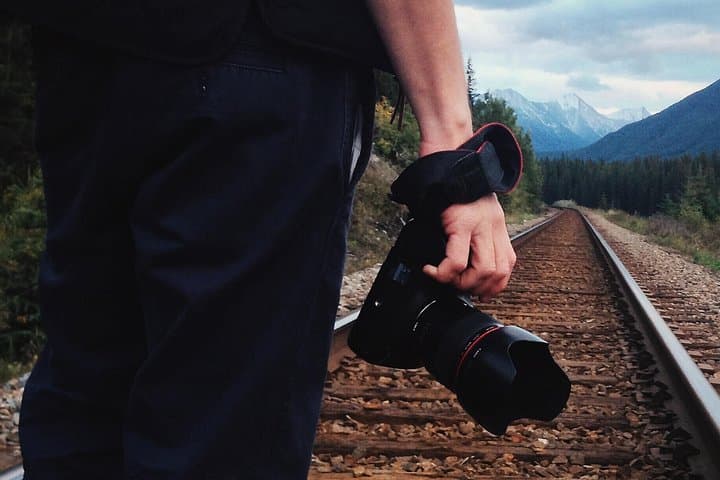
Practical guidance: the route covers roughly 3–5 km on mixed pavement and maintained trails with minimal elevation gain; suitable for most walkers. Wear grippy footwear—rock and boardwalk sections can be slick after rain—and layer for rapid mountain-weather shifts. Bring water and a small camera; the guide often points out building plaques and photo stops.
The pace is conversational, with frequent stops for stories and archival images, so it’s easy to follow even if you’re new to the mountains. Public transit reaches downtown Canmore; the tour is compact enough to pair with a longer hike or a day trip to nearby Banff. Expect historic context, accessible trails, and a sharper sense of how industry and landscape shaped this mountain town.