THE ADVENTURE COLLECTIVE® · Independent discovery and booking for outdoor travel

Slip into aquamarine pools carved into fossil-rich rock at Cangilones de Gualaca. This half-day canyon visit mixes short scrambles, optional jumps, and close-up geology — ideal for travelers seeking active river time near Boquete.
Slip into aquamarine pools carved into fossil-rich rock at Cangilones de Gualaca. This half-day canyon visit mixes short scrambles, optional jumps, and close-up geology — ideal for travelers seeking active river time near Boquete.
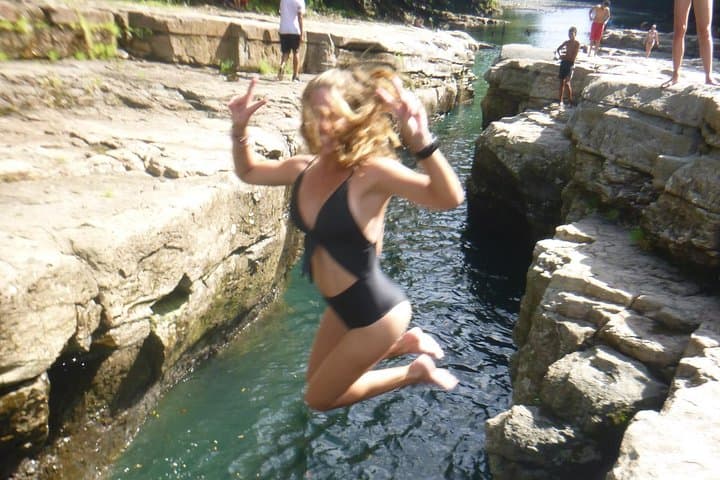
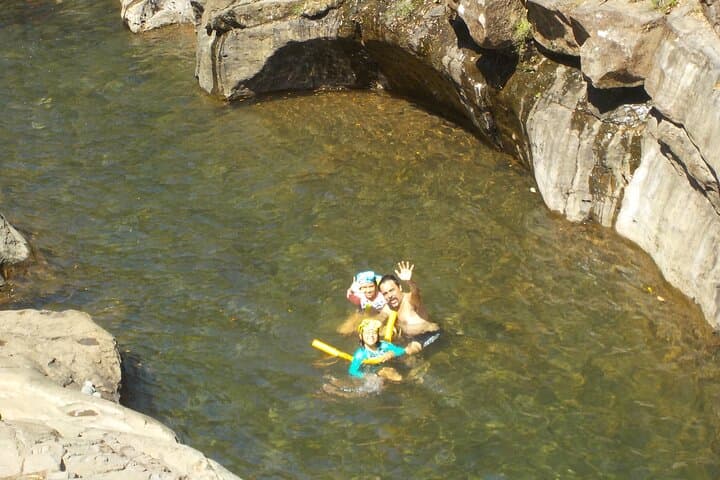
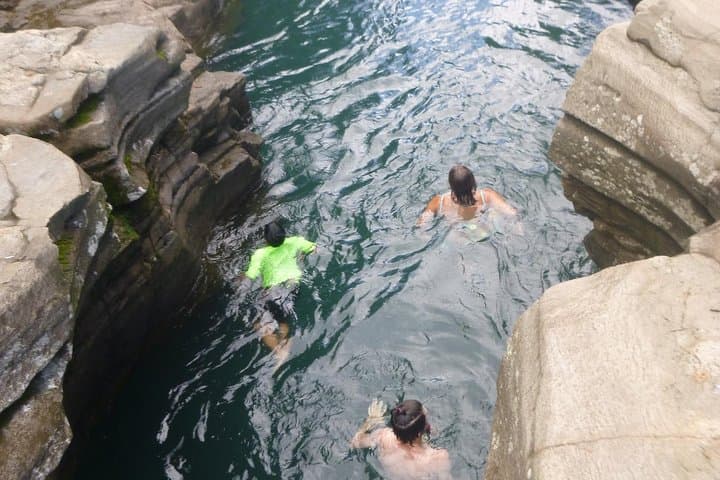
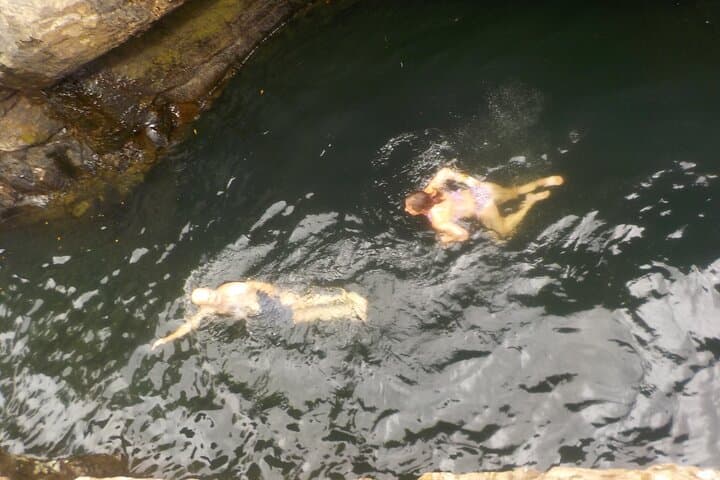
You arrive to the canyon to the steady sound of river water cutting through rock — the current appears calm until you step close and feel its pull. Sun heats broad slabs of volcanic stone; the pools flash aquamarine where deeper channels shelter cool water. Visitors cluster on ledges, testing jumps, while a bilingual guide points out the pale ridges where ancient shells are visible in the cliff face.
Verified experiences and guided adventures in the surrounding area.
Operated by Boquete Outdoor Adventures · Gualaca, Chiriquí
You arrive to the canyon to the steady sound of river water cutting through rock — the current appears calm until you step close and feel its pull. Sun heats broad slabs of volcanic stone; the pools flash aquamarine where deeper channels shelter cool water. Visitors cluster on ledges, testing jumps, while a bilingual guide points out the pale ridges where ancient shells are visible in the cliff face.
The Cangilones formed as the Isthmus of Panama rose from the ocean, compressing marine sediments into layered rock and exposing fossilized shells at unusual altitudes. Locals in Gualaca have long used the river corridors for recreation and as a freshwater source; the canyon sits within a broader agricultural landscape of coffee and cattle that gives the valley its lived-in feel.
Geology shows an interplay of hard volcanic beds and softer marine deposits worn into narrow chutes — the constrictions create deep pools and short cascades that make swimming and controlled jumps possible but situationally risky.
Practical guidance: tours typically last about four hours and include private transport and a bilingual guide; plan for rock-to-water transitions and variable footing. Wear closed-toe water shoes with good grip, bring reef-safe sunscreen, and carry a dry bag for electronics. Expect some mild scrambling and up to 4 meters (12 ft) of optional jumps — guides will advise on safety and water depth.
Timing matters: visit during the drier months for lower currents and clearer water; arrive early to avoid crowds and hot midday rock. Leave no trace: pack out trash and avoid stepping on visible fossils to preserve this exposed slice of Panama’s geological past.
moderate.
3–4 hours.
Moderately fit — able to handle short rock scrambles, repeated stair-like steps, and up to 4-meter jumps; basic swimming ability recommended.
The excursion is approximately four hours and typically includes private transportation, a bilingual guide, and photos as noted in the tour inclusions.
Jumps (up to about 4 meters/12 feet) are optional; guides assess water depth and conditions and will advise which spots are safe — you can choose to sit out.
Basic swimming ability is recommended because the activity includes entering deep pools and river crossings; non-swimmers should discuss options with the guide beforehand.
The drier months (roughly December–April) offer clearer water and lower current; the rainy season can raise water levels and increase flow, affecting swimming and jumping.
The canyon exposes marine sediments uplifted during the formation of the Isthmus of Panama; visible shell fossils are remnants of an ancient seabed now high above the ocean.
Visitors are encouraged to use reef-safe products, avoid disturbing fossil exposures, and pack out all waste — the canyon’s pools are sensitive to pollutants and erosion.
Boquete Outdoor Adventures operates guided outdoor trips and adventures with an emphasis on safety, stewardship, and memorable experiences.
You arrive to the canyon to the steady sound of river water cutting through rock — the current appears calm until you step close and feel its pull. Sun heats broad slabs of volcanic stone; the pools flash aquamarine where deeper channels shelter cool water. Visitors cluster on ledges, testing jumps, while a bilingual guide points out the pale ridges where ancient shells are visible in the cliff face.
You arrive to the canyon to the steady sound of river water cutting through rock — the current appears calm until you step close and feel its pull. Sun heats broad slabs of volcanic stone; the pools flash aquamarine where deeper channels shelter cool water. Visitors cluster on ledges, testing jumps, while a bilingual guide points out the pale ridges where ancient shells are visible in the cliff face.
The Cangilones formed as the Isthmus of Panama rose from the ocean, compressing marine sediments into layered rock and exposing fossilized shells at unusual altitudes. Locals in Gualaca have long used the river corridors for recreation and as a freshwater source; the canyon sits within a broader agricultural landscape of coffee and cattle that gives the valley its lived-in feel.
Geology shows an interplay of hard volcanic beds and softer marine deposits worn into narrow chutes — the constrictions create deep pools and short cascades that make swimming and controlled jumps possible but situationally risky.
Practical guidance: tours typically last about four hours and include private transport and a bilingual guide; plan for rock-to-water transitions and variable footing. Wear closed-toe water shoes with good grip, bring reef-safe sunscreen, and carry a dry bag for electronics. Expect some mild scrambling and up to 4 meters (12 ft) of optional jumps — guides will advise on safety and water depth.
Timing matters: visit during the drier months for lower currents and clearer water; arrive early to avoid crowds and hot midday rock. Leave no trace: pack out trash and avoid stepping on visible fossils to preserve this exposed slice of Panama’s geological past.