THE ADVENTURE COLLECTIVE® · Independent discovery and booking for outdoor travel

Walk Savannah by lantern light and hear the city's restless past—from wartime loss to local legends—on this 90-minute candlelit ghost tour. Expect a storyteller's blend of documented history and eerie anecdotes while passing moss-draped oaks and colonial squares.
Walk Savannah by lantern light and hear the city's restless past—from wartime loss to local legends—on this 90-minute candlelit ghost tour. Expect a storyteller's blend of documented history and eerie anecdotes while passing moss-draped oaks and colonial squares.
The streetlamps are low and the air has the damp hush of river cities as you step onto cobblestone beside a white-columned house on Chippewa Square. Lantern light leads a small crowd through oak-lined streets, Spanish moss swaying above like slow-moving curtains. Voices drop; the guide sets a scene with a single story, and the city’s past—wars, epidemics, executions, and unexplained losses—feels close enough to touch.
Verified experiences and guided adventures in the surrounding area.
Operated by Savannah History & Haunts · Savannah, Georgia
The streetlamps are low and the air has the damp hush of river cities as you step onto cobblestone beside a white-columned house on Chippewa Square. Lantern light leads a small crowd through oak-lined streets, Spanish moss swaying above like slow-moving curtains. Voices drop; the guide sets a scene with a single story, and the city’s past—wars, epidemics, executions, and unexplained losses—feels close enough to touch.
Savannah was founded in 1733 and its grid of public squares has preserved colonial and antebellum layouts. Many of the tour’s tales focus on specific places: taverns that once doubled as infirmaries, city squares that witnessed duels and public punishments, and Colonial Park Cemetery where gravestones keep date and rumor alike. The city’s geology—low coastal plains and tidal creeks—has shaped its storms and floods, which often appear in accounts of past calamities.
Expect a 90-minute outdoor walk on mostly flat but uneven surfaces: brick, flagstone and occasional cobbles. Guides mix documented history with local legend; the aim is storytelling as civic memory, not paranormal proof. Practical notes: bring water and a charged phone, wear shoes that handle uneven blocks, and know that the walk moves at a steady evening pace.
Tips for timing: summer evenings are sultry and mosquito-prone; spring and fall offer the most comfortable temperatures. Because the route passes through active public squares and ends at Colonial Park Cemetery, be respectful of memorials and residents. The tour balances atmosphere with accessible urban history—ideal for travelers who want the city’s shadowed stories alongside place-based context.
easy.
1.5 hours.
Able to stand and walk 90 minutes over uneven, urban surfaces; comfortable on cobbles and short stair steps.
The tour is 90 minutes and meets on the sidewalk facing Chippewa Square at 17 W. McDonough Street (white house with columns labeled Ralston College).
The operator lists wheelchair accessibility, but surfaces include uneven cobbles—contact the operator ahead for specific accommodation needs.
Tours operate in all but severe weather; you’ll be notified of cancellations and should bring appropriate rain gear if light showers are expected.
Children must be accompanied by an adult; gratuities are not included and are appreciated if you enjoyed the guide.
Savannah’s city plan dates to 1733 and its historic squares were designed as communal nodes; many legends tie directly to documented events from the colonial and Civil War eras.
Stay on sidewalks and marked pathways, avoid touching monuments, and leave no trace in cemetery and park areas to protect fragile historic fabric.
Savannah History & Haunts operates guided outdoor trips and adventures with an emphasis on safety, stewardship, and memorable experiences.
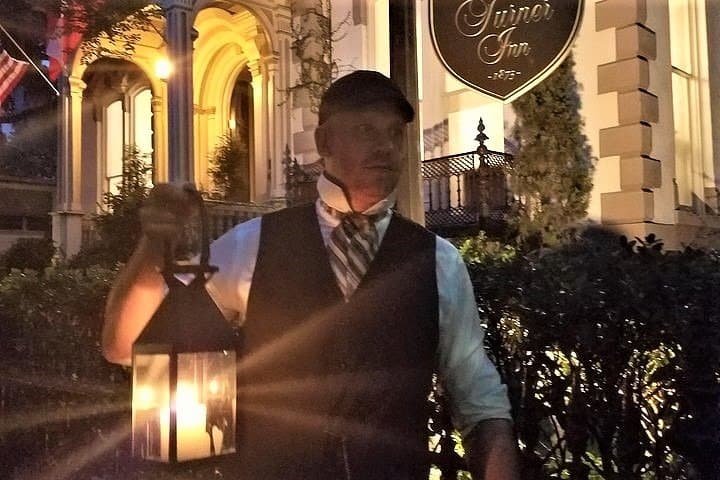
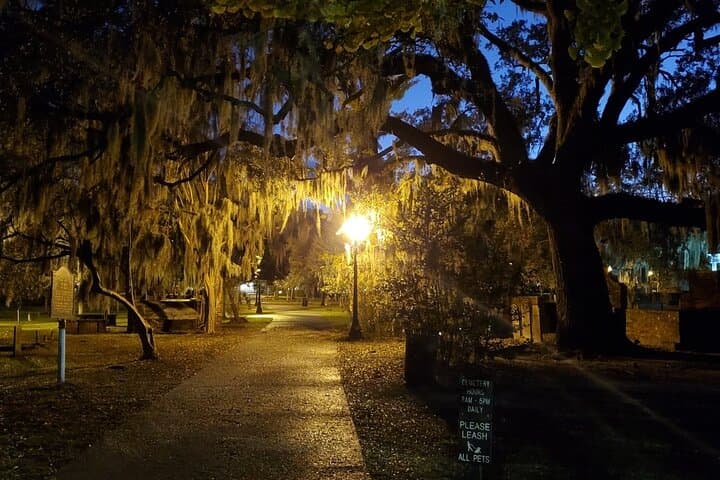
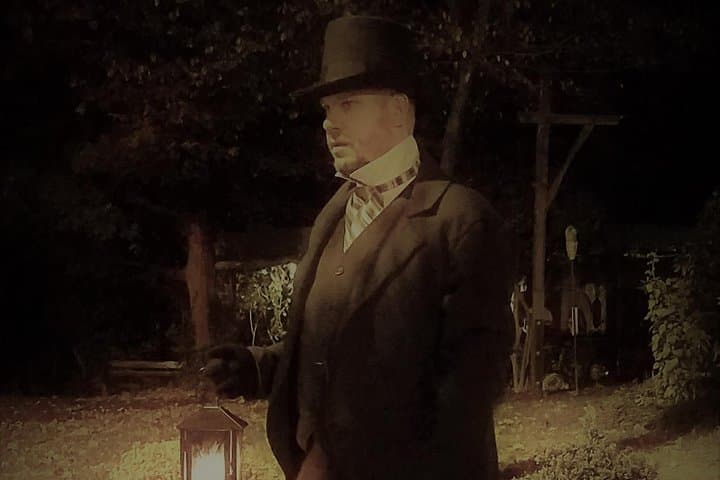
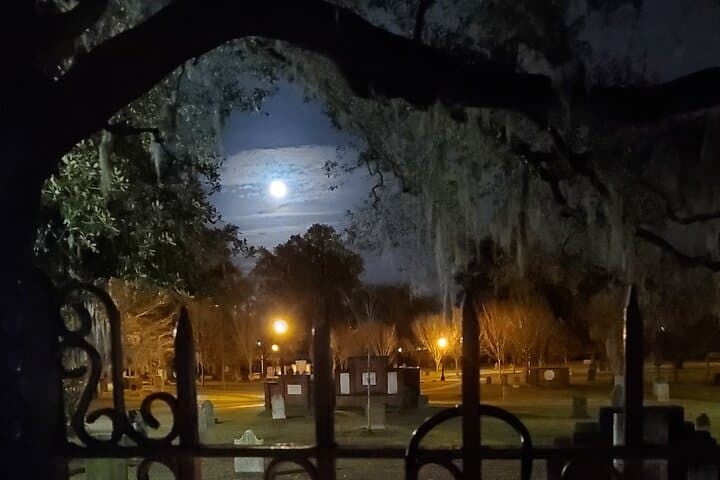
The streetlamps are low and the air has the damp hush of river cities as you step onto cobblestone beside a white-columned house on Chippewa Square. Lantern light leads a small crowd through oak-lined streets, Spanish moss swaying above like slow-moving curtains. Voices drop; the guide sets a scene with a single story, and the city’s past—wars, epidemics, executions, and unexplained losses—feels close enough to touch.
The streetlamps are low and the air has the damp hush of river cities as you step onto cobblestone beside a white-columned house on Chippewa Square. Lantern light leads a small crowd through oak-lined streets, Spanish moss swaying above like slow-moving curtains. Voices drop; the guide sets a scene with a single story, and the city’s past—wars, epidemics, executions, and unexplained losses—feels close enough to touch.
Savannah was founded in 1733 and its grid of public squares has preserved colonial and antebellum layouts. Many of the tour’s tales focus on specific places: taverns that once doubled as infirmaries, city squares that witnessed duels and public punishments, and Colonial Park Cemetery where gravestones keep date and rumor alike. The city’s geology—low coastal plains and tidal creeks—has shaped its storms and floods, which often appear in accounts of past calamities.
Expect a 90-minute outdoor walk on mostly flat but uneven surfaces: brick, flagstone and occasional cobbles. Guides mix documented history with local legend; the aim is storytelling as civic memory, not paranormal proof. Practical notes: bring water and a charged phone, wear shoes that handle uneven blocks, and know that the walk moves at a steady evening pace.
Tips for timing: summer evenings are sultry and mosquito-prone; spring and fall offer the most comfortable temperatures. Because the route passes through active public squares and ends at Colonial Park Cemetery, be respectful of memorials and residents. The tour balances atmosphere with accessible urban history—ideal for travelers who want the city’s shadowed stories alongside place-based context.