THE ADVENTURE COLLECTIVE® · Independent discovery and booking for outdoor travel

Spend two hours snorkeling four distinct sites off Cancún — living reefs, underwater sculptures, a shipwreck and seagrass beds where turtles feed. This guided, family-friendly tour includes kit checks, life jackets and roundtrip hotel transport for a confident, conservation-minded experience.
Spend two hours snorkeling four distinct sites off Cancún — living reefs, underwater sculptures, a shipwreck and seagrass beds where turtles feed. This guided, family-friendly tour includes kit checks, life jackets and roundtrip hotel transport for a confident, conservation-minded experience.
A small skiff slips out from the hotel-lined lagoon and, within five minutes, the shallow turquoise of Cancún gives way to the deeper blue where coral gardens drop away. Guides brief the group on the back deck, masks glinting in the sun; below, statues and a quiet shipwreck wait like a submerged neighborhood, while turtles browse the seagrass. The sea is active — fish dart like punctuation — and even first-time snorkelers move with steady confidence after a short in-shore practice.
Verified experiences and guided adventures in the surrounding area.
Operated by Stap Travel · Cancún, Quintana Roo
A small skiff slips out from the hotel-lined lagoon and, within five minutes, the shallow turquoise of Cancún gives way to the deeper blue where coral gardens drop away. Guides brief the group on the back deck, masks glinting in the sun; below, statues and a quiet shipwreck wait like a submerged neighborhood, while turtles browse the seagrass. The sea is active — fish dart like punctuation — and even first-time snorkelers move with steady confidence after a short in-shore practice.
The Underwater Museum (MUSA), installed by sculptor Jason deCaires Taylor in the late 2000s, was born out of conservation and curiosity: artificial reef sculptures encourage coral growth while easing pressure on natural formations. Geologically, the reef is a living limestone platform shaped by coral growth and ocean currents; seagrass beds host turtles and support nearby fisheries. Local guides, many from Cancún’s Hotel Zone, combine knowledge of currents, biology, and respectful reef etiquette to keep encounters safe and sustainable.
Practical notes: the tour covers four snorkeling spots — reef, MUSA sculptures, seagrass, and a shipwreck — with about two hours in the water total. Operators supply life jackets, masks (including prescription options), bottled water, towels and lockers; there’s a small reef-conservation fee at departure. Morning departures usually mean calmer seas and clearer visibility; briefings and supervised practice make this a solid option for families and nervous swimmers. Wear reef-safe sunscreen, secure loose gear, and keep movements slow around corals and turtles — the reef responds best to patient visitors.
easy.
2 hours.
Comfort with basic snorkeling and being in the water for multiple short swims; suitable for children and non-expert swimmers with guide support
No — the tour is designed for all fitness levels; life jackets and in-water guidance help non-swimmers participate safely.
Operators report a high sighting rate (commonly claimed 90%+), but sightings can’t be guaranteed — mornings and calm seas improve chances.
Yes — the wreck is explored from the surface; guides mark safe zones and discourage touching or entering the structure.
Yes — round-trip transport from Cancún’s Hotel Zone is typically included; confirm pickup point and time when booking.
The Underwater Museum (MUSA) began in 2009 as an art-meets-conservation project by Jason deCaires Taylor, creating sculptures to become artificial reef habitat.
Tours collect a small reef-conservation fee and emphasize no-touch rules; visitors are encouraged to use reef-safe sunscreen and avoid disturbing seagrass and coral.
Stap Travel operates guided outdoor trips and adventures with an emphasis on safety, stewardship, and memorable experiences.

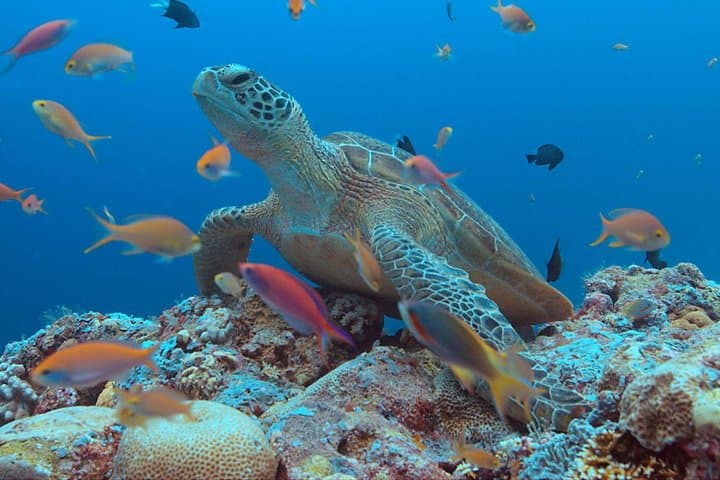
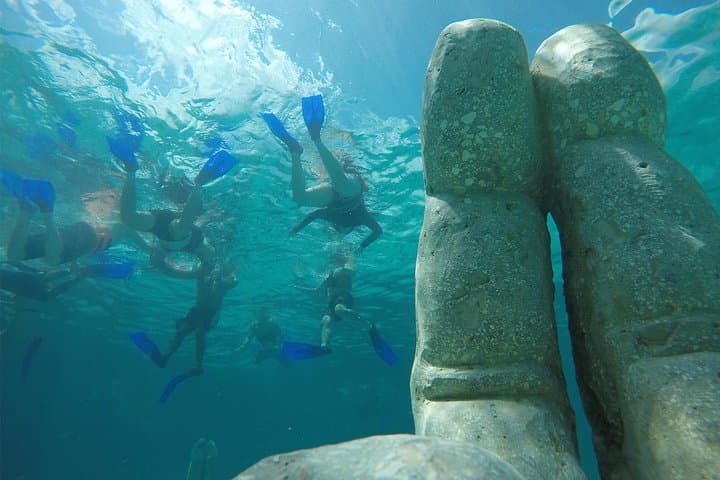

A small skiff slips out from the hotel-lined lagoon and, within five minutes, the shallow turquoise of Cancún gives way to the deeper blue where coral gardens drop away. Guides brief the group on the back deck, masks glinting in the sun; below, statues and a quiet shipwreck wait like a submerged neighborhood, while turtles browse the seagrass. The sea is active — fish dart like punctuation — and even first-time snorkelers move with steady confidence after a short in-shore practice.
A small skiff slips out from the hotel-lined lagoon and, within five minutes, the shallow turquoise of Cancún gives way to the deeper blue where coral gardens drop away. Guides brief the group on the back deck, masks glinting in the sun; below, statues and a quiet shipwreck wait like a submerged neighborhood, while turtles browse the seagrass. The sea is active — fish dart like punctuation — and even first-time snorkelers move with steady confidence after a short in-shore practice.
The Underwater Museum (MUSA), installed by sculptor Jason deCaires Taylor in the late 2000s, was born out of conservation and curiosity: artificial reef sculptures encourage coral growth while easing pressure on natural formations. Geologically, the reef is a living limestone platform shaped by coral growth and ocean currents; seagrass beds host turtles and support nearby fisheries. Local guides, many from Cancún’s Hotel Zone, combine knowledge of currents, biology, and respectful reef etiquette to keep encounters safe and sustainable.
Practical notes: the tour covers four snorkeling spots — reef, MUSA sculptures, seagrass, and a shipwreck — with about two hours in the water total. Operators supply life jackets, masks (including prescription options), bottled water, towels and lockers; there’s a small reef-conservation fee at departure. Morning departures usually mean calmer seas and clearer visibility; briefings and supervised practice make this a solid option for families and nervous swimmers. Wear reef-safe sunscreen, secure loose gear, and keep movements slow around corals and turtles — the reef responds best to patient visitors.