THE ADVENTURE COLLECTIVE® · Independent discovery and booking for outdoor travel

Walk the same sands where Canadian troops landed on D‑Day and visit Pegasus Bridge, Beny‑sur‑Mer Cemetery and the Juno Beach Centre. This full‑day guided tour pairs battlefield geography with personal stories and museum context.
Walk the same sands where Canadian troops landed on D‑Day and visit Pegasus Bridge, Beny‑sur‑Mer Cemetery and the Juno Beach Centre. This full‑day guided tour pairs battlefield geography with personal stories and museum context.
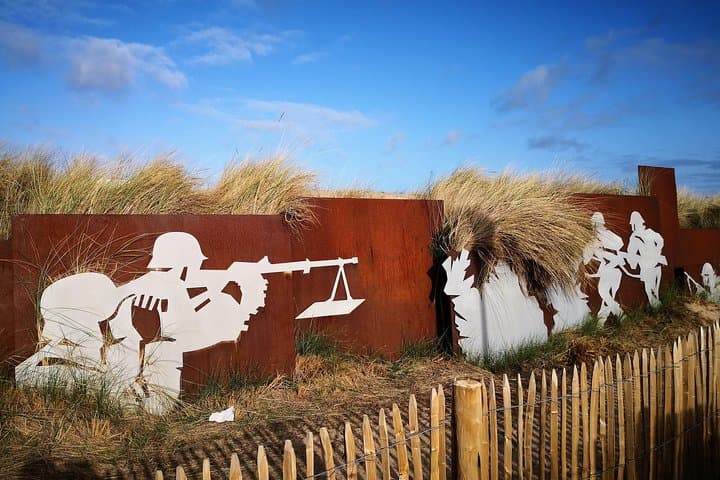
The wind off the English Channel pushes salt and memory across the sand as you stand where young Canadians first stepped ashore on 6 June 1944. Waves lap at footprints that history refuses to forget; the low-rise beach stretches east and west, and a short drive inland brings you to the low, taut shape of Pegasus Bridge and quiet rows of white headstones under maples.
Verified experiences and guided adventures in the surrounding area.
Operated by ADRIAN ROADS · Courseulles-sur-Mer, Calvados
The wind off the English Channel pushes salt and memory across the sand as you stand where young Canadians first stepped ashore on 6 June 1944. Waves lap at footprints that history refuses to forget; the low-rise beach stretches east and west, and a short drive inland brings you to the low, taut shape of Pegasus Bridge and quiet rows of white headstones under maples.
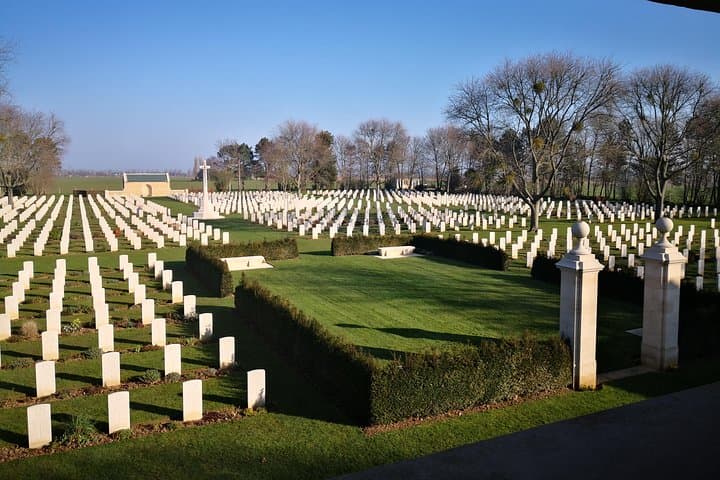
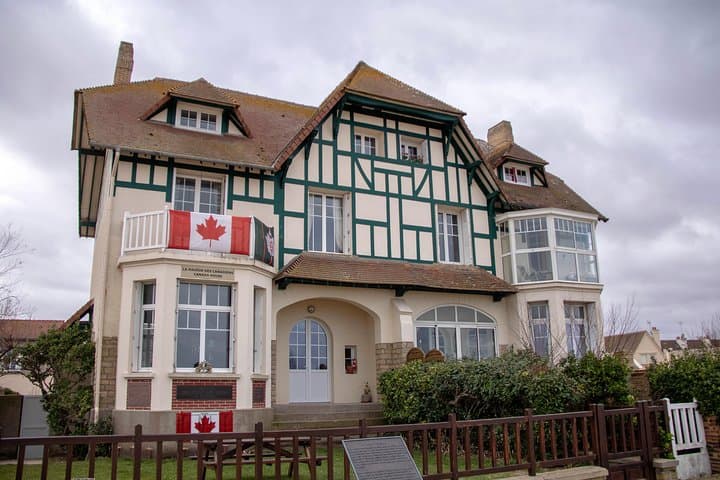
This single-day circuit threads contemporary Normandy with wartime geography and lived stories. You’ll visit Pegasus Bridge — the strategic bascule crossing taken by glider troops in the opening minutes of the invasion — then move to the Bény‑sur‑Mer Canadian War Cemetery where the Commonwealth War Graves Commission maintains immaculate grounds. On Juno Beach you can trace the line of the tide and picture the landing craft, while the Juno Beach Centre provides artifacts, film and Canadian context from pre-war society to campaigns across Europe.
Geology here is straightforward: wide tidal flats of sand and shingle open to the Channel, backed by low limestone and cultivated fields that afforded both approach and concealment in 1944. Villages like Courseulles and Bernières show a Normandy that repaired itself and keeps memory alive through small museums and guarded monuments.
Practicalities: this is a long, guided day tour (13–14 hours) with coach transport and walking at memorial sites. Wear sturdy shoes for sand and damp grass, bring layered waterproofs and sun protection, and plan for limited free time at each stop. Be prepared to walk respectfully through cemeteries and small exhibits; guided narration will make the facts vivid while leaving space to reflect.
easy.
13–14 hours.
Suitable for most fitness levels; involves short walks on sand and grass with long periods on a coach.
The full‑day shared tour runs about 13–14 hours and uses an air‑conditioned coach with guided commentary; walking at sites is brief and moderate.
Yes — the itinerary is rated ‘easy’ with short walks; however, there are stairs at some museum exhibits and extended coach time, so plan accordingly.
Admission to the Juno Beach Centre is included on this tour; smaller sites and cemeteries are free to visit.
Small personal bags are fine for visits; large luggage should remain on the coach. Follow guide instructions for storage and security.
Canadian forces played a decisive role on Juno Beach on D‑Day and in subsequent Normandy operations; the Juno Beach Centre preserves their stories and artefacts.
Memorial sites are maintained by the Commonwealth War Graves Commission and local authorities; visitors are asked to follow signage and leave no trace to protect graves and fragile coastal habitats.
ADRIAN ROADS operates guided outdoor trips and adventures with an emphasis on safety, stewardship, and memorable experiences.

The wind off the English Channel pushes salt and memory across the sand as you stand where young Canadians first stepped ashore on 6 June 1944. Waves lap at footprints that history refuses to forget; the low-rise beach stretches east and west, and a short drive inland brings you to the low, taut shape of Pegasus Bridge and quiet rows of white headstones under maples.
The wind off the English Channel pushes salt and memory across the sand as you stand where young Canadians first stepped ashore on 6 June 1944. Waves lap at footprints that history refuses to forget; the low-rise beach stretches east and west, and a short drive inland brings you to the low, taut shape of Pegasus Bridge and quiet rows of white headstones under maples.
This single-day circuit threads contemporary Normandy with wartime geography and lived stories. You’ll visit Pegasus Bridge — the strategic bascule crossing taken by glider troops in the opening minutes of the invasion — then move to the Bény‑sur‑Mer Canadian War Cemetery where the Commonwealth War Graves Commission maintains immaculate grounds. On Juno Beach you can trace the line of the tide and picture the landing craft, while the Juno Beach Centre provides artifacts, film and Canadian context from pre-war society to campaigns across Europe.
Geology here is straightforward: wide tidal flats of sand and shingle open to the Channel, backed by low limestone and cultivated fields that afforded both approach and concealment in 1944. Villages like Courseulles and Bernières show a Normandy that repaired itself and keeps memory alive through small museums and guarded monuments.
Practicalities: this is a long, guided day tour (13–14 hours) with coach transport and walking at memorial sites. Wear sturdy shoes for sand and damp grass, bring layered waterproofs and sun protection, and plan for limited free time at each stop. Be prepared to walk respectfully through cemeteries and small exhibits; guided narration will make the facts vivid while leaving space to reflect.