THE ADVENTURE COLLECTIVE® · Independent discovery and booking for outdoor travel

Skip the SIM card lines and activate a Canada eSIM by QR in minutes. This guide explains where coverage is strongest, how to prepare your phone, and practical tips for staying connected from city streets to remote parks.
Skip the SIM card lines and activate a Canada eSIM by QR in minutes. This guide explains where coverage is strongest, how to prepare your phone, and practical tips for staying connected from city streets to remote parks.
You step out of customs and the noise of the terminal narrows to the small, practical task of getting online — maps, tickets, a message to say you’ve arrived. Scan the QR, tap accept, and a digital profile unfurls in your phone: bars climb, blue dots settle on the map, and the trip begins.
Verified experiences and guided adventures in the surrounding area.
Operated by Xplori · Toronto, Ontario
You step out of customs and the noise of the terminal narrows to the small, practical task of getting online — maps, tickets, a message to say you’ve arrived. Scan the QR, tap accept, and a digital profile unfurls in your phone: bars climb, blue dots settle on the map, and the trip begins.
Canada’s mobile networks ride a long history of connection that started with telegraph lines and railways. Today coverage is dense in southern corridors—Ontario’s lake plain, Quebec’s St. Lawrence valley—and thins toward the boreal forest and Arctic archipelago, where mountains and distance shape signal availability. Culture here is travel-friendly; major cities offer plentiful kiosks and fast local networks, while remote parks reward preparation.
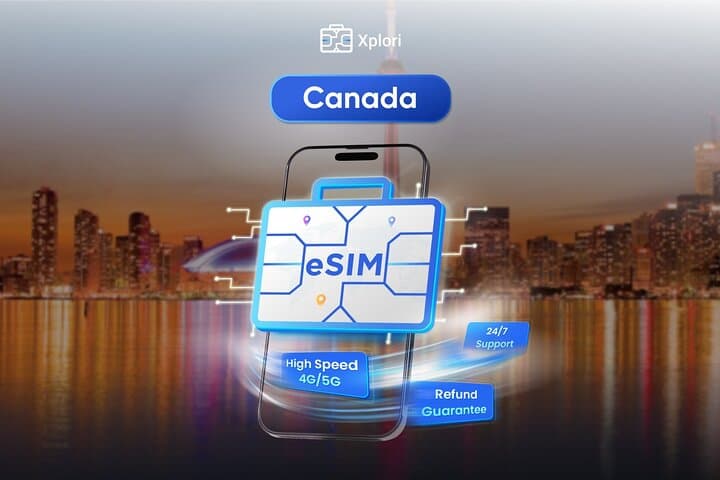
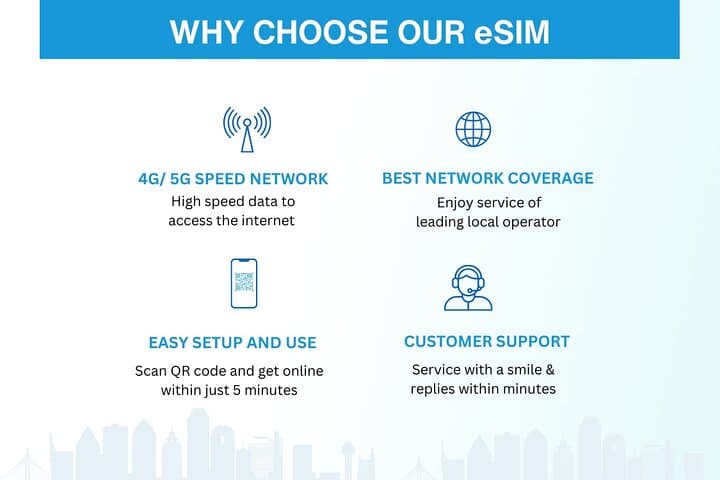
This eSIM option delivers daily-data plans for 3–30 days via a QR code emailed after purchase, letting travelers avoid airport hassles and local-language friction. Expect 4G across most populated areas and 5G where carriers have rolled it out; remote stretches may drop to 3G or no service.
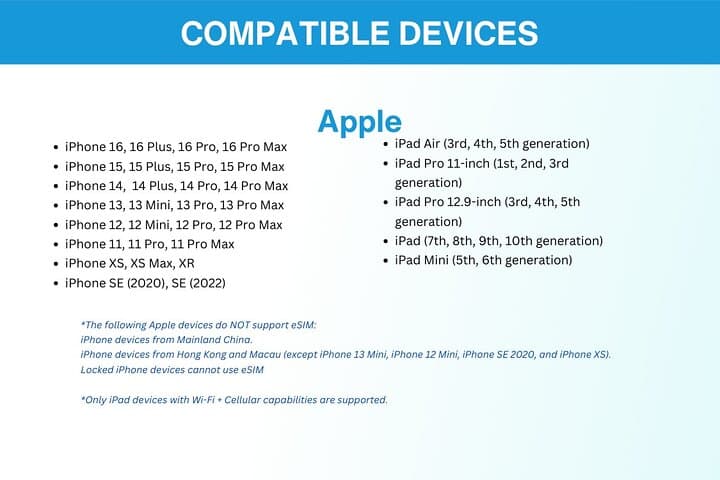
Practical steps: confirm your phone supports eSIM (recent iPhone, Pixel, Samsung models), keep the emailed QR and activation instructions offline-ready, and enable a backup—download offline maps and save important contacts. Carry a charged power bank and set aggressive battery-saving rules when you enter low-signal regions.
For multi-week routes through provinces, buy enough days for planned legs; for short city stays, the smaller bundles suffice. If activation stalls, reboot, toggle airplane mode, or contact the provider with a screenshot. A small digital purchase can turn into a major convenience: reliable navigation, local booking access, and the confidence to move quickly from urban streets to wild places.
easy.
3–30 days.
No physical fitness required; basic smartphone familiarity is sufficient
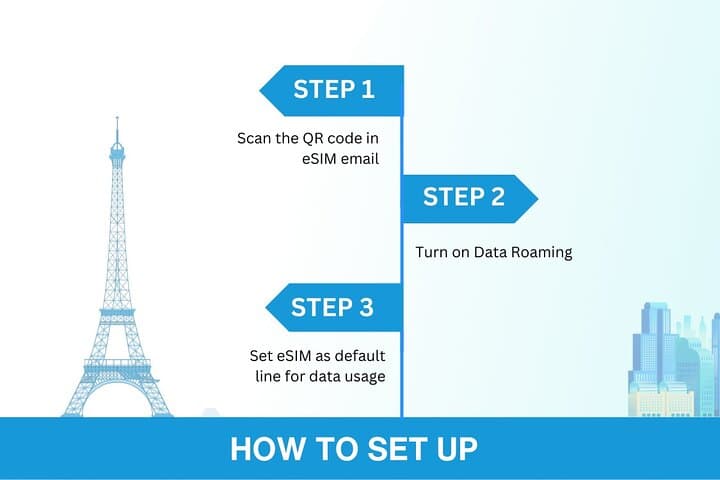
After ordering, you'll submit your email at the provider portal and receive an email with a QR code and activation instructions to install the eSIM profile.
The plan covers all provinces; expect robust 4G/5G in populated regions and reduced or no signal in remote northern areas and some parklands.
Yes—your device must be carrier-unlocked and support eSIM; check your phone settings or carrier documentation before buying.
Most modern phones allow multiple profiles; you can keep your home number active for calls and use the eSIM for data, but check dual-SIM settings before travel.
Canada’s national communications grew from telegraph and rail corridors linking coasts; contemporary mobile networks followed population and transportation routes, concentrating service along settled areas.
Minimize energy use by disabling background syncing and delete unused profiles to reduce e-waste; choose digital delivery over physical SIMs to cut plastic waste.
Xplori operates guided outdoor trips and adventures with an emphasis on safety, stewardship, and memorable experiences.
You step out of customs and the noise of the terminal narrows to the small, practical task of getting online — maps, tickets, a message to say you’ve arrived. Scan the QR, tap accept, and a digital profile unfurls in your phone: bars climb, blue dots settle on the map, and the trip begins.
You step out of customs and the noise of the terminal narrows to the small, practical task of getting online — maps, tickets, a message to say you’ve arrived. Scan the QR, tap accept, and a digital profile unfurls in your phone: bars climb, blue dots settle on the map, and the trip begins.
Canada’s mobile networks ride a long history of connection that started with telegraph lines and railways. Today coverage is dense in southern corridors—Ontario’s lake plain, Quebec’s St. Lawrence valley—and thins toward the boreal forest and Arctic archipelago, where mountains and distance shape signal availability. Culture here is travel-friendly; major cities offer plentiful kiosks and fast local networks, while remote parks reward preparation.
This eSIM option delivers daily-data plans for 3–30 days via a QR code emailed after purchase, letting travelers avoid airport hassles and local-language friction. Expect 4G across most populated areas and 5G where carriers have rolled it out; remote stretches may drop to 3G or no service.
Practical steps: confirm your phone supports eSIM (recent iPhone, Pixel, Samsung models), keep the emailed QR and activation instructions offline-ready, and enable a backup—download offline maps and save important contacts. Carry a charged power bank and set aggressive battery-saving rules when you enter low-signal regions.
For multi-week routes through provinces, buy enough days for planned legs; for short city stays, the smaller bundles suffice. If activation stalls, reboot, toggle airplane mode, or contact the provider with a screenshot. A small digital purchase can turn into a major convenience: reliable navigation, local booking access, and the confidence to move quickly from urban streets to wild places.