THE ADVENTURE COLLECTIVE® · Independent discovery and booking for outdoor travel

Three days on the Mekong that mix gentle village cycling, a bird-rich cajuput forest, and the famous Cai Rang floating market. This practical guide tells you what to expect, how to prepare, and where the real moments happen.
Three days on the Mekong that mix gentle village cycling, a bird-rich cajuput forest, and the famous Cai Rang floating market. This practical guide tells you what to expect, how to prepare, and where the real moments happen.
You step off the minivan and the air changes—warm, humid, scented with wet earth and mango. Low, wooden houses sit beside the water and a ribbon of road runs flat between rice paddies and fruit gardens. The first afternoon is spent on a slow bike loop through villages where laundry skims the canal and children sprint into the river; it’s quiet, immediate, and governed by tide and harvest.
Verified experiences and guided adventures in the surrounding area.
Operated by Mekong Realism · Can Tho, Can Tho
You step off the minivan and the air changes—warm, humid, scented with wet earth and mango. Low, wooden houses sit beside the water and a ribbon of road runs flat between rice paddies and fruit gardens. The first afternoon is spent on a slow bike loop through villages where laundry skims the canal and children sprint into the river; it’s quiet, immediate, and governed by tide and harvest.
This three-day itinerary threads together living Mekong culture: family-run rice noodle workshops that preserve techniques passed down generations, the vast wetland ecology of Tra Su Cajuput forest where raised boardwalks reveal storks and kingfishers, and the chaotic early-morning commerce of Cai Rang floating market—boats piled with pineapples and watermelon, vendors swapping prices as the sun lightens the sky.
Geologically the delta is young—alluvial plain shaped by sediment from the Mekong—so expect flat terrain, seasonal flooding, and rich black soil that feeds the orchards you’ll cycle past. Culturally, Can Tho sits at the crossroads of Khmer and Vietnamese riverine traditions; the trip emphasizes local craft, food, and small-scale farming.
Practical guidance: pack a light rain jacket and insect repellent, bring a secure dry bag for phones, and plan for early mornings to catch markets and bird activity. Cycling distances are modest (roughly 10–15 km of gentle village roads), and most transfers are by boat or short drives. Hydrate often—shade is limited on the delta roads—and carry cash for roadside snacks and small purchases. With minimal elevation gain and comfortable accommodations (homestay or Can Tho hotel), this route rewards travelers who want slow, sensory access to Mekong life.
easy.
3 days (approx. 72 hours).
Light activity: casual cycling and short, flat walks; suitable for most travelers in reasonable health.
The tour is rated easy—cycling is on flat rural roads for short stretches and transfers are by vehicle or boat; basic mobility and comfort on a bike are sufficient.
Yes; breakfasts, lunches, one dinner, fruits and drinks are included, and you stay two nights at an eco-homestay with pool or a luxury Can Tho hotel depending on booking options.
Dry season (December–April) offers clearer skies and easier cycling, while the wet season brings higher water levels that make some waterways more navigable and lush scenery.
Yes—local operators provide stable sampans and life vests; basic precautions like dry bags and supervised transfers keep boat segments low-risk.
Can Tho developed as a river trading hub in the Mekong Delta; its markets and small workshops have long connected inland producers with maritime routes.
Tra Su and surrounding wetlands are important bird habitats; visitors should stick to boardwalks and avoid feeding wildlife to minimize disturbance.
Mekong Realism operates guided outdoor trips and adventures with an emphasis on safety, stewardship, and memorable experiences.
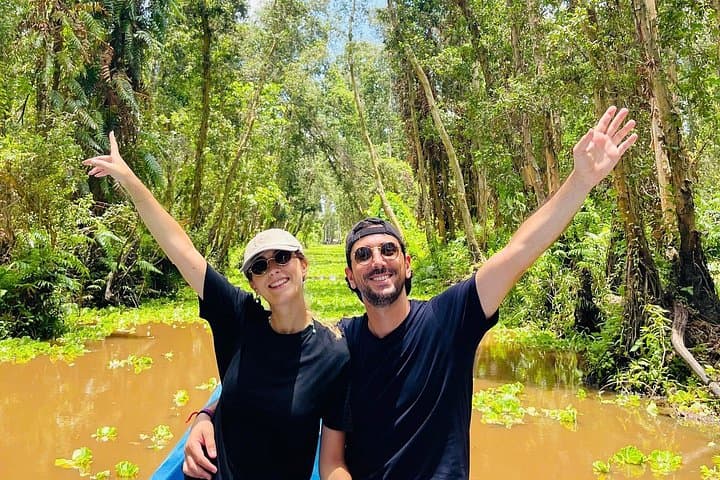
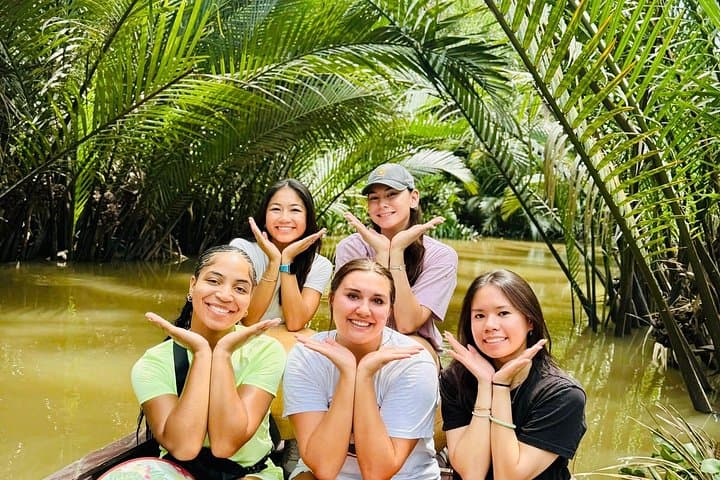
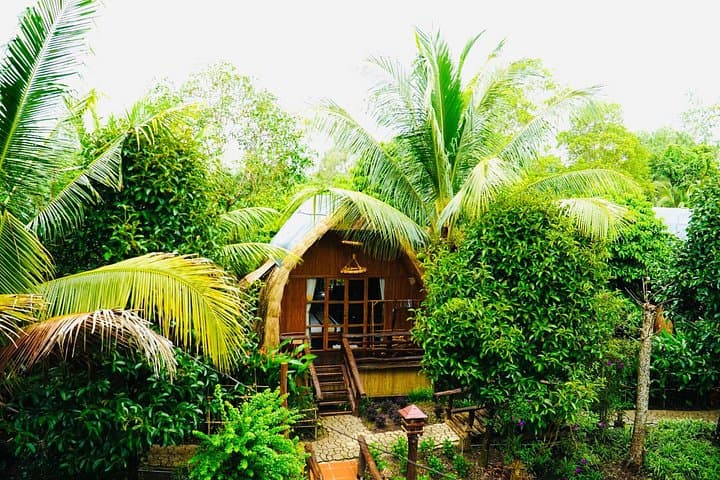
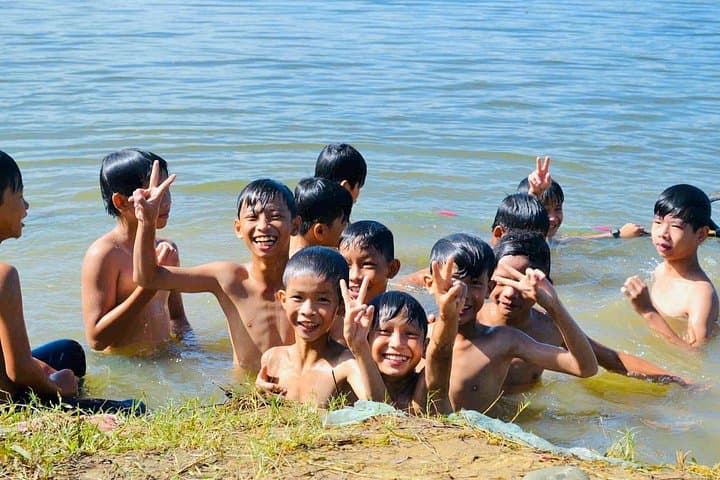
You step off the minivan and the air changes—warm, humid, scented with wet earth and mango. Low, wooden houses sit beside the water and a ribbon of road runs flat between rice paddies and fruit gardens. The first afternoon is spent on a slow bike loop through villages where laundry skims the canal and children sprint into the river; it’s quiet, immediate, and governed by tide and harvest.
You step off the minivan and the air changes—warm, humid, scented with wet earth and mango. Low, wooden houses sit beside the water and a ribbon of road runs flat between rice paddies and fruit gardens. The first afternoon is spent on a slow bike loop through villages where laundry skims the canal and children sprint into the river; it’s quiet, immediate, and governed by tide and harvest.
This three-day itinerary threads together living Mekong culture: family-run rice noodle workshops that preserve techniques passed down generations, the vast wetland ecology of Tra Su Cajuput forest where raised boardwalks reveal storks and kingfishers, and the chaotic early-morning commerce of Cai Rang floating market—boats piled with pineapples and watermelon, vendors swapping prices as the sun lightens the sky.
Geologically the delta is young—alluvial plain shaped by sediment from the Mekong—so expect flat terrain, seasonal flooding, and rich black soil that feeds the orchards you’ll cycle past. Culturally, Can Tho sits at the crossroads of Khmer and Vietnamese riverine traditions; the trip emphasizes local craft, food, and small-scale farming.
Practical guidance: pack a light rain jacket and insect repellent, bring a secure dry bag for phones, and plan for early mornings to catch markets and bird activity. Cycling distances are modest (roughly 10–15 km of gentle village roads), and most transfers are by boat or short drives. Hydrate often—shade is limited on the delta roads—and carry cash for roadside snacks and small purchases. With minimal elevation gain and comfortable accommodations (homestay or Can Tho hotel), this route rewards travelers who want slow, sensory access to Mekong life.