THE ADVENTURE COLLECTIVE® · Independent discovery and booking for outdoor travel

Drive a Can-Am Maverick X3 from Baja desert trails onto a white-sand beach north of Cabo, with stops for tequila tasting and seasonal gray whale viewing. Two-hour shore excursion ideal for first-time off-roaders and cruise passengers.
Drive a Can-Am Maverick X3 from Baja desert trails onto a white-sand beach north of Cabo, with stops for tequila tasting and seasonal gray whale viewing. Two-hour shore excursion ideal for first-time off-roaders and cruise passengers.
The engine vibrates under the seat as the convoy peels away from the pier and into Baja’s sun-baked silence. Sand rises like exhaled breath from the Can-Am Maverick X3 tires; scrubby cacti lean into the wind and the ocean beyond flashes an unnatural blue. Guides call cadence and direction; riders answer with a steady throttle and the click of cameras as the desert gives way to white sand and the Pacific.
Verified experiences and guided adventures in the surrounding area.
Operated by Tours Mexico · Cabo San Lucas, Baja California Sur
The engine vibrates under the seat as the convoy peels away from the pier and into Baja’s sun-baked silence. Sand rises like exhaled breath from the Can-Am Maverick X3 tires; scrubby cacti lean into the wind and the ocean beyond flashes an unnatural blue. Guides call cadence and direction; riders answer with a steady throttle and the click of cameras as the desert gives way to white sand and the Pacific.
This corridor north of Cabo San Lucas sits on the eastern flank of the Baja California peninsula, a place shaped by faulted rock and recent volcanic flows. The landscape reads like a primer on arid coastal geology—gravel washes, rocky mesas, and dunes that migrate with seasonal winds. Culturally, the route traces patterns of ranching, fishing and modern tourism; local guides often mix natural history with stories of early coastal communities and tequila-making traditions introduced centuries ago.
Expect two hours of active driving, frequent stops for photos and short interpretive talks. Migrino Beach is an important shoreline for migrating gray whales between January and March; from the dunes the animals will sometimes surface and breach, daring you to look away. The guides provide helmets, goggles and basic safety briefings; passengers should be able to climb in and out of the UTV and follow instructions.
Practical guidance: go early to avoid peak heat, bring layered sun protection and at least 1L water, and wear closed-toe shoes with good traction. If whale season is your aim, schedule between January and March and keep expectations flexible—marine wildlife is never guaranteed. This is an accessible, high-adrenaline way to feel the peninsula’s geology and coastline in a single afternoon.
moderate.
2 hours.
Moderate—participants should be able to climb into a UTV, handle bumpy terrain and tolerate short walks over sand
Most operators require drivers to be at least 18 and present a valid photo ID; check the vendor’s rules for license requirements.
This family-friendly excursion often permits children as passengers, but minimum age and height limits vary—confirm when booking.
No—whale sightings depend on season and animal movements; January–March offers the highest likelihood but never a certainty.
Yes—pickup and drop-off from the cruise dock are included for cruise ship passengers as noted in the itinerary.
The Baja peninsula’s coastal corridors were historically used by ranching and fishing communities; modern off-road routes often follow old access tracks created for those industries.
Respect dune vegetation and stay on designated tracks—coastal habitat recovers slowly from tire ruts, and whale-viewing from shore should maintain distance to avoid disturbance.
Tours Mexico operates guided outdoor trips and adventures with an emphasis on safety, stewardship, and memorable experiences.
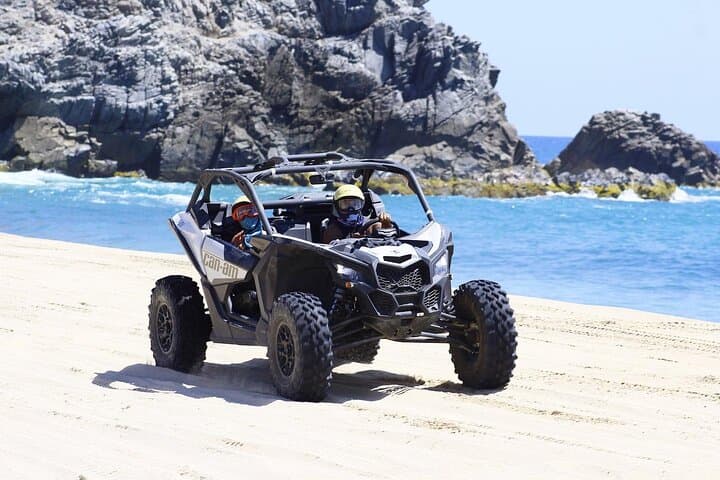


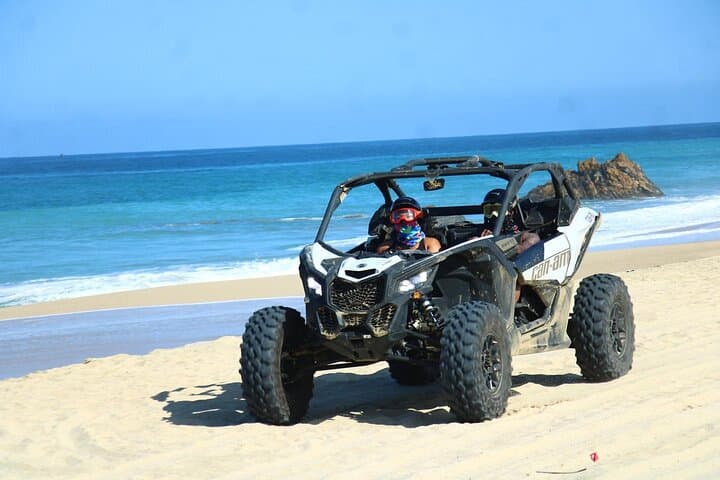
The engine vibrates under the seat as the convoy peels away from the pier and into Baja’s sun-baked silence. Sand rises like exhaled breath from the Can-Am Maverick X3 tires; scrubby cacti lean into the wind and the ocean beyond flashes an unnatural blue. Guides call cadence and direction; riders answer with a steady throttle and the click of cameras as the desert gives way to white sand and the Pacific.
The engine vibrates under the seat as the convoy peels away from the pier and into Baja’s sun-baked silence. Sand rises like exhaled breath from the Can-Am Maverick X3 tires; scrubby cacti lean into the wind and the ocean beyond flashes an unnatural blue. Guides call cadence and direction; riders answer with a steady throttle and the click of cameras as the desert gives way to white sand and the Pacific.
This corridor north of Cabo San Lucas sits on the eastern flank of the Baja California peninsula, a place shaped by faulted rock and recent volcanic flows. The landscape reads like a primer on arid coastal geology—gravel washes, rocky mesas, and dunes that migrate with seasonal winds. Culturally, the route traces patterns of ranching, fishing and modern tourism; local guides often mix natural history with stories of early coastal communities and tequila-making traditions introduced centuries ago.
Expect two hours of active driving, frequent stops for photos and short interpretive talks. Migrino Beach is an important shoreline for migrating gray whales between January and March; from the dunes the animals will sometimes surface and breach, daring you to look away. The guides provide helmets, goggles and basic safety briefings; passengers should be able to climb in and out of the UTV and follow instructions.
Practical guidance: go early to avoid peak heat, bring layered sun protection and at least 1L water, and wear closed-toe shoes with good traction. If whale season is your aim, schedule between January and March and keep expectations flexible—marine wildlife is never guaranteed. This is an accessible, high-adrenaline way to feel the peninsula’s geology and coastline in a single afternoon.