THE ADVENTURE COLLECTIVE® · Independent discovery and booking for outdoor travel

Walk a restored, plank-lined path carved into 100-meter limestone walls and cross the dramatic Gaitanes Gorge on a 7 km one-way trek from Ardales to Álora. Expect industrial history, soaring views, and careful logistics.
Walk a restored, plank-lined path carved into 100-meter limestone walls and cross the dramatic Gaitanes Gorge on a 7 km one-way trek from Ardales to Álora. Expect industrial history, soaring views, and careful logistics.
You step onto a narrow ribbon of engineered plank suspended against vertical limestone, the gorge breathing below. Wind threads up from the Guadalhorce river; every sound — a drip, a bird, the creak of your harness — is magnified by the canyon. For three and a half hours the path insists on attention: the views demand it and the exposure exacts it.
Verified experiences and guided adventures in the surrounding area.
Operated by Naturanda Turismo Ambiental · Ardales, Andalusia
You step onto a narrow ribbon of engineered plank suspended against vertical limestone, the gorge breathing below. Wind threads up from the Guadalhorce river; every sound — a drip, a bird, the creak of your harness — is magnified by the canyon. For three and a half hours the path insists on attention: the views demand it and the exposure exacts it.
The route through the Gaitanes and Gaitanejo gorges became world-famous not for easy beauty but for bravado. Built in the early 20th century by the Chorro hydroelectric company to service the canal and dam works, the original walkway gained wider notoriety when King Alfonso XIII crossed it in 1921 — hence the name — and later when neglect turned it into what guidebooks called “the most dangerous path in Europe.” A meticulous restoration reopened a safer, fixed-walkway that threads through steep karst walls and past small hydroelectric relics, marrying industrial history with raw geology.
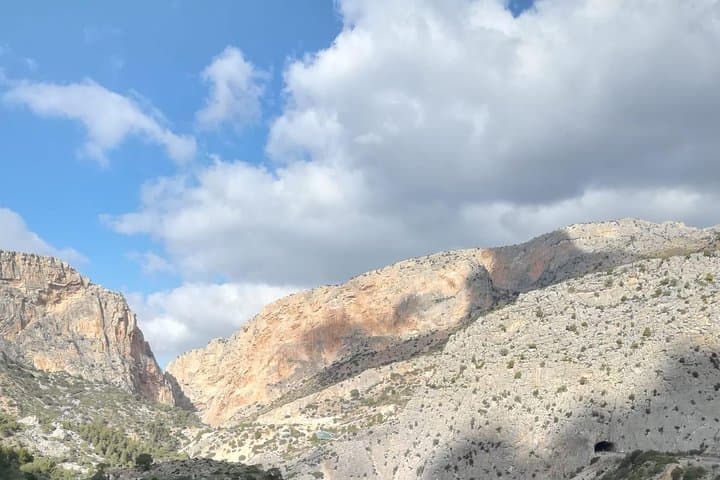
The limestone here is impatient with horizontals: sheer cliffs, pockets of scrubby pines, and narrow terraces carved by the river’s insistence. Birds wheel where the gorge narrows; swifts and raptors treat the vertical faces as highways. Villages like Ardales and Álora offer local whitewashed houses, tapas bars, and a history of shepherding and olive cultivation that shaped these slopes for centuries.
Practicalities are straightforward but strict. The standard one-way trek runs roughly 7 kilometers from Ardales toward Álora, typically taking 3–4 hours including photo stops. Most groups meet at Restaurante El Kiosko, Pantano El Chorro, then shuttle to the start; a return bus meets hikers at the Álora end. Expect an average elevation change concentrated in the approach and exit ramps — the walkway itself sits roughly 100 meters above the river at points and follows the canyon contour rather than sustained climbs.
Don’t underestimate exposure: while the trail is fixed and safe, those with vertigo or serious heart conditions should reconsider. Wear sturdy hiking shoes, carry 1–2 liters of water, and bring wind- and rainproof layers — weather in the gorge can swing quickly. Selfie sticks, tripods, pets, and smoking are not allowed; guides enforce rules to keep traffic flowing and preserve the site.
Timing matters. Visit early or late in the day to avoid the busiest hours and the harsh midday sun; spring wildflowers and autumn light make for the best photographs. Treat the walk as both a natural spectacle and an industrial artifact — a rare place where hydroelectric ambition cut a path so dramatic the landscape seems to hold its breath as you pass.
moderate.
3–4 hours.
Suitable for anyone with moderate fitness who can walk 7 km on uneven ground and manage exposure; not recommended for people with severe vertigo or heart conditions.
The standard one-way route is about 7 km and typically takes 3–4 hours including stops.
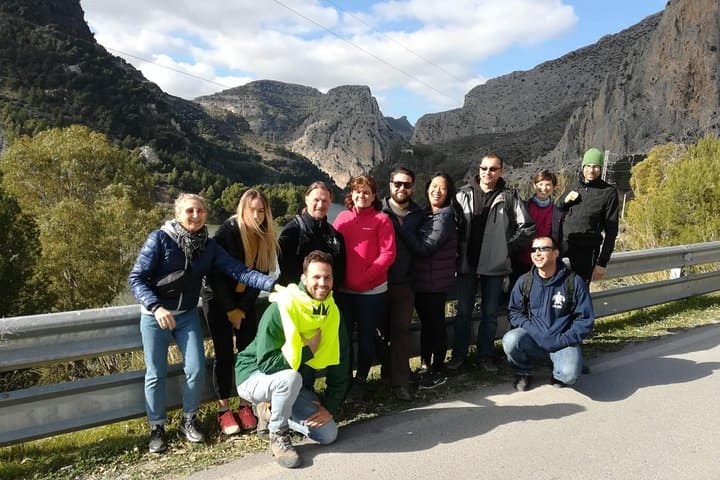
Groups usually meet at Restaurante El Kiosko (Pantano El Chorro) near Ardales; guides arrange buses to the start and a return bus from Álora at the end.
Children can do it if supervised, but the exposure may be uncomfortable; the route is not recommended for people with severe vertigo or serious heart conditions.
Tickets to Caminito are required and are included in guided tour bookings; you’ll receive meeting instructions but your guide provides entry arrangements.
Photography is allowed, but selfie sticks and tripods are prohibited to maintain safety and keep the path clear.
Layer up with a warm base and an insulated midlayer plus a waterproof shell — mornings can be cold and windy inside the gorge.
Originally built to give workers access to hydroelectric infrastructure, the walkway was named after King Alfonso XIII’s 1921 crossing and later restored to public use after decades of disrepair.
Strict visitor limits and rules (no smoking, no tripods) protect the fragile gorge; stick to designated paths and carry out any waste.
Naturanda Turismo Ambiental operates guided outdoor trips and adventures with an emphasis on safety, stewardship, and memorable experiences.
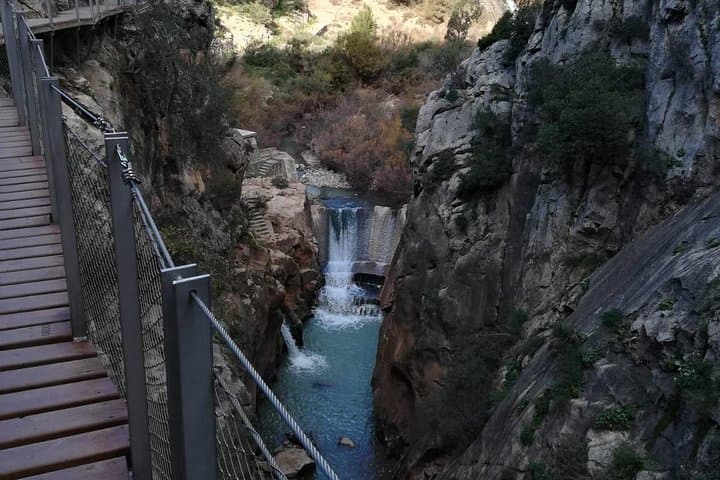
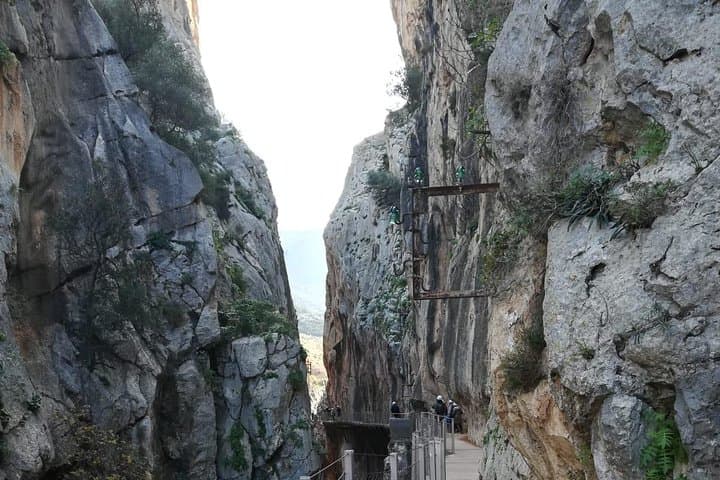
You step onto a narrow ribbon of engineered plank suspended against vertical limestone, the gorge breathing below. Wind threads up from the Guadalhorce river; every sound — a drip, a bird, the creak of your harness — is magnified by the canyon. For three and a half hours the path insists on attention: the views demand it and the exposure exacts it.
You step onto a narrow ribbon of engineered plank suspended against vertical limestone, the gorge breathing below. Wind threads up from the Guadalhorce river; every sound — a drip, a bird, the creak of your harness — is magnified by the canyon. For three and a half hours the path insists on attention: the views demand it and the exposure exacts it.
The route through the Gaitanes and Gaitanejo gorges became world-famous not for easy beauty but for bravado. Built in the early 20th century by the Chorro hydroelectric company to service the canal and dam works, the original walkway gained wider notoriety when King Alfonso XIII crossed it in 1921 — hence the name — and later when neglect turned it into what guidebooks called “the most dangerous path in Europe.” A meticulous restoration reopened a safer, fixed-walkway that threads through steep karst walls and past small hydroelectric relics, marrying industrial history with raw geology.
The limestone here is impatient with horizontals: sheer cliffs, pockets of scrubby pines, and narrow terraces carved by the river’s insistence. Birds wheel where the gorge narrows; swifts and raptors treat the vertical faces as highways. Villages like Ardales and Álora offer local whitewashed houses, tapas bars, and a history of shepherding and olive cultivation that shaped these slopes for centuries.
Practicalities are straightforward but strict. The standard one-way trek runs roughly 7 kilometers from Ardales toward Álora, typically taking 3–4 hours including photo stops. Most groups meet at Restaurante El Kiosko, Pantano El Chorro, then shuttle to the start; a return bus meets hikers at the Álora end. Expect an average elevation change concentrated in the approach and exit ramps — the walkway itself sits roughly 100 meters above the river at points and follows the canyon contour rather than sustained climbs.
Don’t underestimate exposure: while the trail is fixed and safe, those with vertigo or serious heart conditions should reconsider. Wear sturdy hiking shoes, carry 1–2 liters of water, and bring wind- and rainproof layers — weather in the gorge can swing quickly. Selfie sticks, tripods, pets, and smoking are not allowed; guides enforce rules to keep traffic flowing and preserve the site.
Timing matters. Visit early or late in the day to avoid the busiest hours and the harsh midday sun; spring wildflowers and autumn light make for the best photographs. Treat the walk as both a natural spectacle and an industrial artifact — a rare place where hydroelectric ambition cut a path so dramatic the landscape seems to hold its breath as you pass.