THE ADVENTURE COLLECTIVE® · Independent discovery and booking for outdoor travel

Walk a wooden path bolted to limestone cliffs, peer down into a river-etched gorge and trace a century of hydroelectric history. This guide gives the practical and sensory essentials for planning a visit to the Caminito del Rey.
Walk a wooden path bolted to limestone cliffs, peer down into a river-etched gorge and trace a century of hydroelectric history. This guide gives the practical and sensory essentials for planning a visit to the Caminito del Rey.
You step onto a weathered boardwalk bolted to vertical limestone, the gorge walls pressing close while the Guadalhorce river dares you from far below. Wind threads through the chasm and the path curves around sheer rock faces; every footfall clicks in a canyon carved over millennia.
Verified experiences and guided adventures in the surrounding area.
Operated by Terry Adventure · Ardales, Andalusia
You step onto a weathered boardwalk bolted to vertical limestone, the gorge walls pressing close while the Guadalhorce river dares you from far below. Wind threads through the chasm and the path curves around sheer rock faces; every footfall clicks in a canyon carved over millennia.
The Caminito del Rey began as an industrial walkway built in the early 1900s to service dams and tunnels. King Alfonso XIII famously crossed it in 1921, giving the path its royal name. The gorge itself is older: a pale, fractured limestone canyon shaped by tectonic uplift and the slow impatience of water, exposing strata and fissures that attract rock climbers and birdwatchers alike.
Culturally, the route sits at the meeting point of rural Andalusian life and industrial heritage — small towns like Ardales and Álora supplied the labor and still host the local tapas bars and olive groves you’ll pass on the drive in.
Practical guidance: the full route is roughly 7 km from entrance to exit, with about 3 km of elevated catwalks and sections up to 100 meters above the river. The tour runs about 2–3 hours; physical fitness should be moderate — expect steady walking, exposed sections, and some stairs. Helmets are provided; drones and large backpacks are prohibited. Book a timed ticket and arrive 15–30 minutes early for the safety briefing. Bring a refillable water bottle, sturdy closed-toe shoes, sun protection in summer and a windproof layer in cooler months. The fixed walkway keeps you contained, but weather cancels tours; if wind or heavy rain is forecast, expect rescheduling. Follow signs, respect closures, and leave no trace — the gorge’s wild birds and fragile flora depend on it.
moderate.
2–3 hours.
Moderate—comfortable walking ability, able to handle stairs and exposed sections for several hours.
The full trail between entrances is about 7 km; the elevated walkway sections total roughly 3 km and the guided visit typically lasts around 2–3 hours.
Yes—helmets are provided as part of the guided tour and must be worn for safety on exposed sections.
Children under 8 are not permitted; minors under 18 must be accompanied by an adult. Check operator guidelines before booking.
No—because of exposure, uneven terrain, and stairs, people with serious spinal or cardiovascular conditions are advised not to attempt the route.
Constructed in the early 1900s to facilitate dam and canal works and famously crossed by King Alfonso XIII in 1921; it reopened after major restoration in 2015.
Visitor numbers and timed entries help protect fragile cliff flora and nesting birds; stay on the boardwalk and avoid drones to minimize disturbance.
Terry Adventure operates guided outdoor trips and adventures with an emphasis on safety, stewardship, and memorable experiences.
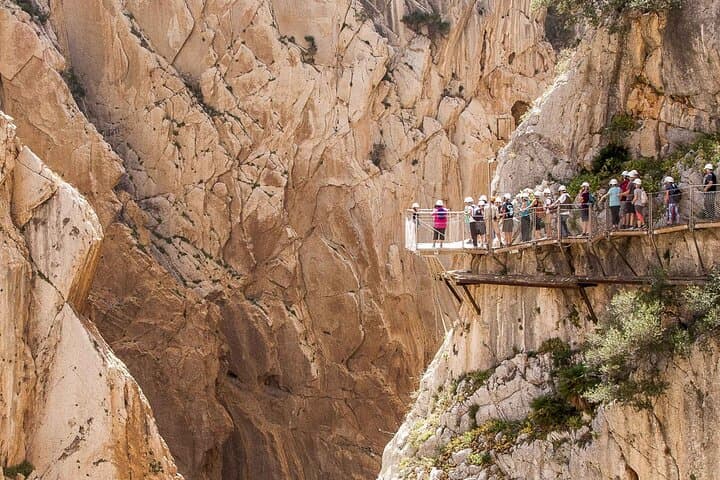
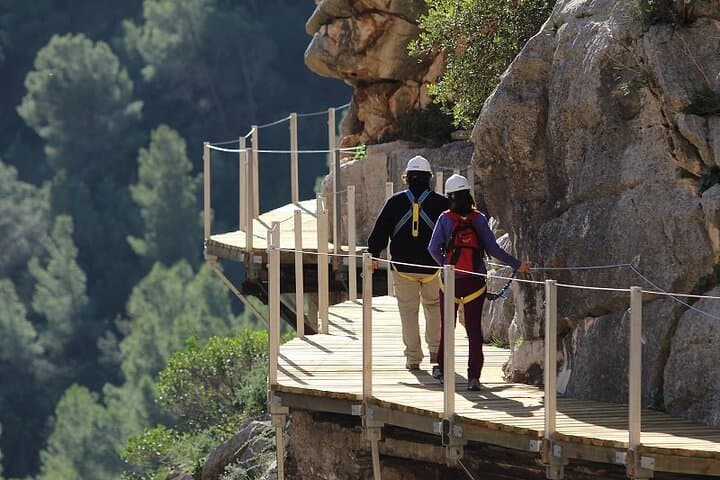
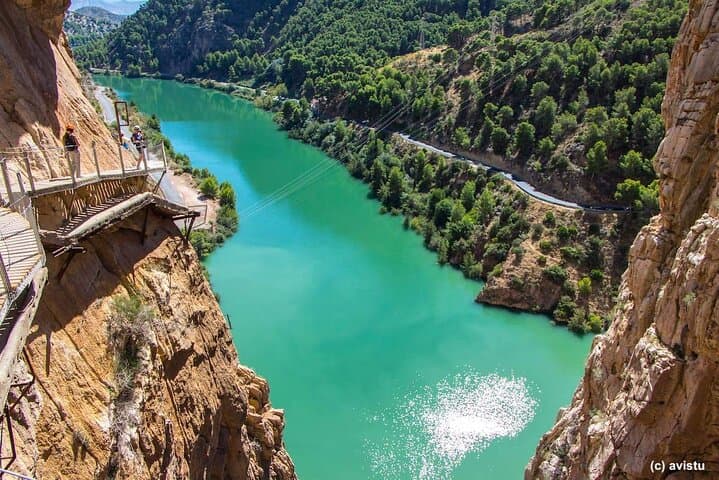
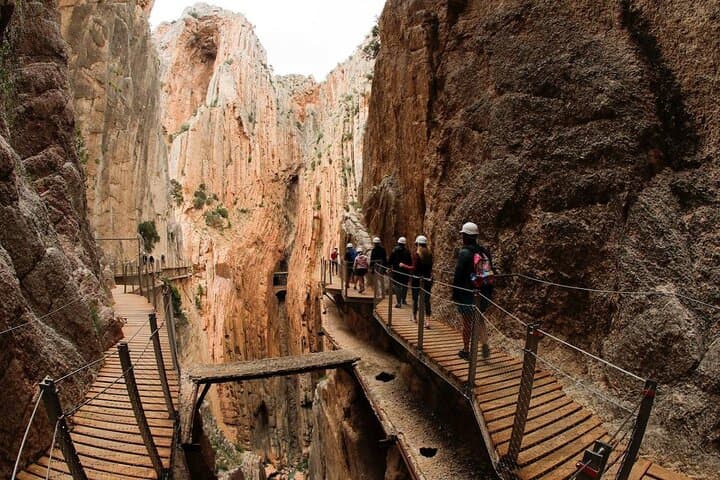
You step onto a weathered boardwalk bolted to vertical limestone, the gorge walls pressing close while the Guadalhorce river dares you from far below. Wind threads through the chasm and the path curves around sheer rock faces; every footfall clicks in a canyon carved over millennia.
You step onto a weathered boardwalk bolted to vertical limestone, the gorge walls pressing close while the Guadalhorce river dares you from far below. Wind threads through the chasm and the path curves around sheer rock faces; every footfall clicks in a canyon carved over millennia.
The Caminito del Rey began as an industrial walkway built in the early 1900s to service dams and tunnels. King Alfonso XIII famously crossed it in 1921, giving the path its royal name. The gorge itself is older: a pale, fractured limestone canyon shaped by tectonic uplift and the slow impatience of water, exposing strata and fissures that attract rock climbers and birdwatchers alike.
Culturally, the route sits at the meeting point of rural Andalusian life and industrial heritage — small towns like Ardales and Álora supplied the labor and still host the local tapas bars and olive groves you’ll pass on the drive in.
Practical guidance: the full route is roughly 7 km from entrance to exit, with about 3 km of elevated catwalks and sections up to 100 meters above the river. The tour runs about 2–3 hours; physical fitness should be moderate — expect steady walking, exposed sections, and some stairs. Helmets are provided; drones and large backpacks are prohibited. Book a timed ticket and arrive 15–30 minutes early for the safety briefing. Bring a refillable water bottle, sturdy closed-toe shoes, sun protection in summer and a windproof layer in cooler months. The fixed walkway keeps you contained, but weather cancels tours; if wind or heavy rain is forecast, expect rescheduling. Follow signs, respect closures, and leave no trace — the gorge’s wild birds and fragile flora depend on it.