THE ADVENTURE COLLECTIVE® · Independent discovery and booking for outdoor travel

Follow a slow camel caravan from M'Hamid into the southern Moroccan Sahara. This two-day trek pairs hands-on desert travel with local culture, dunescapes, and practical guidance for first-time desert travelers.
Follow a slow camel caravan from M'Hamid into the southern Moroccan Sahara. This two-day trek pairs hands-on desert travel with local culture, dunescapes, and practical guidance for first-time desert travelers.
Late afternoon light thins to gold across rippling dunes as a slow caravan threads toward the horizon. In M'Hamid, where asphalt gives way to packed sand, camels take the weight of your kit and the pace of the day; you follow in their measured steps and the quiet of the Sahara.
Verified experiences and guided adventures in the surrounding area.
Operated by Erg Chigaga · M'Hamid, Drâa-Tafilalet
Late afternoon light thins to gold across rippling dunes as a slow caravan threads toward the horizon. In M'Hamid, where asphalt gives way to packed sand, camels take the weight of your kit and the pace of the day; you follow in their measured steps and the quiet of the Sahara.
This route sits on the southern edge of Morocco's Drâa-Tafilalet region, where fluvial deposits from ancient rivers gave way to sweeping erg fields. Historically a staging point for trans-Saharan trade, M'Hamid remains a living outpost of nomadic culture—guides often share stories of seasonal migration, palm-lined oases, and the Berber and Hassaniya influences that shape local life.
Geology here is simple but stark: wind-sculpted dunes, gravel plains (regs), and occasional interdune vegetation that signals underground water. The experience alternates walking and mounted travel, with overnight bivouacs under clear desert skies and meals prepared with local mint tea and tagine rhythms.
Practical guidance: plan for sand, sun, and temperature swings—days can be hot and nights cold. Expect moderate physical demands: mounting and dismounting camels, uneven sand footing, and multi-hour stretches sitting in a saddle. The operator provides meals, bottled water, and private transport to/from M'Hamid. Bring layered clothing, a broad-brim hat, UV protection, and at least 3 liters of water per day beyond what’s provided.
Timing your journey for late afternoon rides eases midday heat and rewards you with long, clean light across the dunes. Respect camp rules about fires and waste—this is fragile terrain, and small actions keep it usable for future caravans.
moderate.
2 days.
Suitable for travelers with moderate fitness who can mount/dismount camels and tolerate long periods seated; some walking on sand expected.
Daily stages vary by itinerary and group pace; expect several hours on camelback with breaks—operators tailor distances to comfort and conditions.
No prior experience is necessary; camels are steady, and guides assist with mounting and riding. Still, riders should be comfortable with basic balance and following instructions.
Typical packages include private transport to M'Hamid, bottled water, breakfast, lunch and dinner, and simple desert camp accommodations; confirm specifics with the provider.
Not recommended for travelers with significant back, spinal, pregnancy, or serious cardiovascular conditions due to camel movement and remote conditions.
M'Hamid developed as a terminal for Saharan caravan routes; its palm groves and wells supported traders moving goods across the desert for centuries.
The Sahara's dune systems are fragile; stick to established routes, pack out waste, and follow guide instructions to minimize erosion and disturbance.
Erg Chigaga operates guided outdoor trips and adventures with an emphasis on safety, stewardship, and memorable experiences.
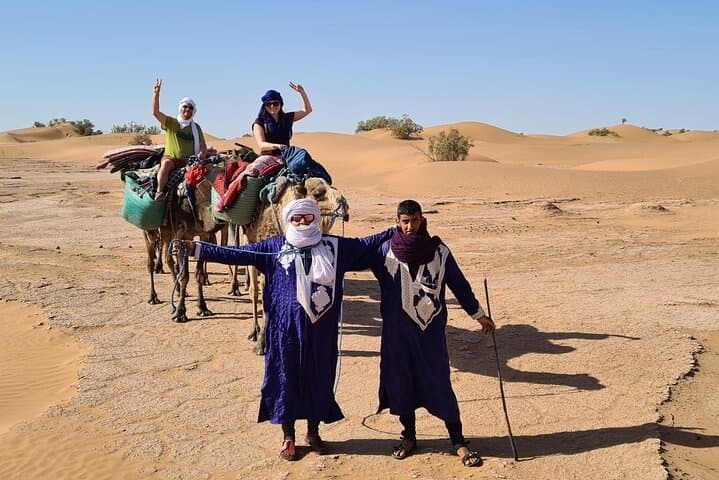
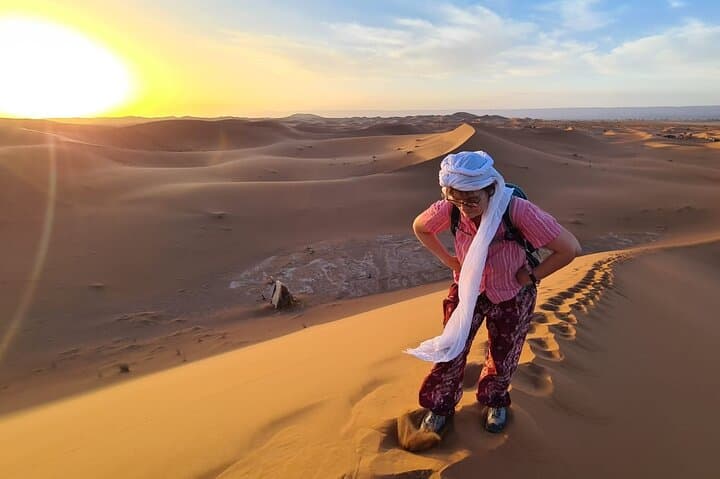
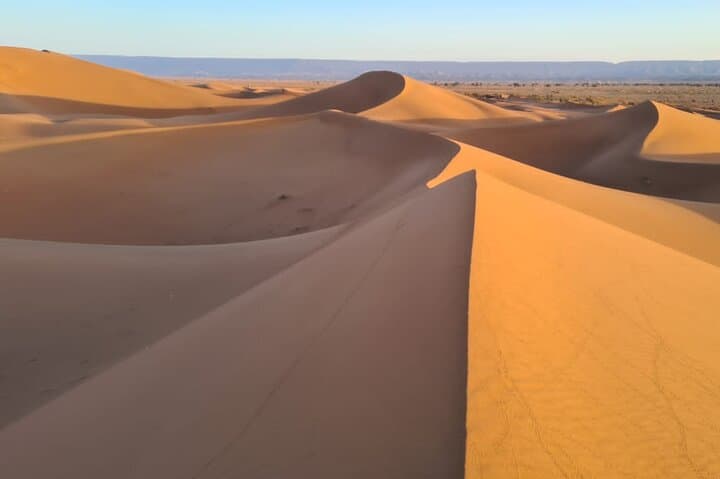
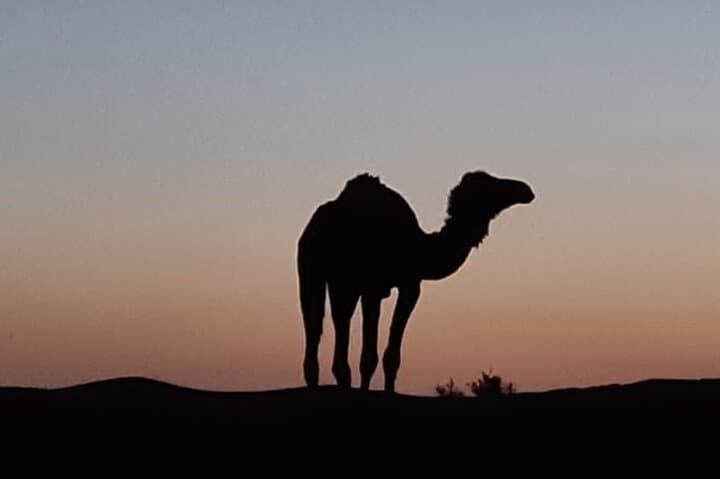
Late afternoon light thins to gold across rippling dunes as a slow caravan threads toward the horizon. In M'Hamid, where asphalt gives way to packed sand, camels take the weight of your kit and the pace of the day; you follow in their measured steps and the quiet of the Sahara.
Late afternoon light thins to gold across rippling dunes as a slow caravan threads toward the horizon. In M'Hamid, where asphalt gives way to packed sand, camels take the weight of your kit and the pace of the day; you follow in their measured steps and the quiet of the Sahara.
This route sits on the southern edge of Morocco's Drâa-Tafilalet region, where fluvial deposits from ancient rivers gave way to sweeping erg fields. Historically a staging point for trans-Saharan trade, M'Hamid remains a living outpost of nomadic culture—guides often share stories of seasonal migration, palm-lined oases, and the Berber and Hassaniya influences that shape local life.
Geology here is simple but stark: wind-sculpted dunes, gravel plains (regs), and occasional interdune vegetation that signals underground water. The experience alternates walking and mounted travel, with overnight bivouacs under clear desert skies and meals prepared with local mint tea and tagine rhythms.
Practical guidance: plan for sand, sun, and temperature swings—days can be hot and nights cold. Expect moderate physical demands: mounting and dismounting camels, uneven sand footing, and multi-hour stretches sitting in a saddle. The operator provides meals, bottled water, and private transport to/from M'Hamid. Bring layered clothing, a broad-brim hat, UV protection, and at least 3 liters of water per day beyond what’s provided.
Timing your journey for late afternoon rides eases midday heat and rewards you with long, clean light across the dunes. Respect camp rules about fires and waste—this is fragile terrain, and small actions keep it usable for future caravans.