THE ADVENTURE COLLECTIVE® · Independent discovery and booking for outdoor travel

Ride camels across Erg Chebbi’s towering dunes, sleep in a luxury desert camp, and return to Marrakech via kasbahs and mountain passes. This two-day loop blends dramatic desert scenery with cultural stops and practical comfort.
Ride camels across Erg Chebbi’s towering dunes, sleep in a luxury desert camp, and return to Marrakech via kasbahs and mountain passes. This two-day loop blends dramatic desert scenery with cultural stops and practical comfort.
The day begins on the Tizi n’Tichka pass with the Atlas mountains folding into the rearview and red dust growing finer until the horizon reads only sand.
Verified experiences and guided adventures in the surrounding area.
Operated by This Desert Experience · Merzouga, Drâa-Tafilalet
The day begins on the Tizi n’Tichka pass with the Atlas mountains folding into the rearview and red dust growing finer until the horizon reads only sand.
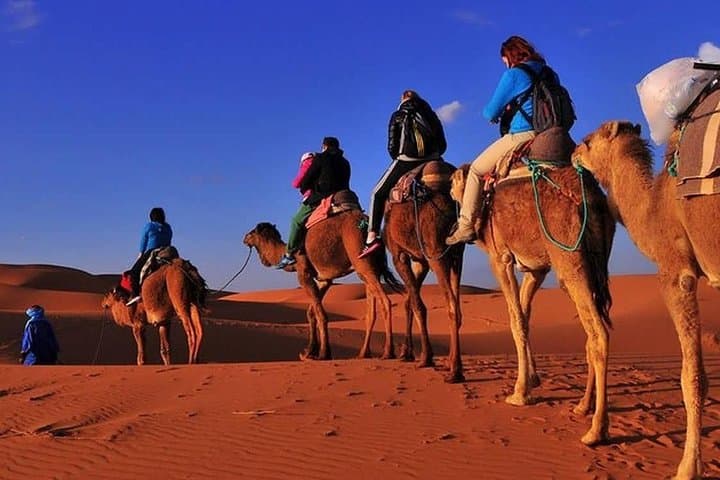
By late afternoon the Erg Chebbi dunes rise like a living wall—wind-sculpted ridges that dare you to climb them at sunset. Travelers switch from 4x4s to camels and move in single file, the animals steady as the sand shifts beneath hoof and boot. Night falls with a clear southern sky; lanterns and Berber drums punctuate the dark while the camp prepares a communal dinner.
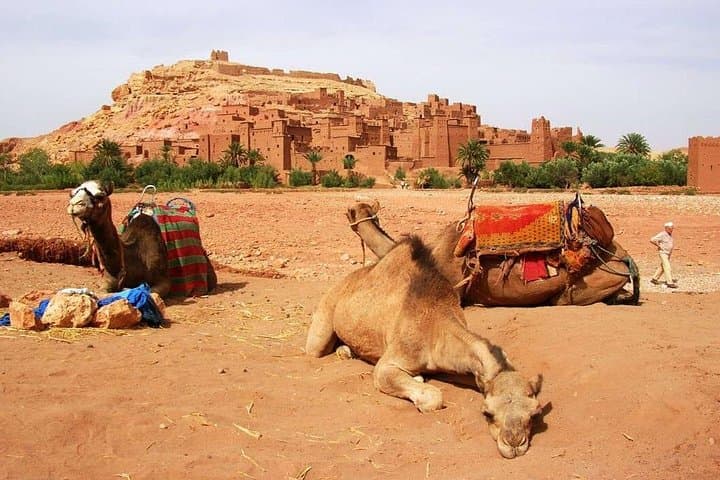
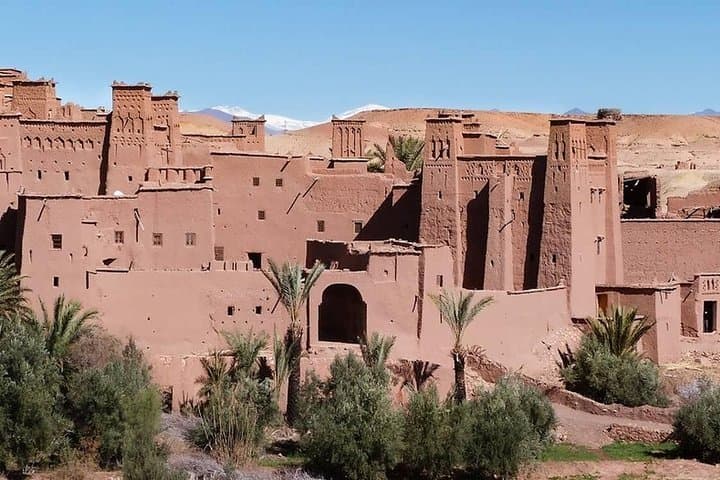
This route threads historic caravan corridors and modern film locations: Ouarzazate’s kasbahs and the UNESCO clay fortress of Aït Benhaddou reflect centuries of trade, adobe architecture, and Berber presence. Geologically, Erg Chebbi is a crescent of mobile dunes formed by wind-borne Saharan sands, offering steep dune faces and softer, rolling leeward slopes.
Expect classic desert culture—tea ceremonies, live gnawa or Berber music, and simple, hospitable camps with private or semi-private tents and hot showers where offered.
Practical guidance: schedule the dune walk for late afternoon or sunrise to avoid midday heat; bring layered clothing, high-SPF sun protection, and sturdy shoes for dune scrambling. Hydrate before leaving and use a small daypack for essentials during the camel trek. Communications can be limited—download maps and carry local cash for village stops.
For photographers and first-time desert travelers this two-day itinerary balances off-road driving, cultural stops, and immersive dune time without demanding advanced technical skills.
moderate.
2 days (approx. 48 hours).
Suitable for travelers in average physical condition who can manage short dune scrambles and sit comfortably on a camel for a few hours.
No; camels are handled by experienced guides and rides are suitable for beginners, though mounting and dismounting can be abrupt.
Many camps offer private tents with beds and hot showers labeled as luxury or golden camps; amenities vary so confirm exact facilities when booking.
The roundtrip drive covers roughly 500–700 km depending on route and stops, with 7–9 hours of driving segments broken up by cultural visits.
The tour is marketed as accessible for a wide range of ages, but long drives, uneven sand, and camel rides may be challenging for very young children or travelers with significant mobility or cardiovascular issues.
This corridor links Marrakech to the Tafilalt oasis and was part of trans-Saharan routes; Aït Benhaddou represents centuries of mud‑brick kasbah construction and trade history.
Dune ecosystems are fragile—stick to established camel tracks and camps to reduce vegetation and surface disturbance; minimize plastic and pack out waste.
This Desert Experience operates guided outdoor trips and adventures with an emphasis on safety, stewardship, and memorable experiences.
The day begins on the Tizi n’Tichka pass with the Atlas mountains folding into the rearview and red dust growing finer until the horizon reads only sand.
The day begins on the Tizi n’Tichka pass with the Atlas mountains folding into the rearview and red dust growing finer until the horizon reads only sand.
By late afternoon the Erg Chebbi dunes rise like a living wall—wind-sculpted ridges that dare you to climb them at sunset. Travelers switch from 4x4s to camels and move in single file, the animals steady as the sand shifts beneath hoof and boot. Night falls with a clear southern sky; lanterns and Berber drums punctuate the dark while the camp prepares a communal dinner.
This route threads historic caravan corridors and modern film locations: Ouarzazate’s kasbahs and the UNESCO clay fortress of Aït Benhaddou reflect centuries of trade, adobe architecture, and Berber presence. Geologically, Erg Chebbi is a crescent of mobile dunes formed by wind-borne Saharan sands, offering steep dune faces and softer, rolling leeward slopes.
Expect classic desert culture—tea ceremonies, live gnawa or Berber music, and simple, hospitable camps with private or semi-private tents and hot showers where offered.
Practical guidance: schedule the dune walk for late afternoon or sunrise to avoid midday heat; bring layered clothing, high-SPF sun protection, and sturdy shoes for dune scrambling. Hydrate before leaving and use a small daypack for essentials during the camel trek. Communications can be limited—download maps and carry local cash for village stops.
For photographers and first-time desert travelers this two-day itinerary balances off-road driving, cultural stops, and immersive dune time without demanding advanced technical skills.