THE ADVENTURE COLLECTIVE® · Independent discovery and booking for outdoor travel

Swap the bustling medina for the steady sway of a camel and an hour beneath towering palms. This short ride through Marrakech’s Palmeraie gives a readable taste of oasis life—mint tea stop included—without the need for prior riding experience.
Swap the bustling medina for the steady sway of a camel and an hour beneath towering palms. This short ride through Marrakech’s Palmeraie gives a readable taste of oasis life—mint tea stop included—without the need for prior riding experience.
A line of camels moves like a slow, deliberate wave through Marrakech’s Palmeraie, the palms casting long, lattice‑work shadows over sandy tracks. Within minutes the red city’s tile roofs fall behind and the smell of dry earth, date fronds and faint smoke of cooking fires fills the air; the rhythm of the camel’s walk becomes the trip’s metronome.
Verified experiences and guided adventures in the surrounding area.
Operated by Day Out Marrakech · Marrakech, Marrakech-Safi
A line of camels moves like a slow, deliberate wave through Marrakech’s Palmeraie, the palms casting long, lattice‑work shadows over sandy tracks. Within minutes the red city’s tile roofs fall behind and the smell of dry earth, date fronds and faint smoke of cooking fires fills the air; the rhythm of the camel’s walk becomes the trip’s metronome.
The Palmeraie is an irrigated oasis on the northern flank of the Haouz plain, fed historically by shallow wells and channels that support thousands of date palms and small farms. Geologically you’re on alluvial soil dropped by winter floods from the High Atlas; the ground is mostly flat with only small dunes and cultivated ridges—elevation gain is negligible, but the sandy surface can test balance when mounting or dismounting.
Culturally the ride is a short window into rural life around Marrakech: you’ll pass orchard plots and low stone walls, and guides commonly pause to serve sweet Moroccan mint tea, a staple of hospitality. Local guides adapt pace to riders of different experience levels, making this suitable for novices who can steady themselves at a sitting trot.
Practical notes: the loop covers roughly 3–5 km over about an hour; expect uneven, sandy tracks and dusty conditions. Bring sun protection, a reusable water bottle, closed shoes and long pants to limit chafing. Travelers with back, heart or pregnancy concerns should avoid the ride. Pickup and drop‑off are typically included; confirm meeting points and weather policies when you book.
moderate.
1 hour.
Moderate; riders should be able to climb onto a low saddle and sit steadily for an hour
The advertised ride lasts about 1 hour and typically covers 3–5 km of sandy tracks through the Palmeraie.
Most bookings include hotel/riad pickup and drop-off—confirm your exact pickup point when you reserve.
Children who can sit steadily are usually allowed; the activity is not recommended for pregnant travelers or people with serious back or heart conditions.
Operators commonly cancel for extreme weather; check the cancellation policy (often full refund if cancelled 24 hours prior) and confirm contingency plans.
The Palmeraie developed as an irrigated palm oasis on Marrakech’s Haouz plain; date palms and small farms have been managed here for centuries using traditional water systems.
Development and tourism pressure threaten oasis habitat and water resources—stick to established tracks, avoid littering and follow your guide’s instructions to minimize impact.
Day Out Marrakech operates guided outdoor trips and adventures with an emphasis on safety, stewardship, and memorable experiences.
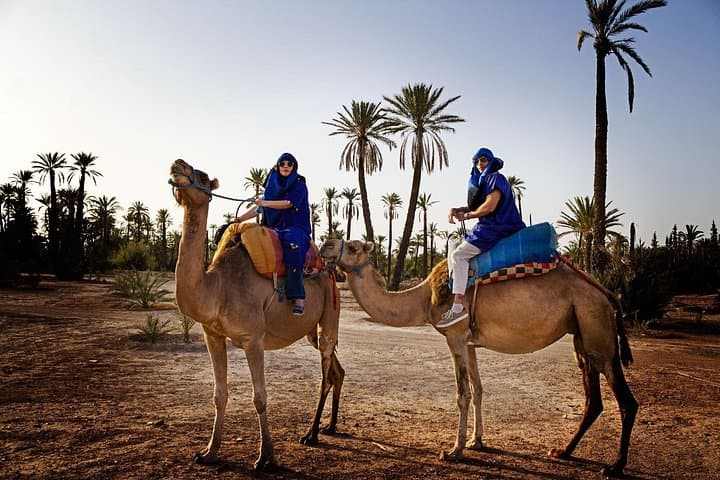
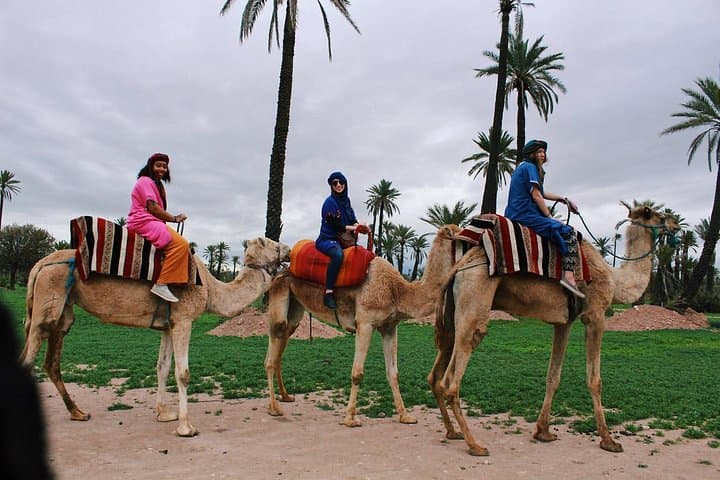
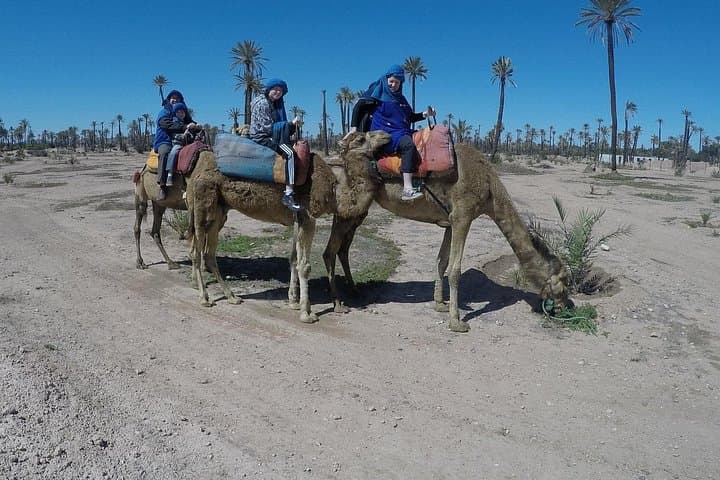
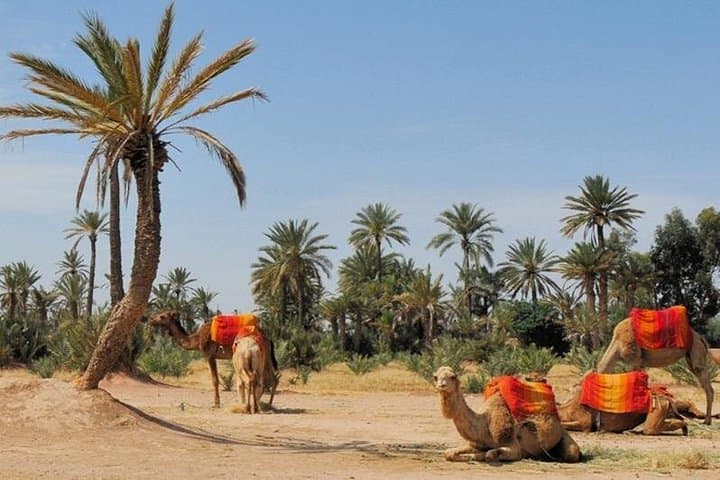
A line of camels moves like a slow, deliberate wave through Marrakech’s Palmeraie, the palms casting long, lattice‑work shadows over sandy tracks. Within minutes the red city’s tile roofs fall behind and the smell of dry earth, date fronds and faint smoke of cooking fires fills the air; the rhythm of the camel’s walk becomes the trip’s metronome.
A line of camels moves like a slow, deliberate wave through Marrakech’s Palmeraie, the palms casting long, lattice‑work shadows over sandy tracks. Within minutes the red city’s tile roofs fall behind and the smell of dry earth, date fronds and faint smoke of cooking fires fills the air; the rhythm of the camel’s walk becomes the trip’s metronome.
The Palmeraie is an irrigated oasis on the northern flank of the Haouz plain, fed historically by shallow wells and channels that support thousands of date palms and small farms. Geologically you’re on alluvial soil dropped by winter floods from the High Atlas; the ground is mostly flat with only small dunes and cultivated ridges—elevation gain is negligible, but the sandy surface can test balance when mounting or dismounting.
Culturally the ride is a short window into rural life around Marrakech: you’ll pass orchard plots and low stone walls, and guides commonly pause to serve sweet Moroccan mint tea, a staple of hospitality. Local guides adapt pace to riders of different experience levels, making this suitable for novices who can steady themselves at a sitting trot.
Practical notes: the loop covers roughly 3–5 km over about an hour; expect uneven, sandy tracks and dusty conditions. Bring sun protection, a reusable water bottle, closed shoes and long pants to limit chafing. Travelers with back, heart or pregnancy concerns should avoid the ride. Pickup and drop‑off are typically included; confirm meeting points and weather policies when you book.