THE ADVENTURE COLLECTIVE® · Independent discovery and booking for outdoor travel

Ride a camel around the Great Pyramids on a private four-hour tour with entrance fees included. Expect sandy trails, close-up views of Khufu, Khafre and Menkaure, and practical tips for beating the heat.
Ride a camel around the Great Pyramids on a private four-hour tour with entrance fees included. Expect sandy trails, close-up views of Khufu, Khafre and Menkaure, and practical tips for beating the heat.
You step off the van and the desert wind pushes at your shirt like a patient guide, urging you toward stone that has watched the Nile for millennia. Camels shift and creak beneath you; in the blue heat the Great Pyramid hangs enormous and simple, a silhouette you can walk around and feel the scale of.
Verified experiences and guided adventures in the surrounding area.
You step off the van and the desert wind pushes at your shirt like a patient guide, urging you toward stone that has watched the Nile for millennia. Camels shift and creak beneath you; in the blue heat the Great Pyramid hangs enormous and simple, a silhouette you can walk around and feel the scale of.
This isn't just a photo stop. The Giza Plateau is Late Fourth Dynasty architecture — Khufu, Khafre and Menkaure carved from local limestone atop a bedrock rise where builders quarried their blocks. The Sphinx keeps a quiet vigil nearby; the sand and wind have shaped both rock and ritual. Local camel handlers (often from multi-generational families around Giza) will lead your ride and share quick, practical stories about the plateau and the daily life that surrounds this tourist magnet.
Expect three to four hours total: hotel pickup in Cairo or Giza, a guided camel loop around the pyramids with entrance fees handled, and return. Terrain is sandy and uneven — camels are forgiving but dismounts are bouncy. Sun presses hard midday; the best light is morning or late afternoon when shadows reveal the stones’ faces.
Practical notes: bring 1–2 liters of water, sun protection, and closed-toe shoes for walking between camel segments. Photography is generous, but climbing the pyramids is illegal and enforced. Respect the handlers, set expectations about tipping up front, and plan for dust: a light scarf and sunglasses will keep you comfortable. This is a short, visceral way to touch ancient history from an honest desert vantage point.
easy.
4 hours.
Light-moderate — comfortable walking and ability to mount/dismount a camel recommended
Yes — this tour includes entrance fees to the Giza Plateau as part of the package.
Pickup and drop-off from hotels in Cairo or Giza are typically included; confirm pickup location and time when booking.
No — climbing the pyramids is prohibited and can result in fines or removal by authorities; the tour provides close-up viewing from allowed areas.
Children can ride but must be supervised; handlers set age and weight limits for safety, so check with the operator before arrival.
The three main pyramids date to Egypt’s Old Kingdom (c. 2600–2500 BCE), built as royal tombs and aligned with complex funerary practices.
Heavy foot traffic and informal vendors stress the plateau; stay on designated paths, avoid taking fragments, and support licensed guides to help sustainable tourism.
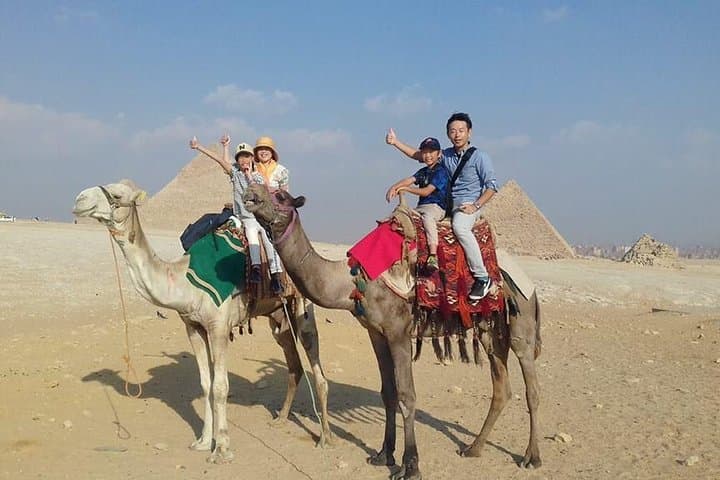
You step off the van and the desert wind pushes at your shirt like a patient guide, urging you toward stone that has watched the Nile for millennia. Camels shift and creak beneath you; in the blue heat the Great Pyramid hangs enormous and simple, a silhouette you can walk around and feel the scale of.
You step off the van and the desert wind pushes at your shirt like a patient guide, urging you toward stone that has watched the Nile for millennia. Camels shift and creak beneath you; in the blue heat the Great Pyramid hangs enormous and simple, a silhouette you can walk around and feel the scale of.
This isn't just a photo stop. The Giza Plateau is Late Fourth Dynasty architecture — Khufu, Khafre and Menkaure carved from local limestone atop a bedrock rise where builders quarried their blocks. The Sphinx keeps a quiet vigil nearby; the sand and wind have shaped both rock and ritual. Local camel handlers (often from multi-generational families around Giza) will lead your ride and share quick, practical stories about the plateau and the daily life that surrounds this tourist magnet.
Expect three to four hours total: hotel pickup in Cairo or Giza, a guided camel loop around the pyramids with entrance fees handled, and return. Terrain is sandy and uneven — camels are forgiving but dismounts are bouncy. Sun presses hard midday; the best light is morning or late afternoon when shadows reveal the stones’ faces.
Practical notes: bring 1–2 liters of water, sun protection, and closed-toe shoes for walking between camel segments. Photography is generous, but climbing the pyramids is illegal and enforced. Respect the handlers, set expectations about tipping up front, and plan for dust: a light scarf and sunglasses will keep you comfortable. This is a short, visceral way to touch ancient history from an honest desert vantage point.