THE ADVENTURE COLLECTIVE® · Independent discovery and booking for outdoor travel

Ride a dromedary from eucalyptus paths by the royal palace out onto the coastal dunes and Oued Souss estuary. This two-hour camel excursion mixes close-up birdwatching, Berber hamlets, and sunset-ready viewpoints.
Ride a dromedary from eucalyptus paths by the royal palace out onto the coastal dunes and Oued Souss estuary. This two-hour camel excursion mixes close-up birdwatching, Berber hamlets, and sunset-ready viewpoints.
The day begins with a low sun and the soft scrape of camel hooves on wind-worn sand. Riders are collected by air-conditioned minibus and driven from Agadir toward the Ranch Club, where a short introduction to dromedaries precedes a two-hour route that moves from eucalyptus-shaded tracks past the royal palace onto sandy ridges and down to the Oued Souss.
Verified experiences and guided adventures in the surrounding area.
Operated by Bakhazouz Tours Company · Agadir, Souss-Massa
The day begins with a low sun and the soft scrape of camel hooves on wind-worn sand. Riders are collected by air-conditioned minibus and driven from Agadir toward the Ranch Club, where a short introduction to dromedaries precedes a two-hour route that moves from eucalyptus-shaded tracks past the royal palace onto sandy ridges and down to the Oued Souss.
This stretch of coastline combines recent human history and coastal geology: Agadir’s modern promenade stands on a rebuilt city after the 1960 earthquake, while the dunes are coastal deposits shaped by Atlantic winds and seasonal river flow. Along the river mouth, migratory flocks—pink flamingos and white egrets—probe the shallows, and passing Berber hamlets recall the region’s Amazigh roots and long-standing ties to subsistence agriculture in the Souss plain.
Expect photo stops at viewpoints and small villages; guides often steer the caravan toward quieter sandbars where light is best. The ride is social and unhurried—suitable for most fitness levels—but requires attention: camels sit and rise suddenly and the terrain can shift from packed beach to loose sand.
Practical notes: bring sun protection and a refillable water bottle, secure loose items for photos, and wear closed-toe shoes for mounting. Morning and late-afternoon departures offer the softest light and cooler temperatures. Respect handlers’ instructions for animal welfare and local customs: tipping, modest dress near villages, and leaving no trace keep this experience sustainable.
easy.
2 hours.
Suitable for most active travelers; requires ability to mount/dismount a camel and tolerate short periods of sitting.
Yes; the tour provides air-conditioned minibus pickup from central Agadir hotels—confirm your pickup point when booking.
Children can generally ride but age/size restrictions may apply; operators often provide infant seats and require booking details for minors.
Not recommended—camel mounting and the ride’s motion can aggravate spinal or cardiovascular conditions and pregnancy.
You’ll often see flamingos and egrets at the Oued Souss estuary, but sightings depend on season and water levels; guides choose routes to increase chances.
The Souss valley has been inhabited by Amazigh (Berber) communities for centuries; Agadir’s coastal role expanded with 20th-century port and market development.
Stay on established routes, follow handler instructions, and avoid feeding wildlife; the estuary is a sensitive habitat for migratory birds.
Bakhazouz Tours Company operates guided outdoor trips and adventures with an emphasis on safety, stewardship, and memorable experiences.
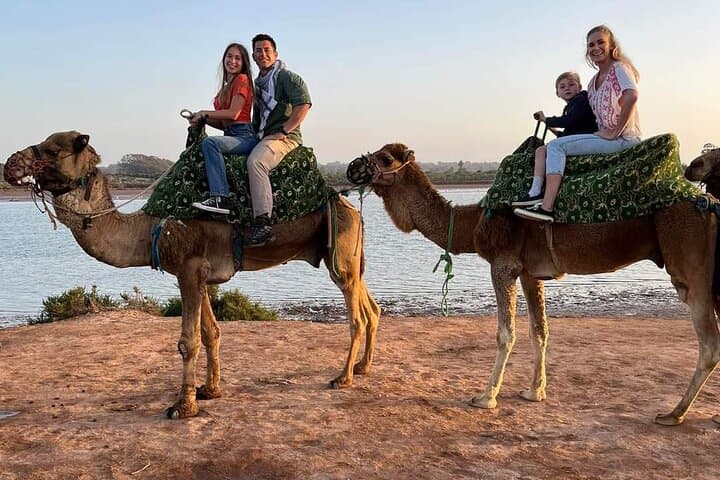
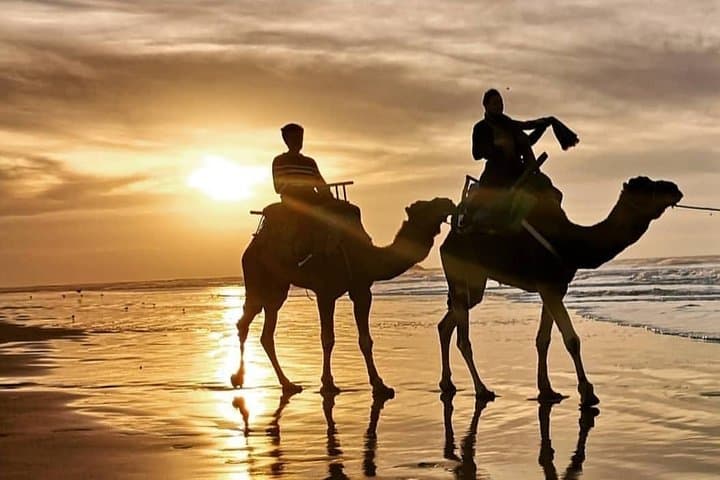
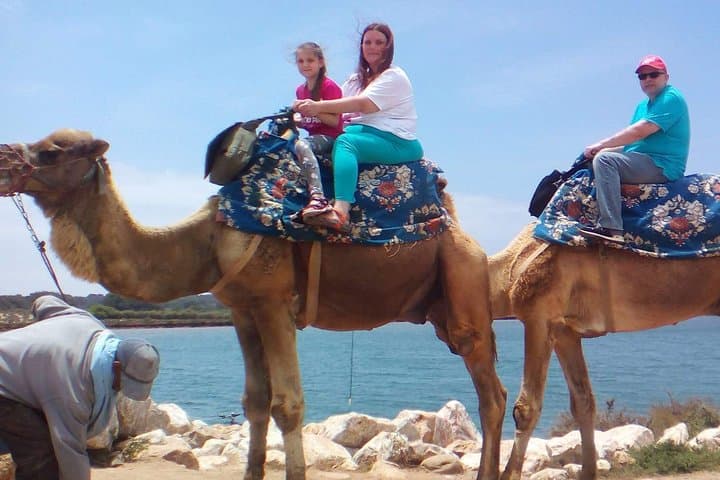
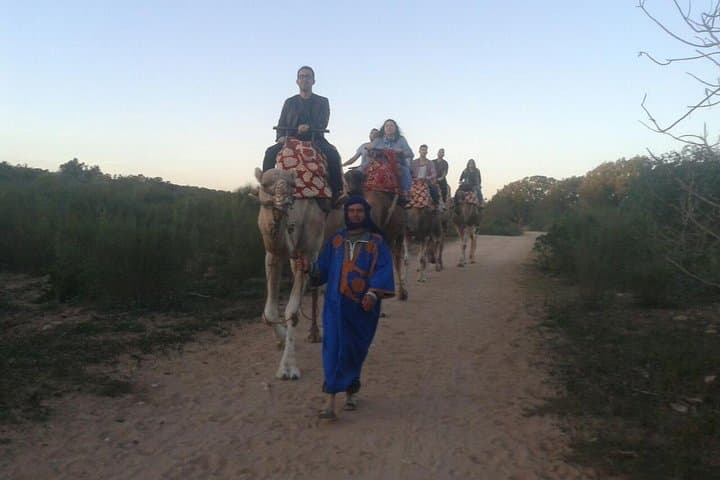
The day begins with a low sun and the soft scrape of camel hooves on wind-worn sand. Riders are collected by air-conditioned minibus and driven from Agadir toward the Ranch Club, where a short introduction to dromedaries precedes a two-hour route that moves from eucalyptus-shaded tracks past the royal palace onto sandy ridges and down to the Oued Souss.
The day begins with a low sun and the soft scrape of camel hooves on wind-worn sand. Riders are collected by air-conditioned minibus and driven from Agadir toward the Ranch Club, where a short introduction to dromedaries precedes a two-hour route that moves from eucalyptus-shaded tracks past the royal palace onto sandy ridges and down to the Oued Souss.
This stretch of coastline combines recent human history and coastal geology: Agadir’s modern promenade stands on a rebuilt city after the 1960 earthquake, while the dunes are coastal deposits shaped by Atlantic winds and seasonal river flow. Along the river mouth, migratory flocks—pink flamingos and white egrets—probe the shallows, and passing Berber hamlets recall the region’s Amazigh roots and long-standing ties to subsistence agriculture in the Souss plain.
Expect photo stops at viewpoints and small villages; guides often steer the caravan toward quieter sandbars where light is best. The ride is social and unhurried—suitable for most fitness levels—but requires attention: camels sit and rise suddenly and the terrain can shift from packed beach to loose sand.
Practical notes: bring sun protection and a refillable water bottle, secure loose items for photos, and wear closed-toe shoes for mounting. Morning and late-afternoon departures offer the softest light and cooler temperatures. Respect handlers’ instructions for animal welfare and local customs: tipping, modest dress near villages, and leaving no trace keep this experience sustainable.