THE ADVENTURE COLLECTIVE® · Independent discovery and booking for outdoor travel

Ride camels through Marrakech’s Palmeraie and exchange city noise for palm-lined tracks, tea with locals, and easy, family-friendly riding. This private two-hour trek combines simple terrain with cultural stops and practical comforts like hotel pickup and cheches.
Ride camels through Marrakech’s Palmeraie and exchange city noise for palm-lined tracks, tea with locals, and easy, family-friendly riding. This private two-hour trek combines simple terrain with cultural stops and practical comforts like hotel pickup and cheches.
A string of camels moves slowly beneath rows of palm trunks, the animals’ soft footfalls stirring the dust as the Palmeraie opens around you. In the cool morning light the grove feels like a working landscape—date palms, scrub, and irrigated gardens giving shade in a city where heat gathers by noon.
Verified experiences and guided adventures in the surrounding area.
Operated by Travel Services Morocco · Marrakech, Marrakech-Safi
A string of camels moves slowly beneath rows of palm trunks, the animals’ soft footfalls stirring the dust as the Palmeraie opens around you. In the cool morning light the grove feels like a working landscape—date palms, scrub, and irrigated gardens giving shade in a city where heat gathers by noon.
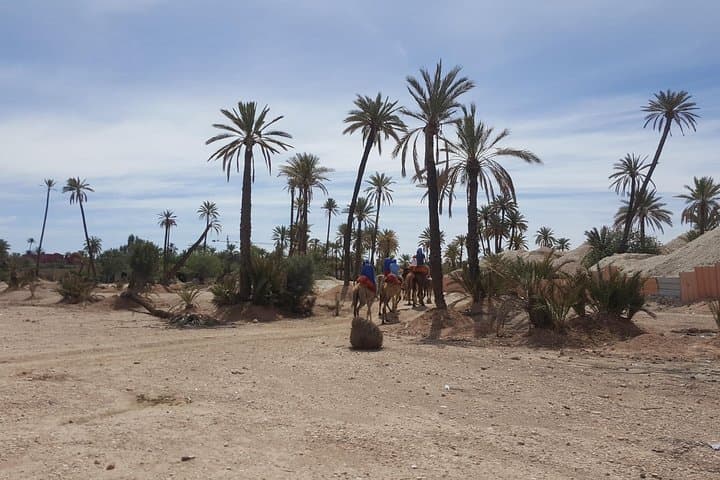
The Palmeraie began as a cultivated palm belt that supported local agriculture and shade for caravan routes; later it expanded with luxury hotels and golf courses, a visible contrast between traditional rural life and modern development. Geologically this is a flat, alluvial plain on Marrakech’s northern edge, where sandy soils and groundwater support the palms through shallow irrigation.
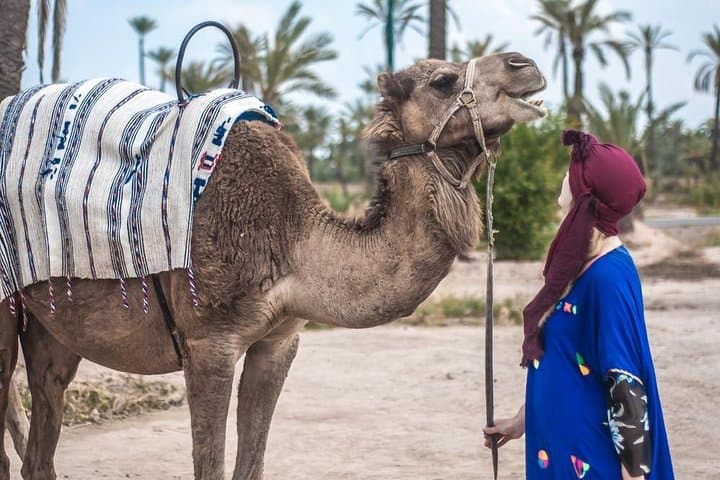
Culturally the ride is as much about meeting people as scenery: your cameleer will share local customs, offer mint tea, and provide a cheche (Touareg scarf) to protect against sun and dust. Short stops pass small hamlets and renovated farms, revealing how irrigation and date cultivation shaped daily rhythms here.
Practical guidance: the route is gentle—mostly flat sandy tracks—so no technical skill is required, and the two-hour private tour is suitable for casual travelers and families. Bring a reusable water bottle, wear closed-toe shoes and sun protection, and plan for morning or late-afternoon departures to avoid peak heat. Keep belongings secure; camel saddles can be bumpy. Respect local customs when photographing people and accept tea invitations as part of the social exchange.
This half-day experience pairs easy riding with cultural contact and accessible scenery, a compact way to see a surprising, living edge of Marrakech.
easy.
2 hours.
Minimal fitness required; suitable for people comfortable sitting on a saddle and walking short distances.
The typical private camel ride in the Palmeraie lasts about two hours, including short stops and a tea break.
Yes — this tour includes hotel pick-up and drop-off within Marrakech as part of the booking.
Yes; infants must sit on an adult’s lap and special infant seats may be available—confirm when booking.
The operator requires cancellation at least 24 hours before departure for a full refund; the tour does not automatically cancel for poor weather.
The Palmeraie has long been a managed palm belt outside Marrakech, historically used for date cultivation and local irrigation systems that supported caravan and rural life.
Urban expansion and tourism pressure strain groundwater and traditional irrigation; stick to marked tracks, avoid littering, and respect private plots to reduce impact.
Travel Services Morocco operates guided outdoor trips and adventures with an emphasis on safety, stewardship, and memorable experiences.
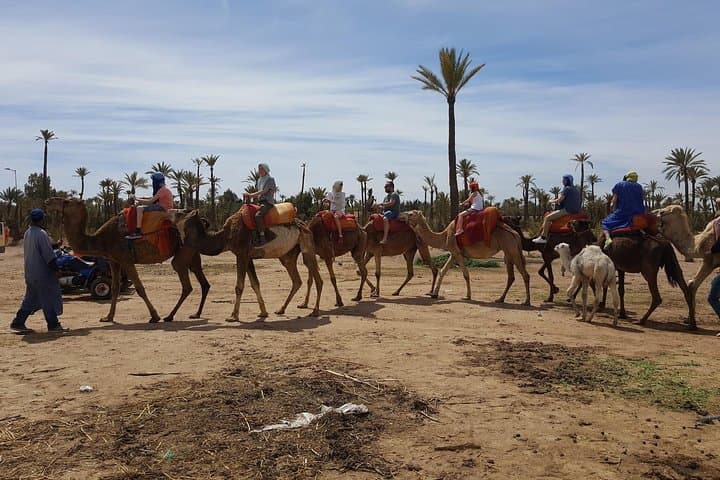
A string of camels moves slowly beneath rows of palm trunks, the animals’ soft footfalls stirring the dust as the Palmeraie opens around you. In the cool morning light the grove feels like a working landscape—date palms, scrub, and irrigated gardens giving shade in a city where heat gathers by noon.
A string of camels moves slowly beneath rows of palm trunks, the animals’ soft footfalls stirring the dust as the Palmeraie opens around you. In the cool morning light the grove feels like a working landscape—date palms, scrub, and irrigated gardens giving shade in a city where heat gathers by noon.
The Palmeraie began as a cultivated palm belt that supported local agriculture and shade for caravan routes; later it expanded with luxury hotels and golf courses, a visible contrast between traditional rural life and modern development. Geologically this is a flat, alluvial plain on Marrakech’s northern edge, where sandy soils and groundwater support the palms through shallow irrigation.
Culturally the ride is as much about meeting people as scenery: your cameleer will share local customs, offer mint tea, and provide a cheche (Touareg scarf) to protect against sun and dust. Short stops pass small hamlets and renovated farms, revealing how irrigation and date cultivation shaped daily rhythms here.
Practical guidance: the route is gentle—mostly flat sandy tracks—so no technical skill is required, and the two-hour private tour is suitable for casual travelers and families. Bring a reusable water bottle, wear closed-toe shoes and sun protection, and plan for morning or late-afternoon departures to avoid peak heat. Keep belongings secure; camel saddles can be bumpy. Respect local customs when photographing people and accept tea invitations as part of the social exchange.
This half-day experience pairs easy riding with cultural contact and accessible scenery, a compact way to see a surprising, living edge of Marrakech.