THE ADVENTURE COLLECTIVE® · Independent discovery and booking for outdoor travel

Slow down and feel the gentle sway of a camel as you cross Marrakech’s Palmeraie. This easy 60–90 minute outing combines cultivated oasis scenery, village glimpses and a brief, memorable animal encounter.
Slow down and feel the gentle sway of a camel as you cross Marrakech’s Palmeraie. This easy 60–90 minute outing combines cultivated oasis scenery, village glimpses and a brief, memorable animal encounter.
A single-file line of camels moves through the Palmeraie as the late-afternoon light softens the edges of date palms and the city hum slips away. The ride begins near Marrakech, where an air-conditioned minibus drops passengers at the edge of a cultivated oasis; you climb onto a saddle and the animals set a steady, rocking pace that encourages quiet observation rather than speed.
Verified experiences and guided adventures in the surrounding area.
Operated by Anas belcaid · Marrakech, Marrakech-Safi
A single-file line of camels moves through the Palmeraie as the late-afternoon light softens the edges of date palms and the city hum slips away. The ride begins near Marrakech, where an air-conditioned minibus drops passengers at the edge of a cultivated oasis; you climb onto a saddle and the animals set a steady, rocking pace that encourages quiet observation rather than speed.
The Palmeraie is a human-made oasis fed by ancient khettara irrigation and cultivated for centuries to shade farms, estates and caravan routes. Geologically the area sits on alluvial plain soil where groundwater supports dense clusters of Phoenix dactylifera (date palms) against a backdrop of ochre suburbs and distant Atlas foothills. Local culture is visible in small douars (villages), irrigation channels and the artisanal stalls that line the approach.
Expect gentle trails on compact dirt with intermittent sand patches; the camel pace is slow and the experience is sensory—crisp palm fronds whispering overhead, the animal’s steady sway and the scent of dry earth. Guides will point out irrigation lines and village life, and there’s often a short stop for photos.
Practical guidance: book a morning or late-afternoon slot to avoid mid-day heat, wear closed shoes and long pants to prevent saddle chafe, bring sunscreen and a reusable water bottle. Inform the operator of mobility needs in advance; many operators offer hotel pickup in Marrakech. The ride is short—roughly 60–90 minutes—making it accessible for most travelers who want a low-effort encounter with Morocco’s palm-lined landscapes.
easy.
1–1.5 hours.
Suitable for most fitness levels; requires ability to mount a low saddle and sit upright for the duration.
The advertised activity lasts about 60–90 minutes including pickup; the on-camel portion is roughly one hour.
Yes—this is a low-impact activity suitable for most ages, but inform the operator of mobility concerns and follow staff guidance when mounting.
Reputable operators emphasize animal welfare—ask the guide about feed, rest periods and handling practices before booking.
Pickup from central Marrakech riads and hotels is usually included; pickup from outside city limits may incur an extra fee.
The Palmeraie is a cultivated oasis shaped over centuries with traditional irrigation techniques, historically supplying shade, dates and produce for Marrakech’s residents and caravans.
Urban expansion and groundwater pressure threaten the palm grove; support small local operators, avoid leaving litter and stick to established tracks to reduce erosion and water stress.
Anas belcaid operates guided outdoor trips and adventures with an emphasis on safety, stewardship, and memorable experiences.
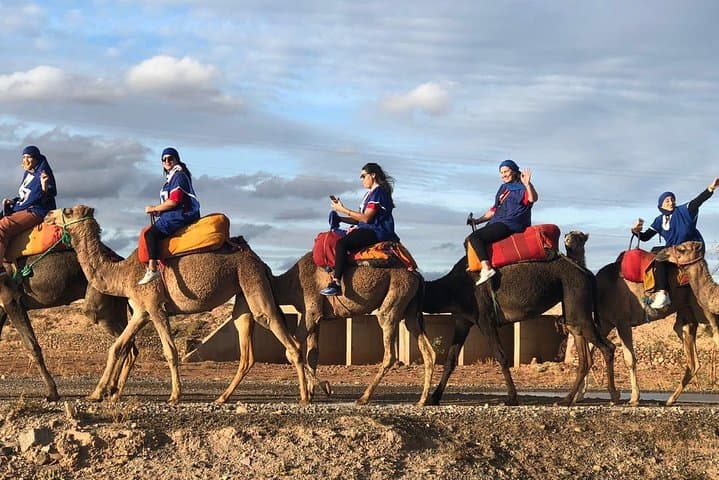
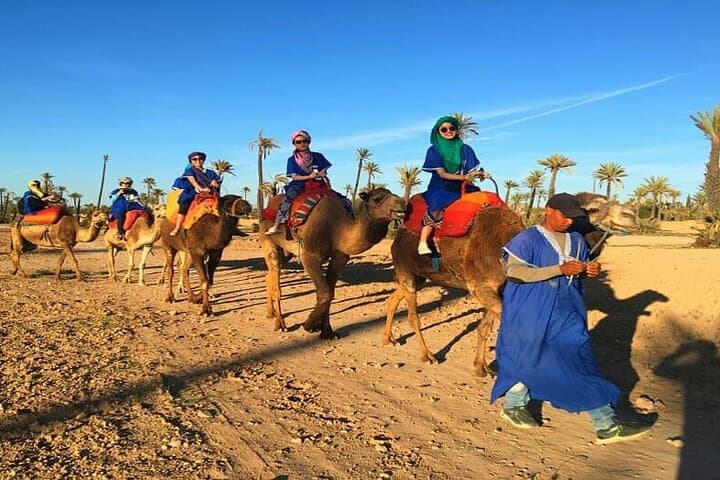
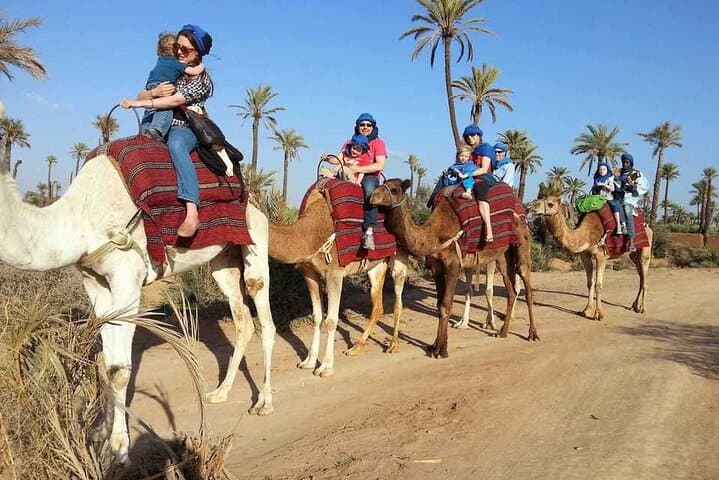
A single-file line of camels moves through the Palmeraie as the late-afternoon light softens the edges of date palms and the city hum slips away. The ride begins near Marrakech, where an air-conditioned minibus drops passengers at the edge of a cultivated oasis; you climb onto a saddle and the animals set a steady, rocking pace that encourages quiet observation rather than speed.
A single-file line of camels moves through the Palmeraie as the late-afternoon light softens the edges of date palms and the city hum slips away. The ride begins near Marrakech, where an air-conditioned minibus drops passengers at the edge of a cultivated oasis; you climb onto a saddle and the animals set a steady, rocking pace that encourages quiet observation rather than speed.
The Palmeraie is a human-made oasis fed by ancient khettara irrigation and cultivated for centuries to shade farms, estates and caravan routes. Geologically the area sits on alluvial plain soil where groundwater supports dense clusters of Phoenix dactylifera (date palms) against a backdrop of ochre suburbs and distant Atlas foothills. Local culture is visible in small douars (villages), irrigation channels and the artisanal stalls that line the approach.
Expect gentle trails on compact dirt with intermittent sand patches; the camel pace is slow and the experience is sensory—crisp palm fronds whispering overhead, the animal’s steady sway and the scent of dry earth. Guides will point out irrigation lines and village life, and there’s often a short stop for photos.
Practical guidance: book a morning or late-afternoon slot to avoid mid-day heat, wear closed shoes and long pants to prevent saddle chafe, bring sunscreen and a reusable water bottle. Inform the operator of mobility needs in advance; many operators offer hotel pickup in Marrakech. The ride is short—roughly 60–90 minutes—making it accessible for most travelers who want a low-effort encounter with Morocco’s palm-lined landscapes.