THE ADVENTURE COLLECTIVE® · Independent discovery and booking for outdoor travel

Ride a dromedary through Marrakech’s Palmeraie on a relaxed two-hour excursion that crosses shaded palm groves and open scrub toward the nearby rocky desert. Expect mint tea breaks, photo stops and easy walking terrain suited to most travelers.
Ride a dromedary through Marrakech’s Palmeraie on a relaxed two-hour excursion that crosses shaded palm groves and open scrub toward the nearby rocky desert. Expect mint tea breaks, photo stops and easy walking terrain suited to most travelers.
You climb into the wooden saddle as the city’s heat thins behind you and palms rise like an ordered crowd, their fronds whispering with a desert breeze. The camels walk deliberately along sandy tracks through the Palmeraie, the cultivated palm oasis that frames Marrakech’s northeastern edge, while low ridges and scrubland open toward the rockier desert beyond.
Verified experiences and guided adventures in the surrounding area.
Operated by Caravane Du Grand Erg · Marrakech, Marrakech-Safi
You climb into the wooden saddle as the city’s heat thins behind you and palms rise like an ordered crowd, their fronds whispering with a desert breeze. The camels walk deliberately along sandy tracks through the Palmeraie, the cultivated palm oasis that frames Marrakech’s northeastern edge, while low ridges and scrubland open toward the rockier desert beyond.
The Palmeraie dates to centuries of irrigation and date cultivation; its grid of palms marks ancient watercourses fed by the Tensift basin and later maintained as an escape for sultans and colonial-era estates. Geologically, the area sits at the transition from alluvial plain to arid plateaus—sand, gravel and seasonal wadis shape the short views. Culturally, local Berber and Arab communities still manage small plots and welcome visitors; mint tea breaks after a ride are a common social ritual.
On a two-hour outing you’ll pass shaded groves, small villages, and open scrub while guided riders handle the camels and explain local customs. Photo stops are frequent; sunset runs sharpen the light and cool the air.
Practical notes: wear closed-toe shoes and a light scarf (a cheich) supplied by many operators will protect from dust. Bring water, sunscreen and a camera with a strap—the ground is uneven and camels mount and dismount with a pronounced sway. Rides are suitable for most fitness levels; motion sensitivity and strict balance concerns should be discussed with the operator beforehand. Plan pickup from central Marrakech and allow extra time during prayer hours or busy market seasons.
easy.
2 hours.
Suitable for most fitness levels; riders should be able to sit upright and hold on during gentle swaying motions.
The tour runs about two hours including pickup and a short mint tea stop; actual saddle time is usually around one to 90 minutes depending on operator routing.
Yes—operators commonly provide infant seats and the ride is classified as easy, but disclose any mobility issues when booking so guides can assist.
Yes—photo stops are routine; bring a secure strap or case because camels’ motion can make handheld devices drop-prone.
Light, breathable clothing, closed-toe shoes, sunscreen and a hat or scarf; operators often supply a cheich for dust protection.
The Palmeraie developed from traditional oasis irrigation and later became a leisure and agricultural zone used by Moroccan elites; its pattern reflects long-standing water management in the Tensift basin.
Water scarcity and urban development pressure the grove—choose operators that respect established paths, avoid leaving waste, and support local communities.
Caravane Du Grand Erg operates guided outdoor trips and adventures with an emphasis on safety, stewardship, and memorable experiences.
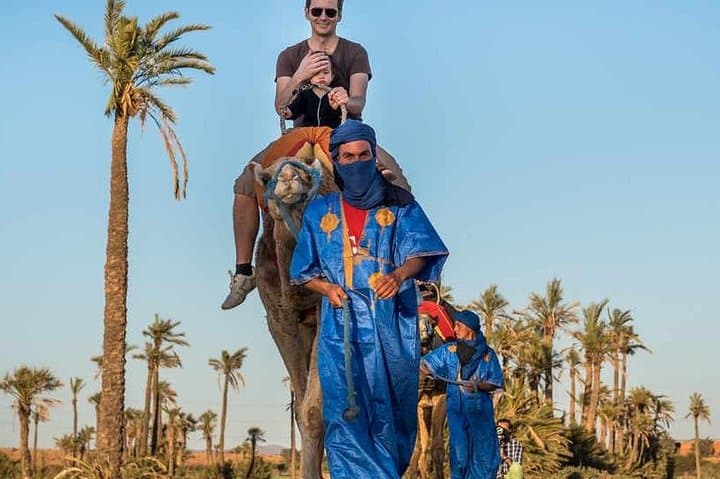
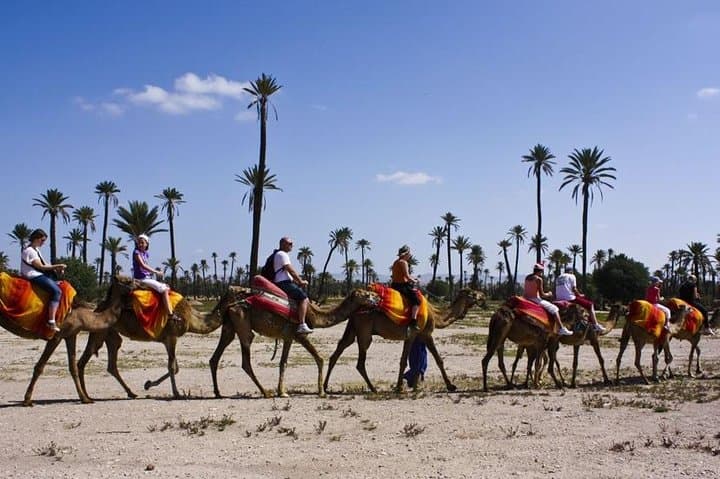
You climb into the wooden saddle as the city’s heat thins behind you and palms rise like an ordered crowd, their fronds whispering with a desert breeze. The camels walk deliberately along sandy tracks through the Palmeraie, the cultivated palm oasis that frames Marrakech’s northeastern edge, while low ridges and scrubland open toward the rockier desert beyond.
You climb into the wooden saddle as the city’s heat thins behind you and palms rise like an ordered crowd, their fronds whispering with a desert breeze. The camels walk deliberately along sandy tracks through the Palmeraie, the cultivated palm oasis that frames Marrakech’s northeastern edge, while low ridges and scrubland open toward the rockier desert beyond.
The Palmeraie dates to centuries of irrigation and date cultivation; its grid of palms marks ancient watercourses fed by the Tensift basin and later maintained as an escape for sultans and colonial-era estates. Geologically, the area sits at the transition from alluvial plain to arid plateaus—sand, gravel and seasonal wadis shape the short views. Culturally, local Berber and Arab communities still manage small plots and welcome visitors; mint tea breaks after a ride are a common social ritual.
On a two-hour outing you’ll pass shaded groves, small villages, and open scrub while guided riders handle the camels and explain local customs. Photo stops are frequent; sunset runs sharpen the light and cool the air.
Practical notes: wear closed-toe shoes and a light scarf (a cheich) supplied by many operators will protect from dust. Bring water, sunscreen and a camera with a strap—the ground is uneven and camels mount and dismount with a pronounced sway. Rides are suitable for most fitness levels; motion sensitivity and strict balance concerns should be discussed with the operator beforehand. Plan pickup from central Marrakech and allow extra time during prayer hours or busy market seasons.