THE ADVENTURE COLLECTIVE® · Independent discovery and booking for outdoor travel

Slow your pace to the camel’s gait and cross Marrakech’s Palmeraie, where date palms and small Berber villages frame a two-hour cultural ride. Expect steady terrain, mint tea stops, and easy logistics with hotel pickup.
Slow your pace to the camel’s gait and cross Marrakech’s Palmeraie, where date palms and small Berber villages frame a two-hour cultural ride. Expect steady terrain, mint tea stops, and easy logistics with hotel pickup.
A low sun casts long ribs of shadow between rows of date palms as riders climb into the slow rhythm of a camel’s gait. The Palmeraie of Marrakech spreads green and unexpected beyond the red city walls, palms leaning like old hands pointing toward the High Atlas. For two hours you move through a landscape that feels both cultivated and wild: irrigated fields, narrow tracks, and small Berber settlements where children watch curiously from mudbrick thresholds.
Verified experiences and guided adventures in the surrounding area.
Operated by Marvels Tours · Marrakech, Marrakech-Safi
A low sun casts long ribs of shadow between rows of date palms as riders climb into the slow rhythm of a camel’s gait. The Palmeraie of Marrakech spreads green and unexpected beyond the red city walls, palms leaning like old hands pointing toward the High Atlas. For two hours you move through a landscape that feels both cultivated and wild: irrigated fields, narrow tracks, and small Berber settlements where children watch curiously from mudbrick thresholds.
The Palmeraie formed from ancient irrigation and human planting over centuries; the palms sit atop alluvial soils carried down from the Atlas. The nearby villages reflect Amazigh (Berber) culture—simple homes, traditional hospitality and mint tea offered after the ride. Geology is quiet here: low, sandy terraces and seasonal irrigation channels that feed palms and small orchards rather than dramatic rock faces.
Expect an easy-paced, low-impact excursion focused on cultural contact as much as scenery. The camel ride itself is steady but requires mounting and a seated two-hour spell; guides lead you between palms and to village stops where hosts demonstrate local life and offer mint tea. Practicalities matter: bring sun protection, water, and long trousers (recommended by operators) to reduce chafing. The provider typically includes hotel pick-up and drop-off, making this a half-day window from hotel door to door.
This is an accessible introduction to rural Marrakech—best for travelers who want a gentle outdoor rhythm, cultural interaction, and calm views of palms against the Atlas backdrop.
easy.
2–4 hours.
Suitable for most fitness levels; able to mount/dismount a camel and remain seated for two hours.
The advertised camel ride lasts about two hours; total door-to-door time including transfers is typically up to four hours.
Yes—operators list the activity as physically easy; infants may sit on laps and special seats are sometimes available, but check about mounting assistance for anyone with mobility limits.
Comfortable clothes with long trousers, closed-toe shoes, and layers are recommended; light fabrics work in heat and a light jacket helps in cooler months.
Yes—this tour generally includes hotel or riad pickup and drop-off within Marrakech, but confirm your pickup point at booking.
The Palmeraie grew from medieval irrigation systems and later 19th–20th century planting that turned alluvial terraces into one of Marrakech’s largest palm zones, supporting local agriculture and shade-grown crops.
Water management is critical: the palm grove depends on irrigation and sustainable water use; choose operators that avoid disturbing village life and stick to established tracks.
Marvels Tours operates guided outdoor trips and adventures with an emphasis on safety, stewardship, and memorable experiences.
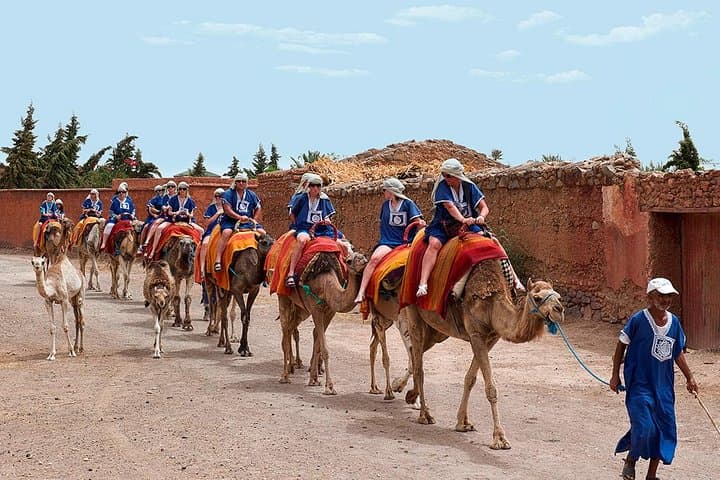
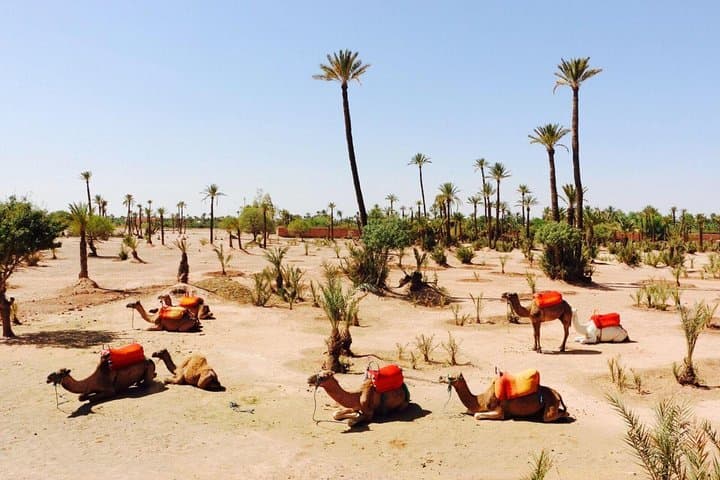
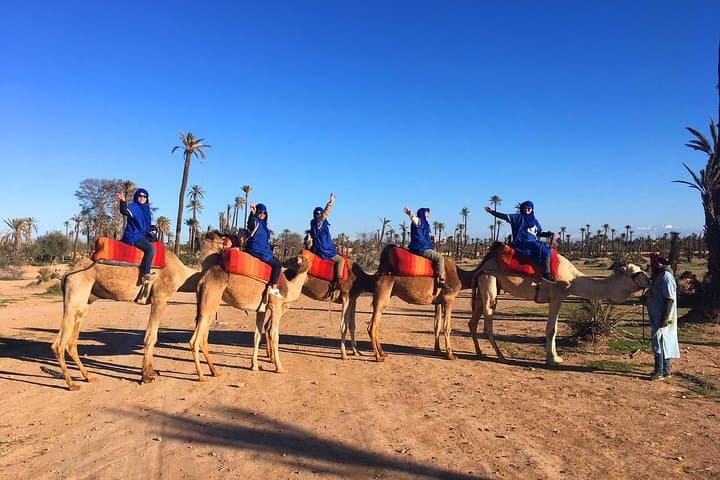
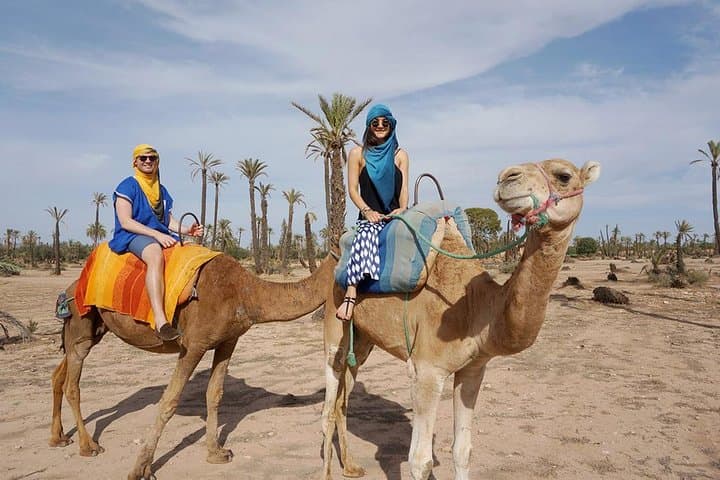
A low sun casts long ribs of shadow between rows of date palms as riders climb into the slow rhythm of a camel’s gait. The Palmeraie of Marrakech spreads green and unexpected beyond the red city walls, palms leaning like old hands pointing toward the High Atlas. For two hours you move through a landscape that feels both cultivated and wild: irrigated fields, narrow tracks, and small Berber settlements where children watch curiously from mudbrick thresholds.
A low sun casts long ribs of shadow between rows of date palms as riders climb into the slow rhythm of a camel’s gait. The Palmeraie of Marrakech spreads green and unexpected beyond the red city walls, palms leaning like old hands pointing toward the High Atlas. For two hours you move through a landscape that feels both cultivated and wild: irrigated fields, narrow tracks, and small Berber settlements where children watch curiously from mudbrick thresholds.
The Palmeraie formed from ancient irrigation and human planting over centuries; the palms sit atop alluvial soils carried down from the Atlas. The nearby villages reflect Amazigh (Berber) culture—simple homes, traditional hospitality and mint tea offered after the ride. Geology is quiet here: low, sandy terraces and seasonal irrigation channels that feed palms and small orchards rather than dramatic rock faces.
Expect an easy-paced, low-impact excursion focused on cultural contact as much as scenery. The camel ride itself is steady but requires mounting and a seated two-hour spell; guides lead you between palms and to village stops where hosts demonstrate local life and offer mint tea. Practicalities matter: bring sun protection, water, and long trousers (recommended by operators) to reduce chafing. The provider typically includes hotel pick-up and drop-off, making this a half-day window from hotel door to door.
This is an accessible introduction to rural Marrakech—best for travelers who want a gentle outdoor rhythm, cultural interaction, and calm views of palms against the Atlas backdrop.