THE ADVENTURE COLLECTIVE® · Independent discovery and booking for outdoor travel

Ride a dromedary through Marrakech’s vast Palmeraie, passing villas, canal lines, and real Berber homes before pausing for mint tea. This three-hour private tour blends gentle outdoor motion with cultural visits to local families.
Ride a dromedary through Marrakech’s vast Palmeraie, passing villas, canal lines, and real Berber homes before pausing for mint tea. This three-hour private tour blends gentle outdoor motion with cultural visits to local families.
You mount a dromedary as wind skims past a fringe of palms, the city’s red roofs shrinking behind you. The Palmeraie of Marrakech unfurls: rows of fan-like date palms and pockets of cultivated soil threaded by old irrigation channels. The camel shifts, steady as a tram, and the grove leans in like an audience watching you pass.
Verified experiences and guided adventures in the surrounding area.
Operated by Dafli Tours · Marrakech, Marrakech-Safi
You mount a dromedary as wind skims past a fringe of palms, the city’s red roofs shrinking behind you. The Palmeraie of Marrakech unfurls: rows of fan-like date palms and pockets of cultivated soil threaded by old irrigation channels. The camel shifts, steady as a tram, and the grove leans in like an audience watching you pass.
Historically the Palmeraie grew from pre-Saharan date supplies and local irrigation practices; folklore even ties its origin to military camps and discarded date pits. Geologically the plain is an alluvial terrace fed by the Tensift basin, which allowed palms to thrive where groundwater is accessible. Culturally the route passes modern villas and genuine Berber homes — a rare glimpse of rural life within reach of a city.
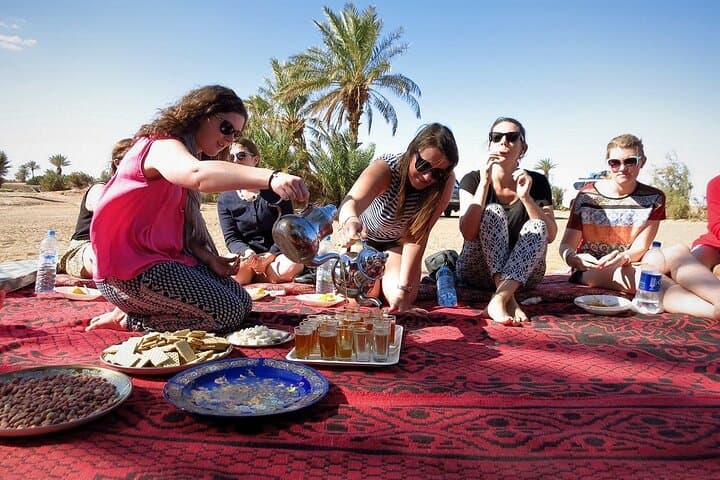
Expect a roughly three-hour private excursion with English- or French-speaking guides, including hotel pick-up, a guided ride on a single camel per rider, and a mint-tea stop in a Berber family home. Terrain is flat sand and packed earth with short stretches beside villas and small canals; elevation change is negligible.
Practical points: wear closed-toe shoes, a sun hat or cheich, and bring at least 1–2 liters of water. Camel saddles are secure but not cushioned—bring a light layer for padding. The experience suits most fitness levels, but it isn’t advised for pregnant travelers or those with significant spinal or heart issues. Aim for early morning or late afternoon to avoid midday heat and to catch soft light across the palms.
This ride pairs cultural contact with easy outdoor movement — an accessible way to feel the outskirts of Marrakech without leaving the landscape’s steady rhythm.
easy.
3 hours.
Suitable for most fitness levels; able to mount/dismount a camel and sit for short periods.
The entire activity is about 3 hours including pick-up, riding through the Palmeraie, and a mint tea stop; actual time on the camel is roughly 60–90 minutes depending on pace.
Children can usually ride but must be supervised; pregnant travelers and those with serious spinal or heart conditions are advised not to participate.
Yes—English- or French-speaking guides are standard and pick-up/return to Marrakech riads or hotels is included in the tour price.
Tipping is customary—small notes for handlers and a modest contribution for the family tea visit are appreciated.
Local folklore links the Palmeraie’s start to pre-Saharan date supplies and military camps; irrigation and groundwater made large-scale palms possible.
The Palmeraie depends on managed groundwater and traditional irrigation; visitors should minimize water waste, stick to paths, and respect private properties and local families.
Dafli Tours operates guided outdoor trips and adventures with an emphasis on safety, stewardship, and memorable experiences.
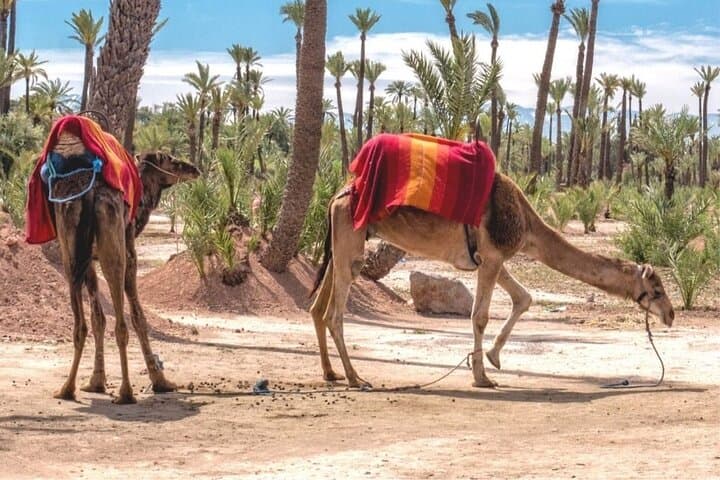
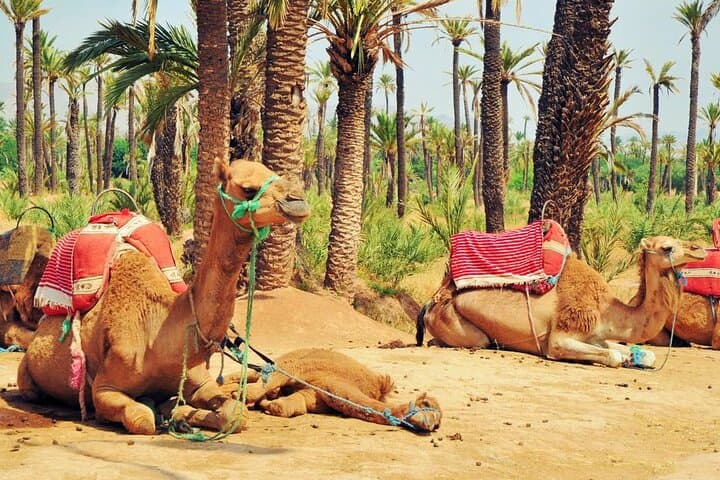
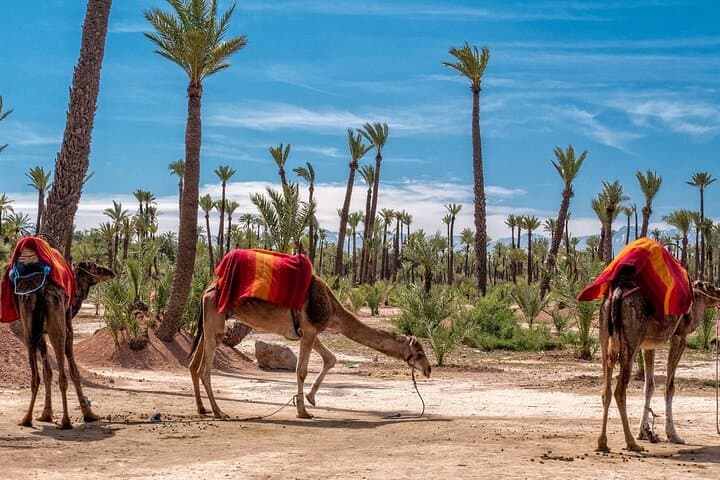
You mount a dromedary as wind skims past a fringe of palms, the city’s red roofs shrinking behind you. The Palmeraie of Marrakech unfurls: rows of fan-like date palms and pockets of cultivated soil threaded by old irrigation channels. The camel shifts, steady as a tram, and the grove leans in like an audience watching you pass.
You mount a dromedary as wind skims past a fringe of palms, the city’s red roofs shrinking behind you. The Palmeraie of Marrakech unfurls: rows of fan-like date palms and pockets of cultivated soil threaded by old irrigation channels. The camel shifts, steady as a tram, and the grove leans in like an audience watching you pass.
Historically the Palmeraie grew from pre-Saharan date supplies and local irrigation practices; folklore even ties its origin to military camps and discarded date pits. Geologically the plain is an alluvial terrace fed by the Tensift basin, which allowed palms to thrive where groundwater is accessible. Culturally the route passes modern villas and genuine Berber homes — a rare glimpse of rural life within reach of a city.
Expect a roughly three-hour private excursion with English- or French-speaking guides, including hotel pick-up, a guided ride on a single camel per rider, and a mint-tea stop in a Berber family home. Terrain is flat sand and packed earth with short stretches beside villas and small canals; elevation change is negligible.
Practical points: wear closed-toe shoes, a sun hat or cheich, and bring at least 1–2 liters of water. Camel saddles are secure but not cushioned—bring a light layer for padding. The experience suits most fitness levels, but it isn’t advised for pregnant travelers or those with significant spinal or heart issues. Aim for early morning or late afternoon to avoid midday heat and to catch soft light across the palms.
This ride pairs cultural contact with easy outdoor movement — an accessible way to feel the outskirts of Marrakech without leaving the landscape’s steady rhythm.