THE ADVENTURE COLLECTIVE® · Independent discovery and booking for outdoor travel

Ride camels across the dunes of M'Hamid, spend a night in a private tent, and watch sunrise and stars over the Sahara. This half-day plus overnight trip mixes gentle travel, local food, and a raw desert sky.
Ride camels across the dunes of M'Hamid, spend a night in a private tent, and watch sunrise and stars over the Sahara. This half-day plus overnight trip mixes gentle travel, local food, and a raw desert sky.
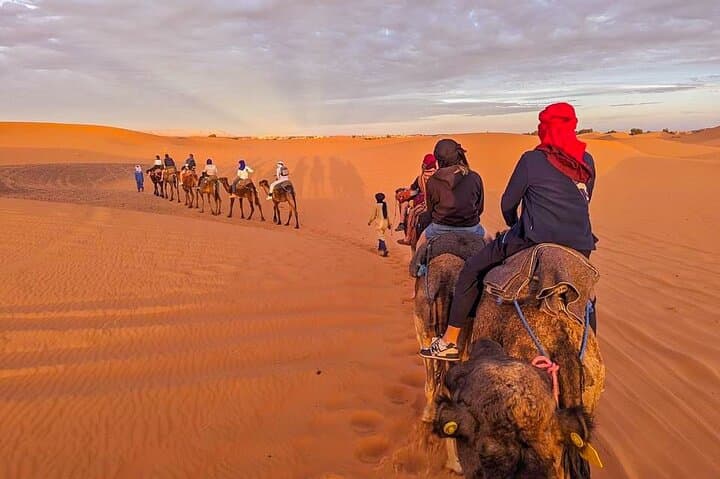
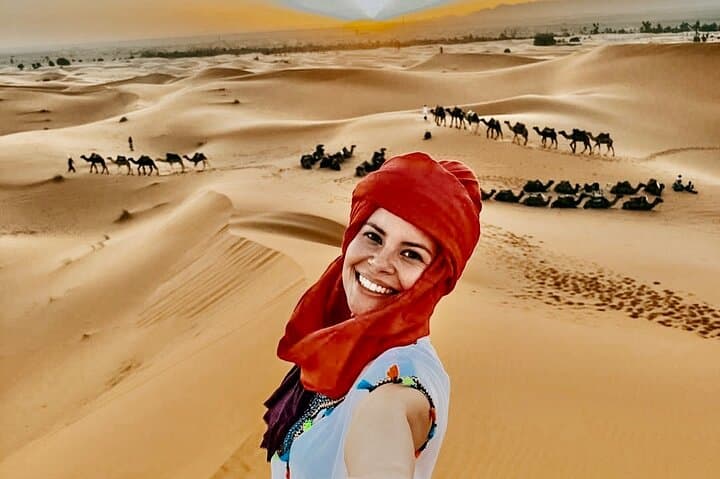
The sun tilts low and the camels pick a steady rhythm, each sway measuring out the distance between you and the horizon. In M'Hamid the dunes stretch into an ocean of sand; the skin-tight blue sky turns copper at sunset and an uncompromising black at night, where stars seem to press close enough to touch.
Verified experiences and guided adventures in the surrounding area.
Operated by Morocco Desert Trip · M'Hamid (Mhamid El Ghizlane), Drâa-Tafilalet
The sun tilts low and the camels pick a steady rhythm, each sway measuring out the distance between you and the horizon. In M'Hamid the dunes stretch into an ocean of sand; the skin-tight blue sky turns copper at sunset and an uncompromising black at night, where stars seem to press close enough to touch.
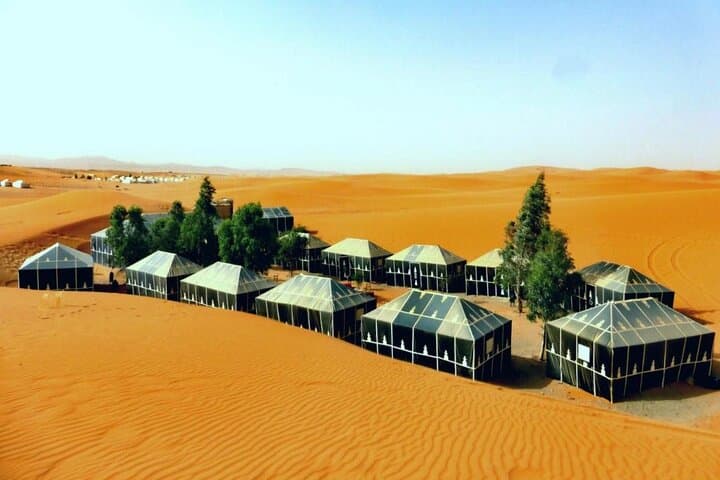
This ride follows routes used for centuries by Saharan caravans moving between oases. Geologically the dunes are wind-sculpted—shifting ridges with small, sudden drops rather than long climbs—so elevation change is minimal but footing on camelback is an acquired balance. The town of M'Hamid is the last palm-lined outpost before open sand and carries a nomadic culture visible in the camps, tents, and evening music around the fire.
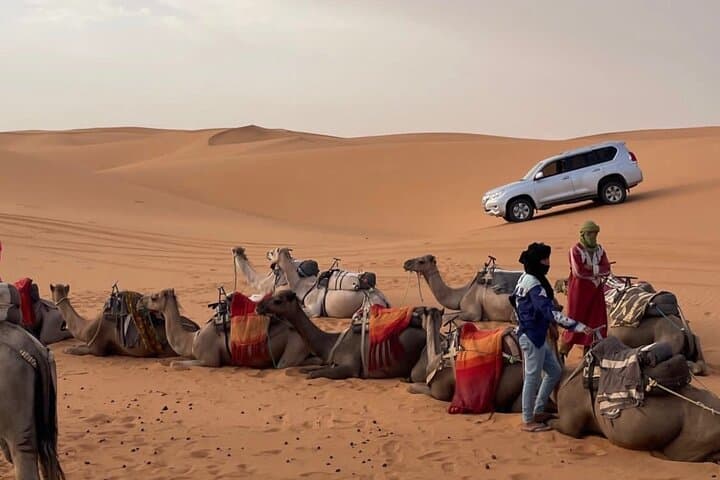
Expect a half-day camel trek that culminates in a private tent camp: dinner of local dishes, hot tea, and a night under the Milky Way. Sunrise here is the practical highlight—soft light, cool air, and long shadows that make navigation easier. Guides typically handle camel care, tent setup, and meals; travelers should bring water, sun protection, and a warm layer for night temperatures that can drop sharply.
Practical details: the trip is suitable for most fitness levels, does not require technical skills, and usually runs about 12 hours including transfer time. Footwear should protect from sand and allow short walks off-camel. If you're planning photography, bring spare batteries—the cold night and long exposures demand it. Respect local etiquette: ask before photographing people, conserve water, and pack out waste. The desert offers a simple, tactile experience—slow travel that trades distance for detail.
moderate.
12 hours (overnight).
Suitable for most travelers who can mount a camel and walk short distances; expect some balance and core engagement.
The organized camel trek and camp experience is part of a roughly 12-hour program that includes transfers; on-camel time varies but typically totals several hours broken into sections for rest and walking.
Yes—overnight stays are commonly in private tents with dinner and breakfast provided by your guide or camp operator.
The activity is suitable for most ages, but it’s not recommended for travelers with serious spinal or cardiovascular issues; always check with the operator about specific mobility needs.
Guides in M'Hamid often speak Arabic and French; many operators catering to tourists also have basic English—confirm language needs when booking.
M'Hamid sits at the edge of ancient trans-Saharan trade routes; the settlement grew around palm oases and seasonal caravan traffic.
Dune ecosystems are fragile—stick to established routes, avoid unnecessary campfires, and carry out all trash to minimize impact.
Morocco Desert Trip operates guided outdoor trips and adventures with an emphasis on safety, stewardship, and memorable experiences.
The sun tilts low and the camels pick a steady rhythm, each sway measuring out the distance between you and the horizon. In M'Hamid the dunes stretch into an ocean of sand; the skin-tight blue sky turns copper at sunset and an uncompromising black at night, where stars seem to press close enough to touch.
The sun tilts low and the camels pick a steady rhythm, each sway measuring out the distance between you and the horizon. In M'Hamid the dunes stretch into an ocean of sand; the skin-tight blue sky turns copper at sunset and an uncompromising black at night, where stars seem to press close enough to touch.
This ride follows routes used for centuries by Saharan caravans moving between oases. Geologically the dunes are wind-sculpted—shifting ridges with small, sudden drops rather than long climbs—so elevation change is minimal but footing on camelback is an acquired balance. The town of M'Hamid is the last palm-lined outpost before open sand and carries a nomadic culture visible in the camps, tents, and evening music around the fire.
Expect a half-day camel trek that culminates in a private tent camp: dinner of local dishes, hot tea, and a night under the Milky Way. Sunrise here is the practical highlight—soft light, cool air, and long shadows that make navigation easier. Guides typically handle camel care, tent setup, and meals; travelers should bring water, sun protection, and a warm layer for night temperatures that can drop sharply.
Practical details: the trip is suitable for most fitness levels, does not require technical skills, and usually runs about 12 hours including transfer time. Footwear should protect from sand and allow short walks off-camel. If you're planning photography, bring spare batteries—the cold night and long exposures demand it. Respect local etiquette: ask before photographing people, conserve water, and pack out waste. The desert offers a simple, tactile experience—slow travel that trades distance for detail.