THE ADVENTURE COLLECTIVE® · Independent discovery and booking for outdoor travel

Ride a dromedary along Tangier’s Atlantic shore for a slow, tactile view of cliffs, lighthouse vistas, and seaside culture. This half-day excursion pairs a beach camel trek with short coastal stops and local insights.
Ride a dromedary along Tangier’s Atlantic shore for a slow, tactile view of cliffs, lighthouse vistas, and seaside culture. This half-day excursion pairs a beach camel trek with short coastal stops and local insights.
The Atlantic pushes cool foam across a wide band of sand as a line of dromedaries rises and falls with the tide. You settle into a padded saddle, the animal’s slow, steady gait setting the rhythm while Tangier’s cliffs and lighthouse stand watch to the north.
Verified experiences and guided adventures in the surrounding area.
Operated by Tour Guide Benamar · Tangier, Tanger-Tetouan-Al Hoceima
The Atlantic pushes cool foam across a wide band of sand as a line of dromedaries rises and falls with the tide. You settle into a padded saddle, the animal’s slow, steady gait setting the rhythm while Tangier’s cliffs and lighthouse stand watch to the north.
This coastal camel ride blends recent and older histories: the shoreline where Phoenicians and later Portuguese and Ottoman influences met, the 19th-century foreign villas near Perdicaris Park, and local fishing villages that still haul nets at dawn. Geologically the coast is limestone and sandstone cliffs worn by waves; the beach itself is a sweeping Atlantic terrace where currents meet the Mediterranean further east near the Strait of Gibraltar.
Culturally the experience is a quiet, human-scale moment—handlers guide calm dromedaries (one-humped camels adapted to North Africa) and often share small stories about Tangier’s medina, kasbah, and seasonal festivals. Expect brief stops for views of Cap Spartel’s lighthouse and the Map of Africa cave when included in a half-day itinerary.
Practically: rides commonly last 20–40 minutes on the sand as part of a 6-hour city-and-coast tour. Bring sun protection, a small daypack, and shoes that can handle sand and salty spray; winds can pick up late afternoon. Fitness needs are moderate—mounting and dismounting requires basic mobility, but the camels are patient and handlers assist.
Timing matters: early morning or late afternoon avoids peak sun and summer crowds. Respect handlers’ guidance, follow local customs around tipping and photography, and leave no trace on the shoreline—these beaches are both working coasts and fragile habitats.
moderate.
6 hours (tour, with 20–40 min ride).
Basic mobility and moderate fitness to mount/dismount and walk on sand; not recommended for those with serious back or joint issues.
The camel segment typically lasts 20–40 minutes on the beach and is part of a larger half-day (about 6-hour) tour of Tangier’s coast and city highlights.
Handlers report rides are accessible to children and seniors with assistance; infants usually sit on laps and those with serious mobility issues should avoid riding.
Yes—most itineraries include stops at Perdicaris Park, the Cap Spartel lighthouse area, the Map of Africa cave viewpoint, and a short visit to the kasbah or medina.
Standard policy allows full refund if canceled at least 24 hours before departure; last-minute cancellations are non-refundable.
Tangier’s coast bears layers of history from Phoenician traders to 15th-century Portuguese fortifications and 19th-century foreign residencies that shaped the city’s multicultural character.
Keep to established paths and avoid disturbing nesting birds on dunes; local efforts focus on beach cleanliness and protecting intertidal habitats.
Tour Guide Benamar operates guided outdoor trips and adventures with an emphasis on safety, stewardship, and memorable experiences.
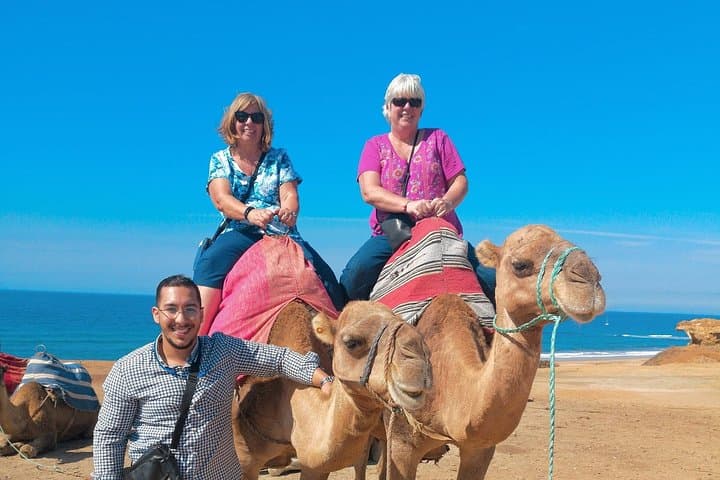
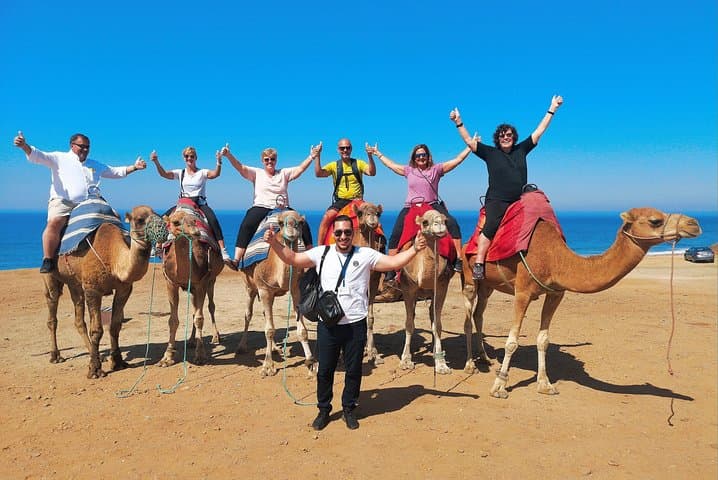
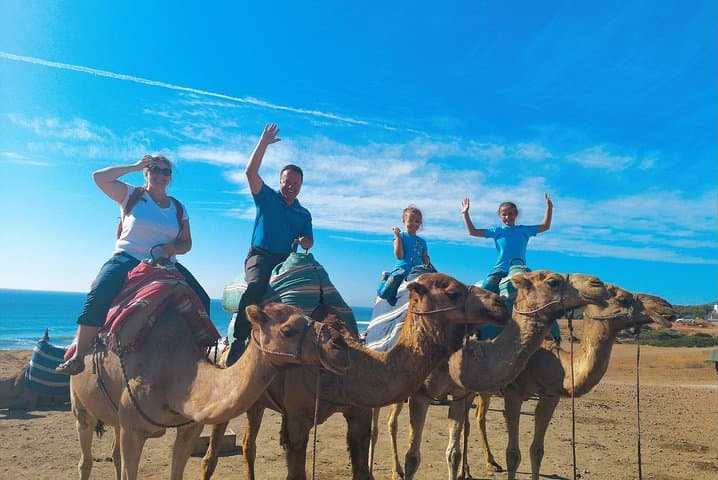
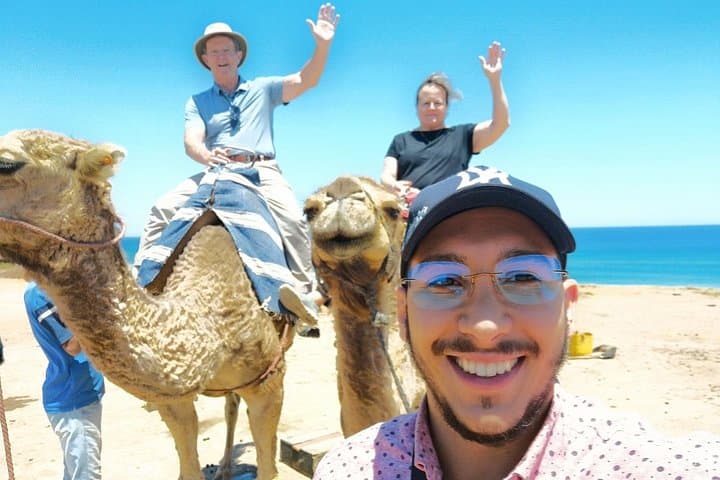
The Atlantic pushes cool foam across a wide band of sand as a line of dromedaries rises and falls with the tide. You settle into a padded saddle, the animal’s slow, steady gait setting the rhythm while Tangier’s cliffs and lighthouse stand watch to the north.
The Atlantic pushes cool foam across a wide band of sand as a line of dromedaries rises and falls with the tide. You settle into a padded saddle, the animal’s slow, steady gait setting the rhythm while Tangier’s cliffs and lighthouse stand watch to the north.
This coastal camel ride blends recent and older histories: the shoreline where Phoenicians and later Portuguese and Ottoman influences met, the 19th-century foreign villas near Perdicaris Park, and local fishing villages that still haul nets at dawn. Geologically the coast is limestone and sandstone cliffs worn by waves; the beach itself is a sweeping Atlantic terrace where currents meet the Mediterranean further east near the Strait of Gibraltar.
Culturally the experience is a quiet, human-scale moment—handlers guide calm dromedaries (one-humped camels adapted to North Africa) and often share small stories about Tangier’s medina, kasbah, and seasonal festivals. Expect brief stops for views of Cap Spartel’s lighthouse and the Map of Africa cave when included in a half-day itinerary.
Practically: rides commonly last 20–40 minutes on the sand as part of a 6-hour city-and-coast tour. Bring sun protection, a small daypack, and shoes that can handle sand and salty spray; winds can pick up late afternoon. Fitness needs are moderate—mounting and dismounting requires basic mobility, but the camels are patient and handlers assist.
Timing matters: early morning or late afternoon avoids peak sun and summer crowds. Respect handlers’ guidance, follow local customs around tipping and photography, and leave no trace on the shoreline—these beaches are both working coasts and fragile habitats.