THE ADVENTURE COLLECTIVE® · Independent discovery and booking for outdoor travel

Ride a camel along 6 km of Taghazout beach under the Moroccan sun, where steady mounts and Atlantic views meet Berber fishing culture. This family-friendly coastal experience mixes easy-paced adventure with practical local insights.
Ride a camel along 6 km of Taghazout beach under the Moroccan sun, where steady mounts and Atlantic views meet Berber fishing culture. This family-friendly coastal experience mixes easy-paced adventure with practical local insights.
The first step onto the camel's padded saddle is a small surrender: the animal rises with a subtle, rhythmic heave and the Atlantic wind immediately rearranges your hair and your plans. You glide along six kilometres of mostly untracked Taghazout sand, the ocean daring you to look away as foamy surf and the distant outline of the Anti-Atlas trade places across the horizon.
Verified experiences and guided adventures in the surrounding area.
Operated by Special Holidays Morocco · Taghazout, Agadir-Ida Ou Tanane
The first step onto the camel's padded saddle is a small surrender: the animal rises with a subtle, rhythmic heave and the Atlantic wind immediately rearranges your hair and your plans. You glide along six kilometres of mostly untracked Taghazout sand, the ocean daring you to look away as foamy surf and the distant outline of the Anti-Atlas trade places across the horizon.
This stretch of coastline began as a string of Berber fishing hamlets; the same dunes that guide your camel formed from millennia of wind-driven sand and coastal currents. Geologically, the beach sits where Atlantic energy meets softer Quaternary deposits, producing long low shores that hold shells and occasional rock pools. Culturally, the ride passes working beaches and surf camps — a living slice of southern Moroccan life where fishing, surfing and tourism intersect.
Practically, the experience is paced and family-friendly: mounts are steady, handlers brief riders on safe boarding and dismounting, and rides usually last around two hours though booking pages often list three. It’s not recommended for pregnant travelers or people with serious back or heart conditions. Bring sun protection, a lightweight layer for breezy moments, and a camera with a strap; camels move smoothly but unpredictably.
Expect slow, panoramic progress rather than speed — time to notice tide-carved rock pools, shorebirds probing the surf, and distant fishermen hauling nets. Respect dune vegetation, follow your guide’s route, and keep conversations low so the coast and its creatures can keep doing what they do best: moving you forward.
easy.
2–3 hours.
Participants should have at least a moderate level of fitness for mounting, dismounting, and maintaining balance for the ride.
The advertised activity runs about two hours on-route, with booking pages sometimes reflecting a three-hour total that includes transfers or brief stops.
Yes—many families join; handlers provide child seating options, but infants and those with mobility limits should check availability of specialized seats.
Not recommended for pregnant travelers or people with serious back, neck, or heart conditions; consult the operator and your doctor if unsure.
Yes—there are natural stopping points for photos, but bring a strap or protective case to keep gear safe from sand and motion.
Taghazout evolved from a small Berber fishing village into a surf and coastal destination; local life still centers on fishing, market trade, and seasonal tourism.
Coastal dunes and shorebird habitat are sensitive—avoid trampling dune vegetation, carry out all litter, and accept guide instructions to minimize erosion and wildlife disturbance.
Special Holidays Morocco operates guided outdoor trips and adventures with an emphasis on safety, stewardship, and memorable experiences.
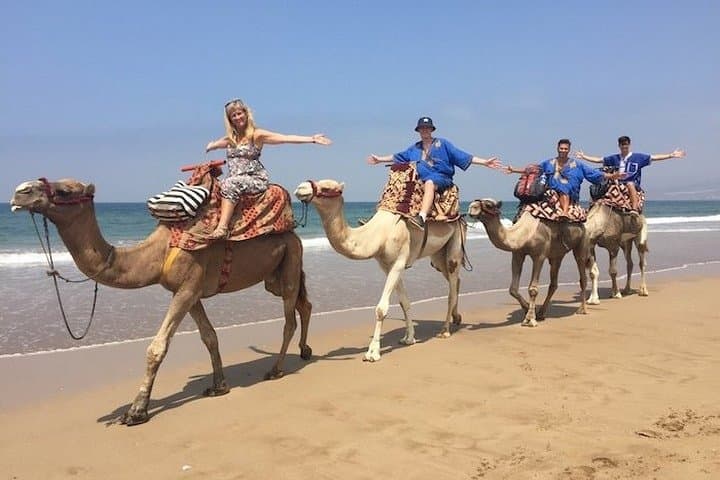
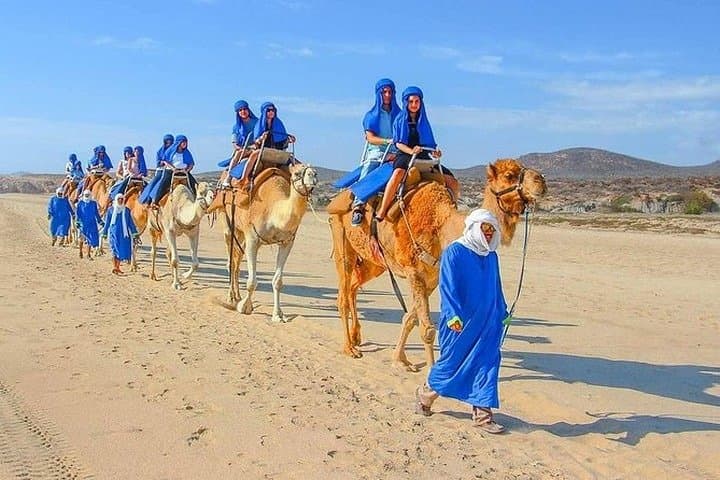
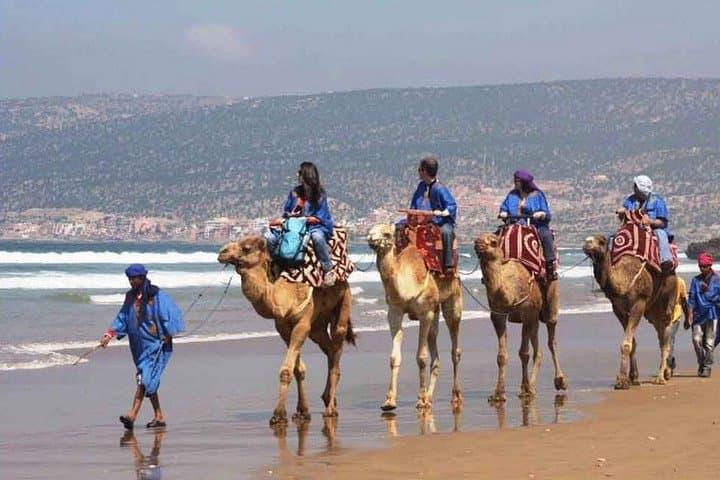
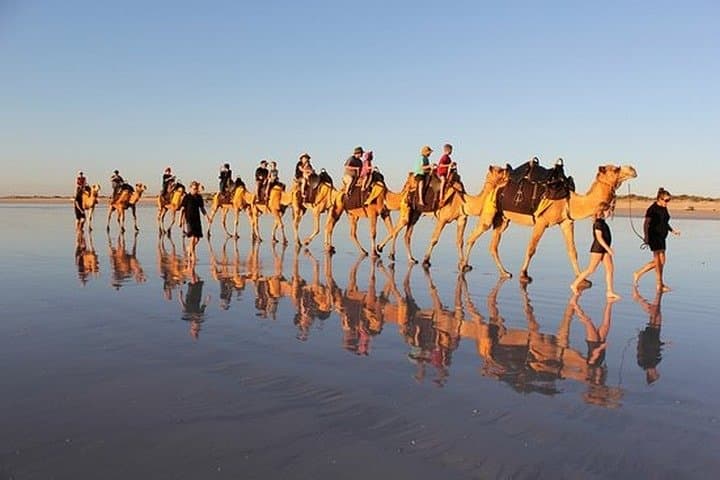
The first step onto the camel's padded saddle is a small surrender: the animal rises with a subtle, rhythmic heave and the Atlantic wind immediately rearranges your hair and your plans. You glide along six kilometres of mostly untracked Taghazout sand, the ocean daring you to look away as foamy surf and the distant outline of the Anti-Atlas trade places across the horizon.
The first step onto the camel's padded saddle is a small surrender: the animal rises with a subtle, rhythmic heave and the Atlantic wind immediately rearranges your hair and your plans. You glide along six kilometres of mostly untracked Taghazout sand, the ocean daring you to look away as foamy surf and the distant outline of the Anti-Atlas trade places across the horizon.
This stretch of coastline began as a string of Berber fishing hamlets; the same dunes that guide your camel formed from millennia of wind-driven sand and coastal currents. Geologically, the beach sits where Atlantic energy meets softer Quaternary deposits, producing long low shores that hold shells and occasional rock pools. Culturally, the ride passes working beaches and surf camps — a living slice of southern Moroccan life where fishing, surfing and tourism intersect.
Practically, the experience is paced and family-friendly: mounts are steady, handlers brief riders on safe boarding and dismounting, and rides usually last around two hours though booking pages often list three. It’s not recommended for pregnant travelers or people with serious back or heart conditions. Bring sun protection, a lightweight layer for breezy moments, and a camera with a strap; camels move smoothly but unpredictably.
Expect slow, panoramic progress rather than speed — time to notice tide-carved rock pools, shorebirds probing the surf, and distant fishermen hauling nets. Respect dune vegetation, follow your guide’s route, and keep conversations low so the coast and its creatures can keep doing what they do best: moving you forward.