THE ADVENTURE COLLECTIVE® · Independent discovery and booking for outdoor travel

Ride a slow-moving caravan through Marrakech’s Palmeraie, exchange stories with local handlers, and finish with mint tea in a family garden. This half-day outing combines easy camel riding, shaded palm tracks, and straightforward cultural exchange.
Ride a slow-moving caravan through Marrakech’s Palmeraie, exchange stories with local handlers, and finish with mint tea in a family garden. This half-day outing combines easy camel riding, shaded palm tracks, and straightforward cultural exchange.
The caravan leaves the hotel, slides north through the city’s red-brick edges, and soon palms crowd the road until a thin green sea opens: the Palmeraie. Camels shift and breathe—slow, patient machines—and their handlers hand over blue Tuareg wraps before guests climb into the saddle. The rhythm of the caravan is steady; the grove’s palms lean like watchful hosts, and the soft crunch of packed sand marks each slow step.
Verified experiences and guided adventures in the surrounding area.
Operated by Sahara Revelation · Marrakech, Marrakesh-Safi
The caravan leaves the hotel, slides north through the city’s red-brick edges, and soon palms crowd the road until a thin green sea opens: the Palmeraie. Camels shift and breathe—slow, patient machines—and their handlers hand over blue Tuareg wraps before guests climb into the saddle. The rhythm of the caravan is steady; the grove’s palms lean like watchful hosts, and the soft crunch of packed sand marks each slow step.
The Palmeraie is a human-shaped oasis on Marrakech’s northern fringe, planted and irrigated over centuries to shade farms and summer homes. Geologically, the area sits on alluvial plains where groundwater supports dense palm stands rather than true dunes, creating a unique desert-edge landscape with its own microclimate.
Riding here is as much cultural as scenic: local families run small camps and invite visitors to mint tea and conversation, preserving a tradition of hospitality. Expect basic camel saddles, patient animals trained for tourists, and short photo stops where handlers explain camel behavior and local customs.
Practical guidance: arrive with sun protection, wear long pants to prevent chafing, and bring a small bottle of water for the ride. The experience typically includes hotel transfer, an hour-plus on camelback through shaded tracks, and a mint tea stop with the hosts. Not recommended for those with back or heart conditions, and pregnant travelers should avoid mounting camels. Tipping local guides and handlers is customary and supports family-run operations.
This half-day outing is approachable for most travelers: it’s immersive, moderately paced, and a direct way to meet both the landscape and the people who manage it.
easy.
3 hours (including transfers; ~1–1.5 hours on camelback).
Suitable for most people who can sit comfortably for an hour; not for those with serious back, heart, or pregnancy restrictions.
The mounted portion runs about 60–90 minutes depending on the pace; total tour time with transfers is roughly three hours.
No — the Palmeraie is a large palm grove on Marrakech’s outskirts, an irrigated oasis, not the Sahara dunes.
Yes; infants may sit on laps and special seating can be arranged, but parents should assess comfort and safety for their child.
A small cash tip (local currency) is appreciated; 20–50 MAD per person is common depending on service and group size.
The Palmeraie grew as an engineered oasis to shade farms and seasonal residences for Marrakech’s nobility; irrigation has long sustained dense palm plantings north of the city.
Groundwater in the Palmeraie is limited; choose operators who practice low-impact riding, avoid leaving litter, and support local families rather than large commercial developments.
Sahara Revelation operates guided outdoor trips and adventures with an emphasis on safety, stewardship, and memorable experiences.
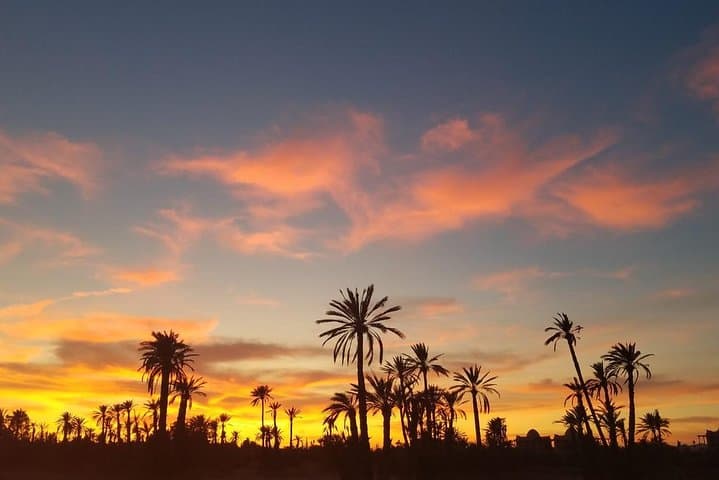
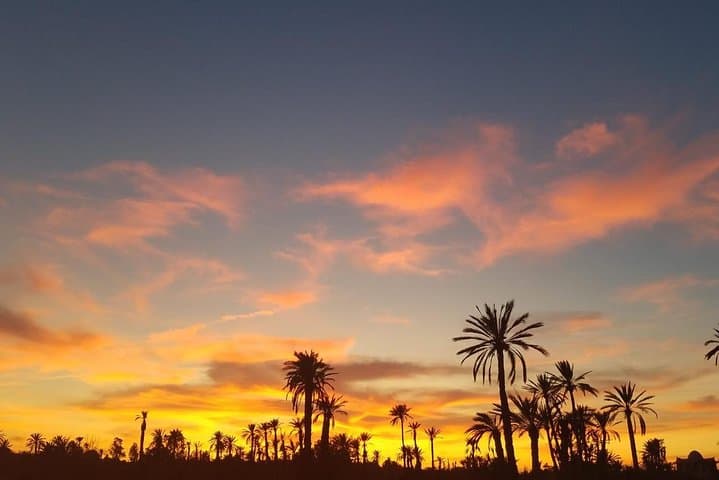
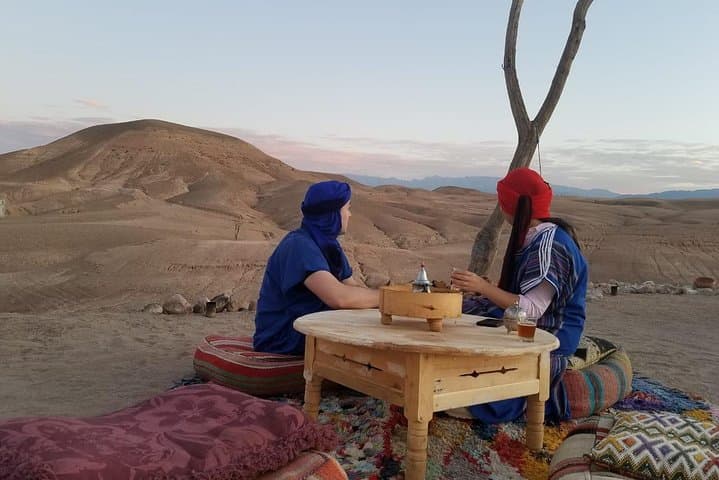
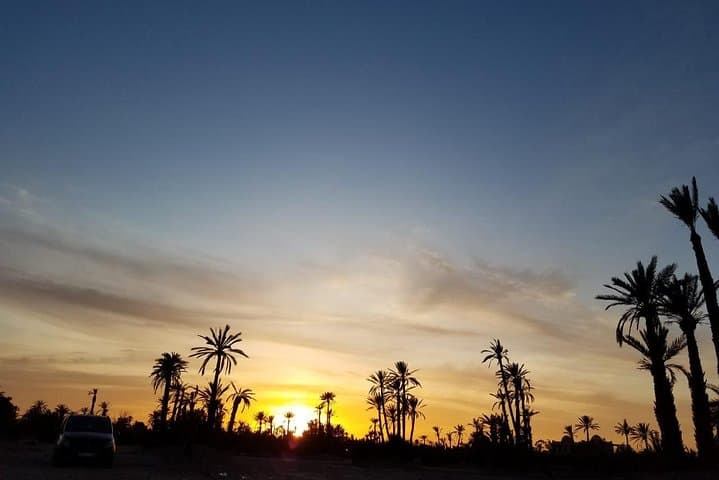
The caravan leaves the hotel, slides north through the city’s red-brick edges, and soon palms crowd the road until a thin green sea opens: the Palmeraie. Camels shift and breathe—slow, patient machines—and their handlers hand over blue Tuareg wraps before guests climb into the saddle. The rhythm of the caravan is steady; the grove’s palms lean like watchful hosts, and the soft crunch of packed sand marks each slow step.
The caravan leaves the hotel, slides north through the city’s red-brick edges, and soon palms crowd the road until a thin green sea opens: the Palmeraie. Camels shift and breathe—slow, patient machines—and their handlers hand over blue Tuareg wraps before guests climb into the saddle. The rhythm of the caravan is steady; the grove’s palms lean like watchful hosts, and the soft crunch of packed sand marks each slow step.
The Palmeraie is a human-shaped oasis on Marrakech’s northern fringe, planted and irrigated over centuries to shade farms and summer homes. Geologically, the area sits on alluvial plains where groundwater supports dense palm stands rather than true dunes, creating a unique desert-edge landscape with its own microclimate.
Riding here is as much cultural as scenic: local families run small camps and invite visitors to mint tea and conversation, preserving a tradition of hospitality. Expect basic camel saddles, patient animals trained for tourists, and short photo stops where handlers explain camel behavior and local customs.
Practical guidance: arrive with sun protection, wear long pants to prevent chafing, and bring a small bottle of water for the ride. The experience typically includes hotel transfer, an hour-plus on camelback through shaded tracks, and a mint tea stop with the hosts. Not recommended for those with back or heart conditions, and pregnant travelers should avoid mounting camels. Tipping local guides and handlers is customary and supports family-run operations.
This half-day outing is approachable for most travelers: it’s immersive, moderately paced, and a direct way to meet both the landscape and the people who manage it.