THE ADVENTURE COLLECTIVE® · Independent discovery and booking for outdoor travel

Escape Marrakech for two hours of slow desert rhythm: a guided camel ride through the Palmeraie with hotel pickup, mint tea, and sunset photo ops. Ideal for first-timers and travelers seeking an easy, culturally rooted outdoor experience.
Escape Marrakech for two hours of slow desert rhythm: a guided camel ride through the Palmeraie with hotel pickup, mint tea, and sunset photo ops. Ideal for first-timers and travelers seeking an easy, culturally rooted outdoor experience.
Dust lifts in a warm ribbon as the caravan moves away from the city; palms thin into open sand and the skyline of Marrakech drops behind you. The steady sway of a dromedary sets the pace — unhurried, reliably forward — while the Palmeraie’s fringe palms and olive groves pass like pages in a field notebook.
Verified experiences and guided adventures in the surrounding area.
Operated by best quad marrakech · Marrakech, Marrakech-Safi
Dust lifts in a warm ribbon as the caravan moves away from the city; palms thin into open sand and the skyline of Marrakech drops behind you. The steady sway of a dromedary sets the pace — unhurried, reliably forward — while the Palmeraie’s fringe palms and olive groves pass like pages in a field notebook.
The Palmeraie has been shaped by human hands for centuries: a working oasis where irrigation and successive cultures — Berber, Arab, Andalusian — found ways to manage scarce water and plant tall palms for shade and fruit. Geologically this is red-earth country at the edge of the High Atlas foothills, where wind and sparse rainfall leave a patchwork of scrub, cultivated plots, and sandy surfaces.
Culturally, camel rides are part show, part transport history: camels were trade partners long before tourism repurposed them. Local handlers often wear regional dress and may invite you for mint tea after the ride — a brief exchange that ties modern visitors into an older hospitality tradition.
Practically: expect a two-hour loop with hotel pickup and drop-off, minimal hiking, and gentle animal movement rather than a workout. Bring sun protection, a light scarf for sand and sun, and closed-toe shoes to step on and off safely. Morning or late‑afternoon departures are best for cooler temperatures and angled light for photos.
Note animal welfare: choose operators who limit rider weight, allow rest breaks, and provide shaded holding areas. Stay on marked routes to protect the palm roots and small-scale agriculture. With straightforward logistics and a low technical bar, the ride is an accessible way to feel the desert’s pace while learning a small slice of Marrakech’s rural edge.
easy.
2 hours.
Minimal fitness required—suitable for most travelers who can mount and sit for short periods
No—this activity is designed for first-time riders; guides provide mounting assistance and basic safety instructions.
Children can join depending on operator age and weight limits; infants may need to sit on laps—confirm during booking.
Most pickups are a short drive, typically 15–30 minutes depending on your hotel location and traffic.
Tours may be canceled for extreme weather; policies usually allow full refunds if canceled at least 24 hours in advance.
The Palmeraie evolved as a managed oasis—centuries of local irrigation and planting created the palm groves that supported villages and caravan routes.
Respect the palms and local farms by staying on tracks, avoiding litter, and choosing operators that prioritize humane treatment of camels and limited group sizes.
best quad marrakech operates guided outdoor trips and adventures with an emphasis on safety, stewardship, and memorable experiences.
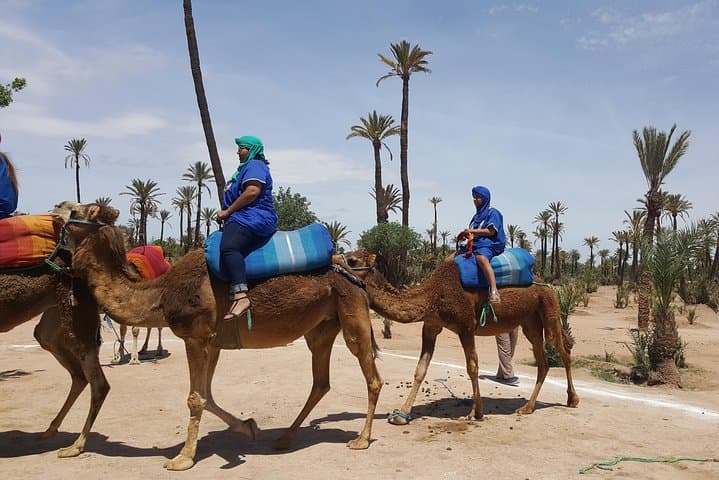
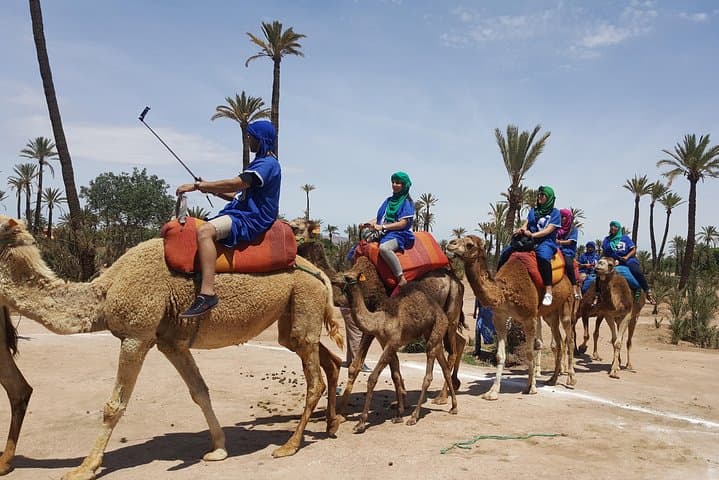
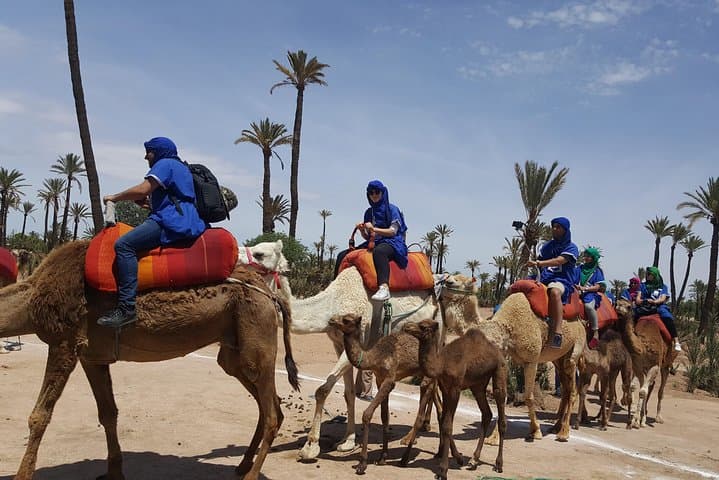
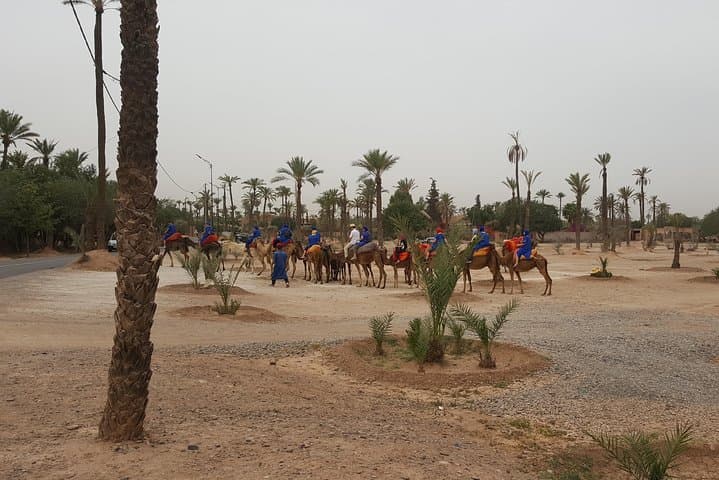
Dust lifts in a warm ribbon as the caravan moves away from the city; palms thin into open sand and the skyline of Marrakech drops behind you. The steady sway of a dromedary sets the pace — unhurried, reliably forward — while the Palmeraie’s fringe palms and olive groves pass like pages in a field notebook.
Dust lifts in a warm ribbon as the caravan moves away from the city; palms thin into open sand and the skyline of Marrakech drops behind you. The steady sway of a dromedary sets the pace — unhurried, reliably forward — while the Palmeraie’s fringe palms and olive groves pass like pages in a field notebook.
The Palmeraie has been shaped by human hands for centuries: a working oasis where irrigation and successive cultures — Berber, Arab, Andalusian — found ways to manage scarce water and plant tall palms for shade and fruit. Geologically this is red-earth country at the edge of the High Atlas foothills, where wind and sparse rainfall leave a patchwork of scrub, cultivated plots, and sandy surfaces.
Culturally, camel rides are part show, part transport history: camels were trade partners long before tourism repurposed them. Local handlers often wear regional dress and may invite you for mint tea after the ride — a brief exchange that ties modern visitors into an older hospitality tradition.
Practically: expect a two-hour loop with hotel pickup and drop-off, minimal hiking, and gentle animal movement rather than a workout. Bring sun protection, a light scarf for sand and sun, and closed-toe shoes to step on and off safely. Morning or late‑afternoon departures are best for cooler temperatures and angled light for photos.
Note animal welfare: choose operators who limit rider weight, allow rest breaks, and provide shaded holding areas. Stay on marked routes to protect the palm roots and small-scale agriculture. With straightforward logistics and a low technical bar, the ride is an accessible way to feel the desert’s pace while learning a small slice of Marrakech’s rural edge.