THE ADVENTURE COLLECTIVE® · Independent discovery and booking for outdoor travel

Leave the medina’s clamor for a 1-hour private camel ride through Marrakech’s Palmeraie. Glide past palm avenues and Berber villages, ending with mint tea in a nomadic tent—ideal at dawn or dusk.
Leave the medina’s clamor for a 1-hour private camel ride through Marrakech’s Palmeraie. Glide past palm avenues and Berber villages, ending with mint tea in a nomadic tent—ideal at dawn or dusk.
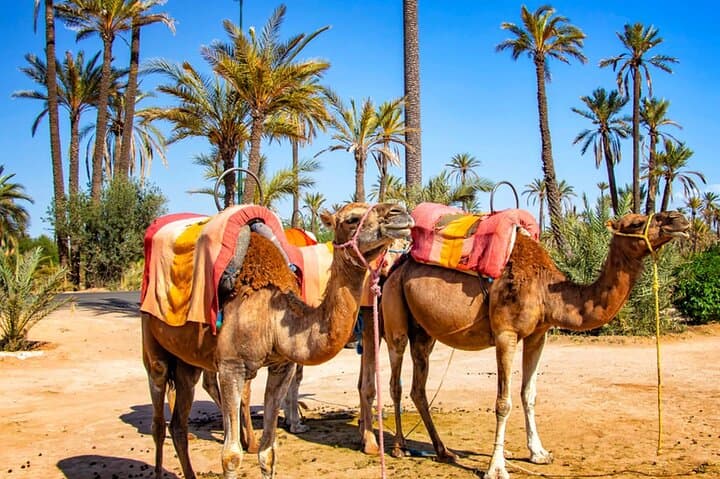
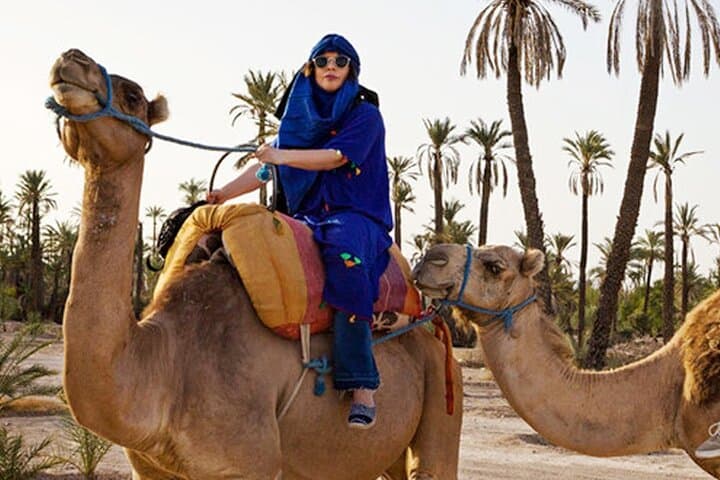
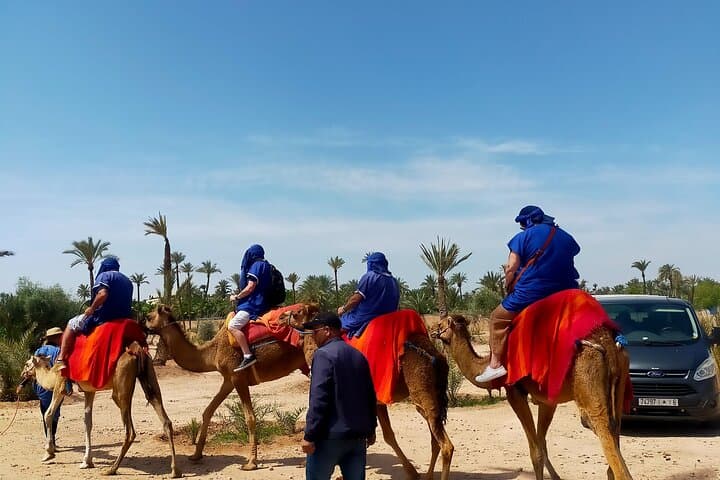
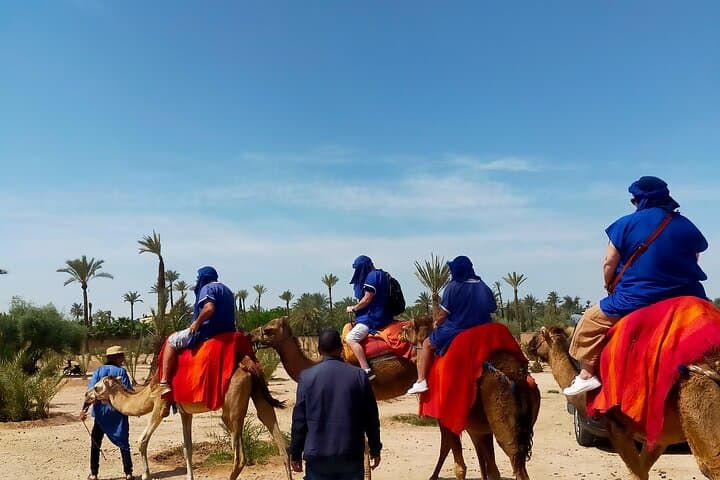
Morning light slices between date palms as a camel’s slow gait sets the rhythm. You climb into the padded saddle, feel the animal shift under you, and the city’s medina noise thins to the rustle of fronds and distant Atlas Mountain silhouettes.
Verified experiences and guided adventures in the surrounding area.
Operated by AnnoQri Travel Services · Marrakech, Marrakech-Safi
Morning light slices between date palms as a camel’s slow gait sets the rhythm. You climb into the padded saddle, feel the animal shift under you, and the city’s medina noise thins to the rustle of fronds and distant Atlas Mountain silhouettes.
The Palmeraie began as a managed oasis centuries ago—an engineered stand of palms fed by traditional khettara irrigation—later threaded by caravan routes that linked Marrakech to desert trade. Geologically, the grove sits on alluvial plains at the edge of the Haouz basin; the palms take advantage of groundwater and seasonal runoff, turning an arid landscape into a long ribbon of shade. Along the route you'll pass small Berber hamlets and agricultural plots where locals tend to olives and market gardens, and guides often drape a tuareg scarf (cheich) to protect riders from sun and sand.
This private, roughly 60–90 minute experience is designed for ease: well-trained dromedaries, hotel pickup and return, and a final stop for mint tea in a nomadic-style tent. Expect dry heat in summer and cooler mornings in winter; early morning or late afternoon rides are best for comfort and light. Wear closed-toe shoes for mounting, bring sun protection, and limit heavy bags—camel saddles are stable but simple. Not recommended for travelers with serious back or heart conditions.
Practical details: confirm pickup point, ask about group size (this booking is private), and respect local customs—polite greetings go far. The ride is quietly instructive: a short, tactile way to experience Marrakech’s agricultural edge and the slow geography that supported caravans for generations.
easy.
1–2 hours.
Minimal fitness required; able to mount a camel and sit comfortably for an hour.
The activity is typically 60 minutes on the camel plus transfer time; the total booking window is about 90 minutes including hotel pickup and return.
Infants must sit on an adult’s lap; staff can provide specialized infant seating but check at booking if you have very young children.
Not recommended for travelers with serious spinal or cardiovascular conditions due to the camel’s motion; disclose health issues when booking.
Guides commonly speak French, English and Arabic; tipping is appreciated—small local currency tips for guide and driver are customary.
The Palmeraie developed as an irrigated oasis supporting Marrakech’s growth; its palms and khettara systems reflect centuries of water management and caravan-era agriculture.
Water use and tourism pressure are ongoing concerns—choose operators that limit herd sizes, respect local land, and support community livelihoods.
AnnoQri Travel Services operates guided outdoor trips and adventures with an emphasis on safety, stewardship, and memorable experiences.
Morning light slices between date palms as a camel’s slow gait sets the rhythm. You climb into the padded saddle, feel the animal shift under you, and the city’s medina noise thins to the rustle of fronds and distant Atlas Mountain silhouettes.
Morning light slices between date palms as a camel’s slow gait sets the rhythm. You climb into the padded saddle, feel the animal shift under you, and the city’s medina noise thins to the rustle of fronds and distant Atlas Mountain silhouettes.
The Palmeraie began as a managed oasis centuries ago—an engineered stand of palms fed by traditional khettara irrigation—later threaded by caravan routes that linked Marrakech to desert trade. Geologically, the grove sits on alluvial plains at the edge of the Haouz basin; the palms take advantage of groundwater and seasonal runoff, turning an arid landscape into a long ribbon of shade. Along the route you'll pass small Berber hamlets and agricultural plots where locals tend to olives and market gardens, and guides often drape a tuareg scarf (cheich) to protect riders from sun and sand.
This private, roughly 60–90 minute experience is designed for ease: well-trained dromedaries, hotel pickup and return, and a final stop for mint tea in a nomadic-style tent. Expect dry heat in summer and cooler mornings in winter; early morning or late afternoon rides are best for comfort and light. Wear closed-toe shoes for mounting, bring sun protection, and limit heavy bags—camel saddles are stable but simple. Not recommended for travelers with serious back or heart conditions.
Practical details: confirm pickup point, ask about group size (this booking is private), and respect local customs—polite greetings go far. The ride is quietly instructive: a short, tactile way to experience Marrakech’s agricultural edge and the slow geography that supported caravans for generations.