THE ADVENTURE COLLECTIVE® · Independent discovery and booking for outdoor travel

Ride a dromedary through Marrakech’s iconic Palmeraie—an hour of steady sway beneath towering palms, a mint-tea break with locals, and hotel pickup for easy logistics. This short trek connects travelers to caravan routes and oasis culture without demanding technical skill.
Ride a dromedary through Marrakech’s iconic Palmeraie—an hour of steady sway beneath towering palms, a mint-tea break with locals, and hotel pickup for easy logistics. This short trek connects travelers to caravan routes and oasis culture without demanding technical skill.
A late-afternoon sun slides between tall date palms as a line of camels rocks forward on soft sand; the Palmeraie opens like a living corridor, palms bending and dust motes catching light. Riders in Tuareg-style veils feel the animals’ steady sway and the small, rhythmic bounce that once powered caravan trade routes across Morocco.
Verified experiences and guided adventures in the surrounding area.
Operated by Safari Rose · Marrakech, Marrakech-Safi
A late-afternoon sun slides between tall date palms as a line of camels rocks forward on soft sand; the Palmeraie opens like a living corridor, palms bending and dust motes catching light. Riders in Tuareg-style veils feel the animals’ steady sway and the small, rhythmic bounce that once powered caravan trade routes across Morocco.
La Palmeraie is a human-shaped landscape — centuries of irrigation, royal estates, and modern agrarian change have produced this palm-dotted plain on Marrakech’s edge. Geologically the area sits on alluvial soils from the Tensift plain; culturally it’s where traditional Berber villages meet tourist-focused riads and boutique camps. Local guides will often pause to pour mint tea, an invitation to the social rhythm that frames any Moroccan outing.
Expect a gentle, one-hour camel trek across sandy tracks and between palm clumps, followed by a short mint-tea stop. The ride traces old caravan access paths more than rugged trails, so technical difficulty is low but the motion can be tiring for some.
Practical guidance: wear long pants and closed-toe shoes, bring sun protection and a refillable water bottle, and book morning or late-afternoon departures to avoid peak heat. Inform your operator of pregnancy, back issues, or very young children; carriers usually require children under nine to sit with an adult. With hotel pickup included, logistics are straightforward — but confirm pickup times and allow extra time for Marrakech traffic.
This is an accessible, sensory way to touch Morocco’s caravan past while practicing simple, respectful travel in a fragile oasis environment.
easy.
1–2 hours.
Suitable for average fitness; riders should be able to mount and sit for an hour and manage short walks on uneven sand.
The camel ride itself is about one hour; with hotel pickup, transfers and tea stop the total excursion is typically 1.5–2 hours.
Yes—children are welcome but those under nine usually must sit with an adult; operators may have additional safety rules.
This activity is not recommended for pregnant travelers or those with significant back or heart conditions due to the camel’s motion.
Avoid skirts and short shorts; wear long pants or long shorts and layers, plus sun protection and closed-toe shoes.
La Palmeraie grew from irrigated date-palm plantations tied to caravan and royal estates; today it bridges traditional rural life and Marrakech’s tourism economy.
Urban expansion and tourism put pressure on groundwater and palm groves; choose operators who support local communities and limit disturbance to the oasis.
Safari Rose operates guided outdoor trips and adventures with an emphasis on safety, stewardship, and memorable experiences.
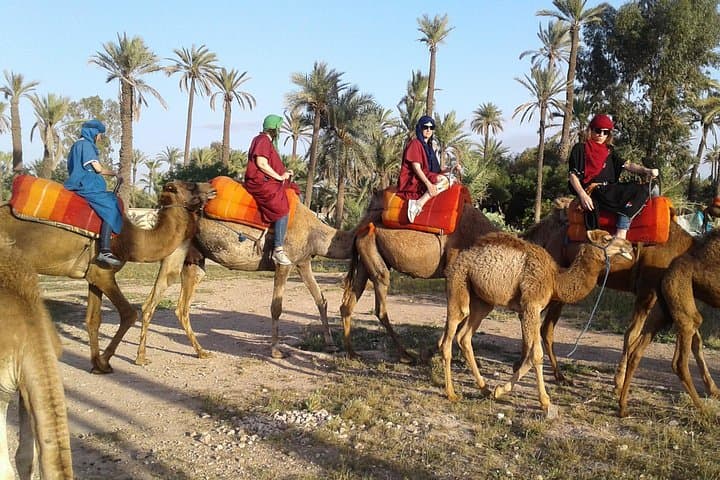
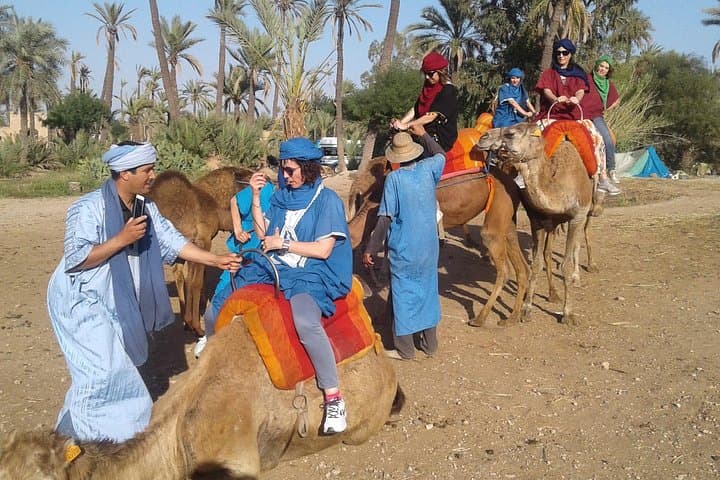
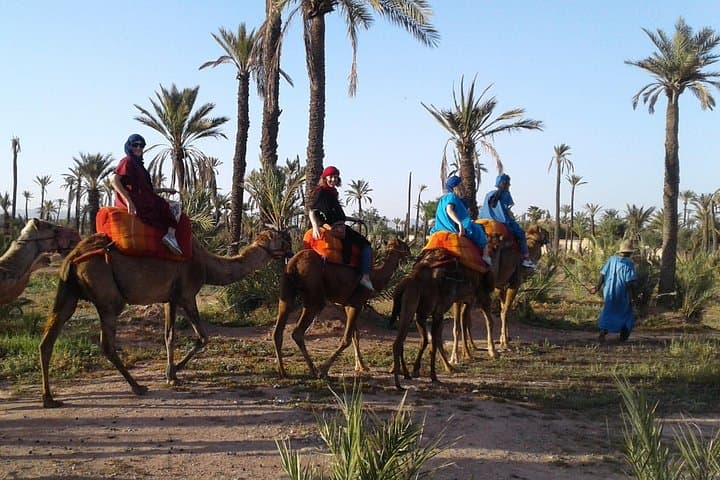
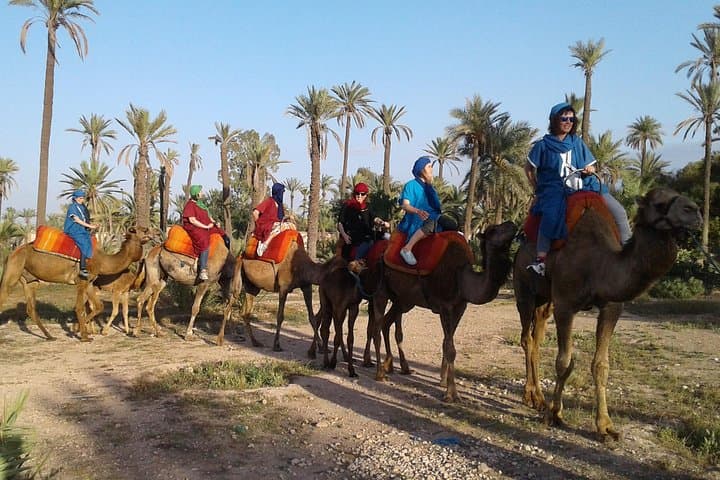
A late-afternoon sun slides between tall date palms as a line of camels rocks forward on soft sand; the Palmeraie opens like a living corridor, palms bending and dust motes catching light. Riders in Tuareg-style veils feel the animals’ steady sway and the small, rhythmic bounce that once powered caravan trade routes across Morocco.
A late-afternoon sun slides between tall date palms as a line of camels rocks forward on soft sand; the Palmeraie opens like a living corridor, palms bending and dust motes catching light. Riders in Tuareg-style veils feel the animals’ steady sway and the small, rhythmic bounce that once powered caravan trade routes across Morocco.
La Palmeraie is a human-shaped landscape — centuries of irrigation, royal estates, and modern agrarian change have produced this palm-dotted plain on Marrakech’s edge. Geologically the area sits on alluvial soils from the Tensift plain; culturally it’s where traditional Berber villages meet tourist-focused riads and boutique camps. Local guides will often pause to pour mint tea, an invitation to the social rhythm that frames any Moroccan outing.
Expect a gentle, one-hour camel trek across sandy tracks and between palm clumps, followed by a short mint-tea stop. The ride traces old caravan access paths more than rugged trails, so technical difficulty is low but the motion can be tiring for some.
Practical guidance: wear long pants and closed-toe shoes, bring sun protection and a refillable water bottle, and book morning or late-afternoon departures to avoid peak heat. Inform your operator of pregnancy, back issues, or very young children; carriers usually require children under nine to sit with an adult. With hotel pickup included, logistics are straightforward — but confirm pickup times and allow extra time for Marrakech traffic.
This is an accessible, sensory way to touch Morocco’s caravan past while practicing simple, respectful travel in a fragile oasis environment.