THE ADVENTURE COLLECTIVE® · Independent discovery and booking for outdoor travel

Spend a few hours on a gentle camel along Agadir’s beach, crossing the Souss River and eucalyptus-lined banks. This easy, guided outing includes hotel pickup, a Berber tea stop, and chances to spot migrating flamingos.
Spend a few hours on a gentle camel along Agadir’s beach, crossing the Souss River and eucalyptus-lined banks. This easy, guided outing includes hotel pickup, a Berber tea stop, and chances to spot migrating flamingos.
The camel rises with a slow, familiar sway and the city’s tile-roof hum fades into the sound of surf and gulls. You cross soft sand, the animal’s rhythm setting the pace as the Atlantic air sharpens and eucalyptus scent drifts in from the river corridor.
Verified experiences and guided adventures in the surrounding area.
Operated by Imohatours · Agadir, Souss-Massa
The camel rises with a slow, familiar sway and the city’s tile-roof hum fades into the sound of surf and gulls. You cross soft sand, the animal’s rhythm setting the pace as the Atlantic air sharpens and eucalyptus scent drifts in from the river corridor.
This short tour threads Agadir’s coastal plain: dunes and a narrow eucalyptus belt that lines the Souss River estuary — a seasonal staging area for migrating waders. Agadir itself is a modernized port rebuilt after the 1960 earthquake; the river and plain have long supported Berber fishing and market settlements. Geologically the coastline is recent—sands and river-borne sediment shifted by Atlantic swells—so views change with the seasons.
Culturally, the ride pauses at a small Berber-style camp for mint tea and a snack, an opportunity to hear local stories and learn about camel handling and nomadic traditions. Guides commonly point out the royal palace from a distance and the pink patches of greater flamingos on the estuary.
Practical guidance: the experience is easy and family-friendly — around three hours door-to-door with 60–90 minutes on the camels. Wear closed-toe shoes for sand and short eucalyptus tracks, bring sun protection and a light layer for coastal breeze. Cameras are welcome but secure gear against sand; follow your guide’s safety briefing for mounting and dismounting. If you have back issues or mobility limits, mention it at booking so a suitable camel can be provided. Expect a relaxed pace, opportunities for photos at low tide, and a brief cultural stop for tea.
easy.
3 hours (door-to-door).
Suitable for most fitness levels; must be able to mount a camel with assistance
Yes — pickup and drop-off from most Agadir hotels is included; you’ll select or confirm your exact pickup point when booking.
Total tour time is about three hours; expect roughly 60–90 minutes mounted, plus transfer and a short tea break.
The tour is family-friendly; guides choose calm camels and assist with mounting but disclose any mobility limitations during booking.
Yes — the Souss estuary is an important birding area and you may see greater flamingos and other waders, especially in migration seasons.
Agadir was rebuilt after the 1960 earthquake; the Souss plain has long supported Berber coastal communities and seasonal fishing traditions.
The Souss estuary is ecologically sensitive—stay on designated tracks, avoid disturbing birds, and limit single-use plastics to protect habitat.
Imohatours operates guided outdoor trips and adventures with an emphasis on safety, stewardship, and memorable experiences.
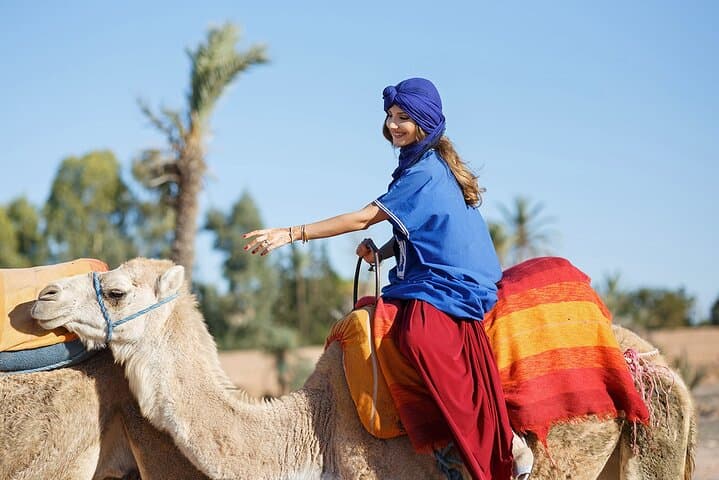
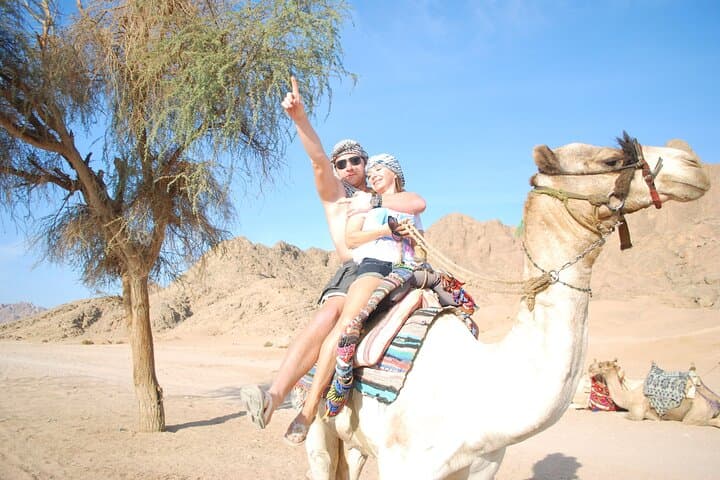
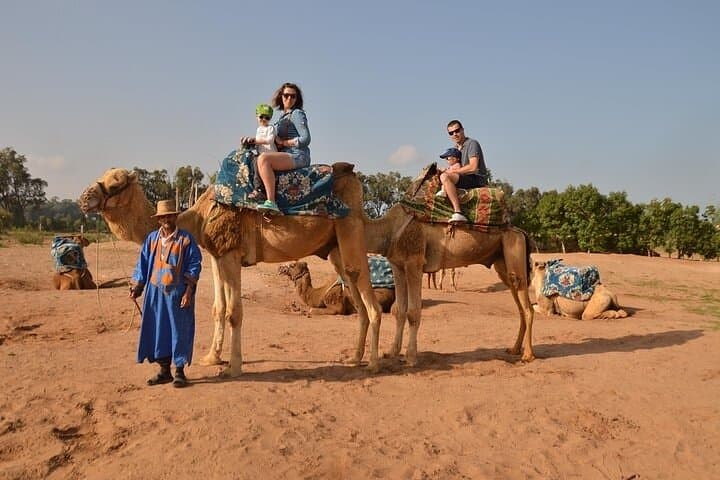
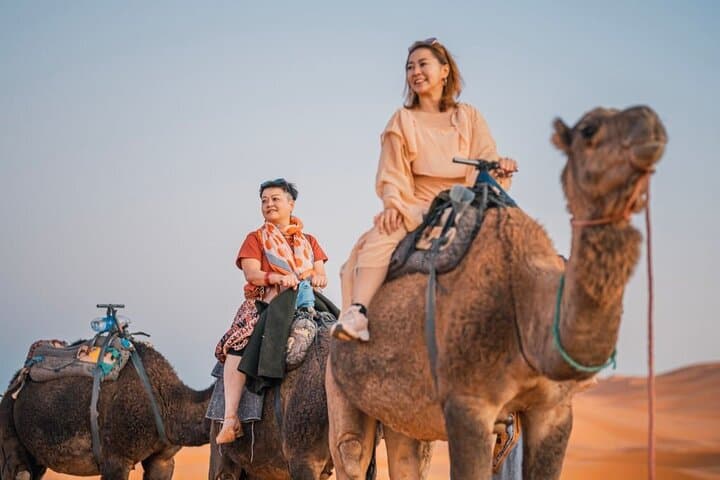
The camel rises with a slow, familiar sway and the city’s tile-roof hum fades into the sound of surf and gulls. You cross soft sand, the animal’s rhythm setting the pace as the Atlantic air sharpens and eucalyptus scent drifts in from the river corridor.
The camel rises with a slow, familiar sway and the city’s tile-roof hum fades into the sound of surf and gulls. You cross soft sand, the animal’s rhythm setting the pace as the Atlantic air sharpens and eucalyptus scent drifts in from the river corridor.
This short tour threads Agadir’s coastal plain: dunes and a narrow eucalyptus belt that lines the Souss River estuary — a seasonal staging area for migrating waders. Agadir itself is a modernized port rebuilt after the 1960 earthquake; the river and plain have long supported Berber fishing and market settlements. Geologically the coastline is recent—sands and river-borne sediment shifted by Atlantic swells—so views change with the seasons.
Culturally, the ride pauses at a small Berber-style camp for mint tea and a snack, an opportunity to hear local stories and learn about camel handling and nomadic traditions. Guides commonly point out the royal palace from a distance and the pink patches of greater flamingos on the estuary.
Practical guidance: the experience is easy and family-friendly — around three hours door-to-door with 60–90 minutes on the camels. Wear closed-toe shoes for sand and short eucalyptus tracks, bring sun protection and a light layer for coastal breeze. Cameras are welcome but secure gear against sand; follow your guide’s safety briefing for mounting and dismounting. If you have back issues or mobility limits, mention it at booking so a suitable camel can be provided. Expect a relaxed pace, opportunities for photos at low tide, and a brief cultural stop for tea.