THE ADVENTURE COLLECTIVE® · Independent discovery and booking for outdoor travel

Saddle up beside the timeless silhouettes of Khufu, Khafre, and Menkaure. This five-hour sunset camel safari on the Giza Plateau pairs an easy ride with sweeping views, local color, and a concise guided introduction to the ancient landscape.
Saddle up beside the timeless silhouettes of Khufu, Khafre, and Menkaure. This five-hour sunset camel safari on the Giza Plateau pairs an easy ride with sweeping views, local color, and a concise guided introduction to the ancient landscape.
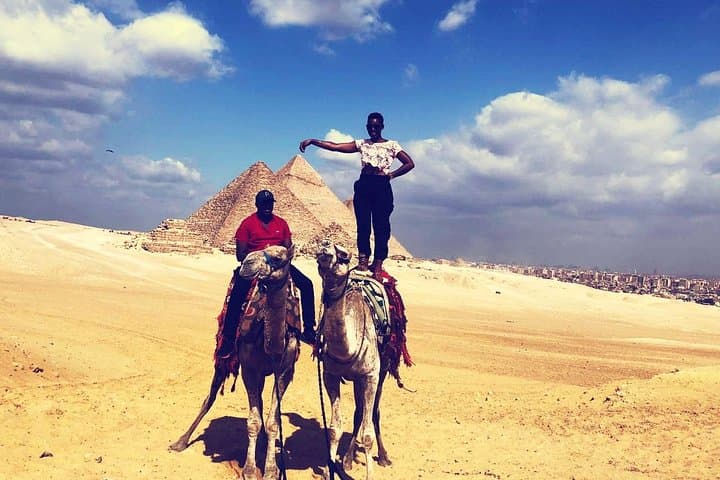
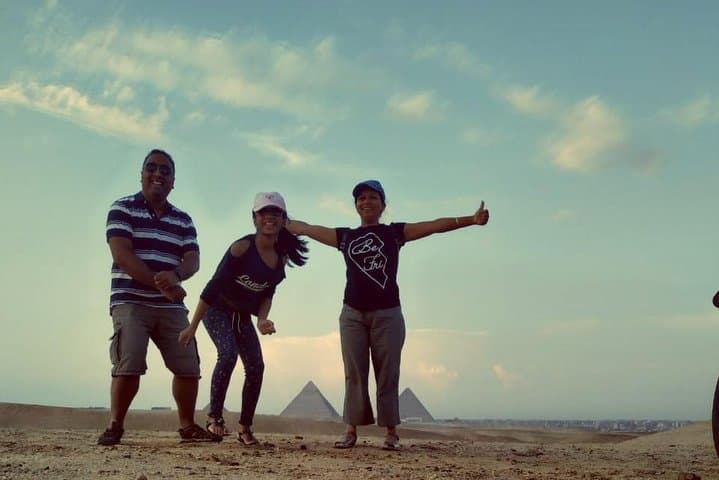
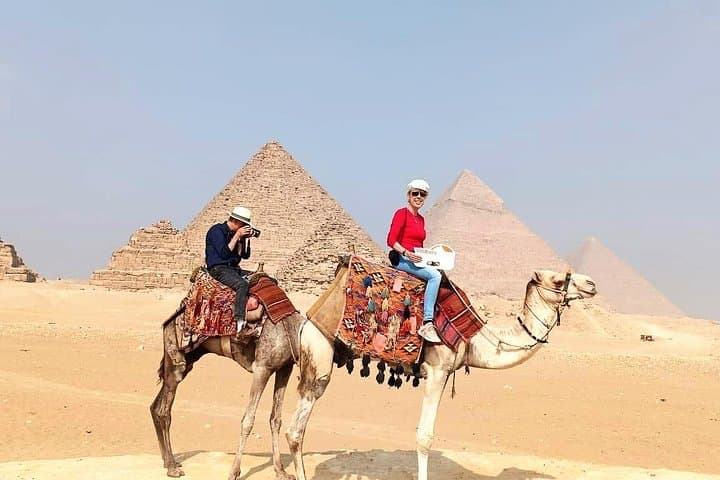
You arrive on the plateau as the late-afternoon sun slants across limestone faces, heat giving way to a cooler breeze that tugs at the sand. Camels stand patient, their handlers ready, and the three great pyramids—Khufu, Khafre, Menkaure—loom like weathered giants demanding measured attention.
Verified experiences and guided adventures in the surrounding area.
Operated by Three Pyramids Tours · Giza, Giza
You arrive on the plateau as the late-afternoon sun slants across limestone faces, heat giving way to a cooler breeze that tugs at the sand. Camels stand patient, their handlers ready, and the three great pyramids—Khufu, Khafre, Menkaure—loom like weathered giants demanding measured attention.
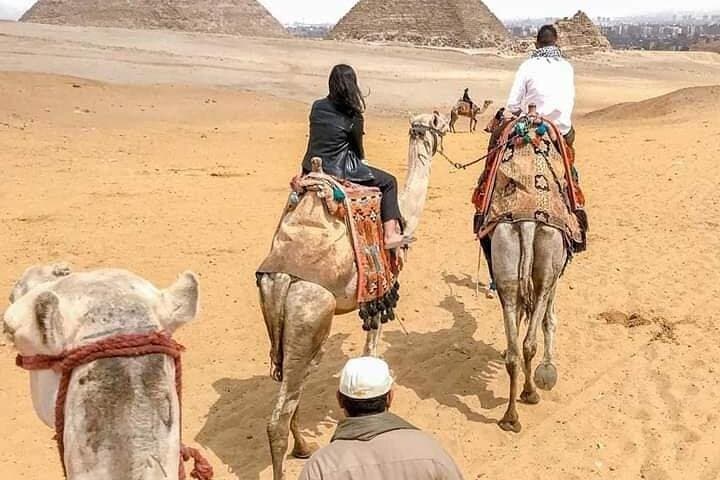
The camel ride is less about speed and more about rhythm: the animal’s roll and the scrape of pack saddles set the pace while the pyramids present shifting profiles. The Giza Plateau is the visible edge of a 4,500-year-old funerary landscape; the stones are Old Kingdom masonry and the plateau’s bedrock holds traces of quarrying that built a civilization’s monuments.
Culturally, your ride follows long-standing Bedouin and tourist practices; handlers often share practical stories about local work and daily life. Geologically, the area sits on Eocene limestone with wind-blown sand sculpting the approach roads.
Practically: this activity runs about five hours door-to-door and commonly includes hotel pickup in an air-conditioned vehicle, a guided plateau walk, snacks, and the camel segment at sunset. Dress for sun and sand—closed shoes, long sleeves, and a hat—and bring 1–2 liters of water. If you have back or spinal issues, avoid the ride: camel mounting can strain the spine. Expect short walks on uneven ground, light bargaining if you buy photos or trinkets, and brief stops for photos with panoramic views. The experience is straightforward, sensory, and built for travelers who want an immediate connection to Egypt’s most iconic monuments without deep archaeological access.
easy.
5 hours (includes transfers, guide time, and sunset ride).
Suitable for most travelers in average physical condition; requires short walks on uneven ground and the ability to mount a camel with assistance.
Yes; the tour typically includes hotel pickup and drop-off in an air-conditioned vehicle within Cairo/Giza as part of the five-hour schedule.
This camel-focused experience provides external views of the pyramids and photo stops; entry into pyramids or the Sphinx interior is usually not included.
Children often ride with adult supervision and handlers, but operators set age or size limits—check booking questions and inform the provider during reservation.
Light, breathable clothing with long sleeves, closed shoes, a hat, and sun protection; bring a light layer for cooler early evenings.
The Giza Plateau holds Old Kingdom monuments dating to around 2600–2500 BCE; the Great Pyramid of Khufu was the tallest man-made structure for millennia.
The site is heavily visited—stay on designated paths, avoid climbing structures, minimize plastic waste, and respect handlers and working animals to reduce local impact.
Three Pyramids Tours operates guided outdoor trips and adventures with an emphasis on safety, stewardship, and memorable experiences.
You arrive on the plateau as the late-afternoon sun slants across limestone faces, heat giving way to a cooler breeze that tugs at the sand. Camels stand patient, their handlers ready, and the three great pyramids—Khufu, Khafre, Menkaure—loom like weathered giants demanding measured attention.
You arrive on the plateau as the late-afternoon sun slants across limestone faces, heat giving way to a cooler breeze that tugs at the sand. Camels stand patient, their handlers ready, and the three great pyramids—Khufu, Khafre, Menkaure—loom like weathered giants demanding measured attention.
The camel ride is less about speed and more about rhythm: the animal’s roll and the scrape of pack saddles set the pace while the pyramids present shifting profiles. The Giza Plateau is the visible edge of a 4,500-year-old funerary landscape; the stones are Old Kingdom masonry and the plateau’s bedrock holds traces of quarrying that built a civilization’s monuments.
Culturally, your ride follows long-standing Bedouin and tourist practices; handlers often share practical stories about local work and daily life. Geologically, the area sits on Eocene limestone with wind-blown sand sculpting the approach roads.
Practically: this activity runs about five hours door-to-door and commonly includes hotel pickup in an air-conditioned vehicle, a guided plateau walk, snacks, and the camel segment at sunset. Dress for sun and sand—closed shoes, long sleeves, and a hat—and bring 1–2 liters of water. If you have back or spinal issues, avoid the ride: camel mounting can strain the spine. Expect short walks on uneven ground, light bargaining if you buy photos or trinkets, and brief stops for photos with panoramic views. The experience is straightforward, sensory, and built for travelers who want an immediate connection to Egypt’s most iconic monuments without deep archaeological access.