THE ADVENTURE COLLECTIVE® · Independent discovery and booking for outdoor travel

Ride a camel around the Giza Plateau to view the Great Pyramids and Sphinx from desert vantage points while a local guide fills in stories, geology and cultural context. Ideal for visitors wanting a short, memorable outdoor experience with convenient transfers from Cairo.
Ride a camel around the Giza Plateau to view the Great Pyramids and Sphinx from desert vantage points while a local guide fills in stories, geology and cultural context. Ideal for visitors wanting a short, memorable outdoor experience with convenient transfers from Cairo.
You sit into the camel’s sway as the desert opens: the horizon is a low ribbon of sand, and the pyramids rise like carved mountains, their faces catching the sun. The camel’s slow, deliberate pace gives you time to take in angles and stonework that were once sightlines for pharaohs.
Verified experiences and guided adventures in the surrounding area.
Operated by Visitors Egypt Tours · Giza, Giza Governorate
You sit into the camel’s sway as the desert opens: the horizon is a low ribbon of sand, and the pyramids rise like carved mountains, their faces catching the sun. The camel’s slow, deliberate pace gives you time to take in angles and stonework that were once sightlines for pharaohs.
This route circles Cheops (Khufu), Chephren (Khafre) and Mykerinus (Menkaure) and passes the Great Sphinx and the Valley Temple. Geologically these monuments rest on Pleistocene limestone and Eocene formations; wind and occasional sandstorms shaped the surrounding dunes that now frame the complex. Culturally, Giza has been a focal point since the 3rd millennium BCE — a working necropolis that still reveals hieroglyphs, quarry scars and aligning causeways.
Local guides emphasize oral histories and practical details you won’t find in a guidebook: caravan routes, seasonal wind patterns, and how camels were bred and used by Bedouin communities. The landscape isn’t passive — the desert pushes and polishes, the sun dictates rhythm, and the Sphinx watches with an immovable calm.
Practical guidance: rides typically last 60–90 minutes within a 5-hour private tour that includes transfers. Wear breathable layers, a wide-brim hat and sturdy closed shoes for mounting. Bring sunscreen and a refillable water bottle; mornings and late afternoons offer cooler light and thinner crowds. If you prefer, operators can arrange a horse instead of a camel; choose camel for steadiness and local character. Confirm pickup details, and avoid bringing bulky backpacks onto the mounts. Respect restricted zones near excavation sites and follow your guide’s directions to minimize impact and preserve these ancient stones for the next traveler.
easy.
5 hours (including transfers); 60–90 minutes riding.
Suitable for most fitness levels; requires ability to climb onto a camel or accept assistance
The camel ride typically runs 60–90 minutes within a 5-hour private tour that includes round-trip transfers from Cairo.
Yes—operators accommodate a wide range of ages, but those with significant spinal issues should avoid the ride; staff provide mounting assistance.
Yes, many providers offer the option of horse riding instead—notify the operator when booking to arrange the preferred mount.
This tour indicates entrance fees are included; confirm with the operator what specific sites and museum entries are covered before you go.
The Giza Plateau was developed in the Fourth Dynasty (c. 2600–2500 BCE) as a royal necropolis; the alignment of pyramids and causeways reflects astronomical and ritual planning.
High visitor numbers and urban encroachment stress the plateau; follow designated trails, avoid touching carved stone, and use local guides to support responsible access.
Visitors Egypt Tours operates guided outdoor trips and adventures with an emphasis on safety, stewardship, and memorable experiences.
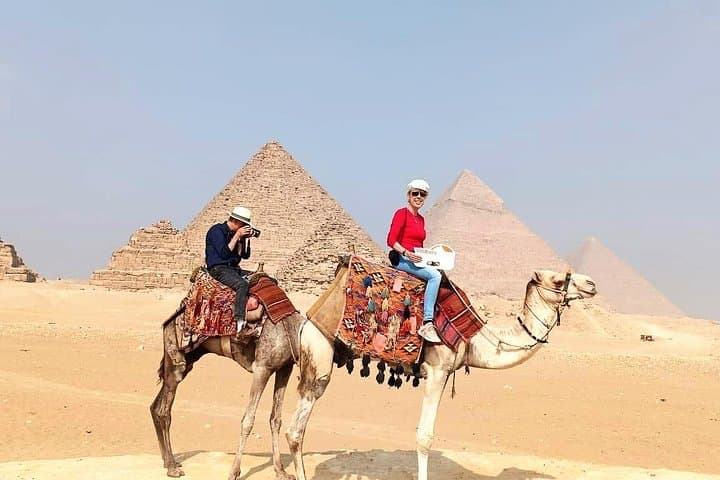
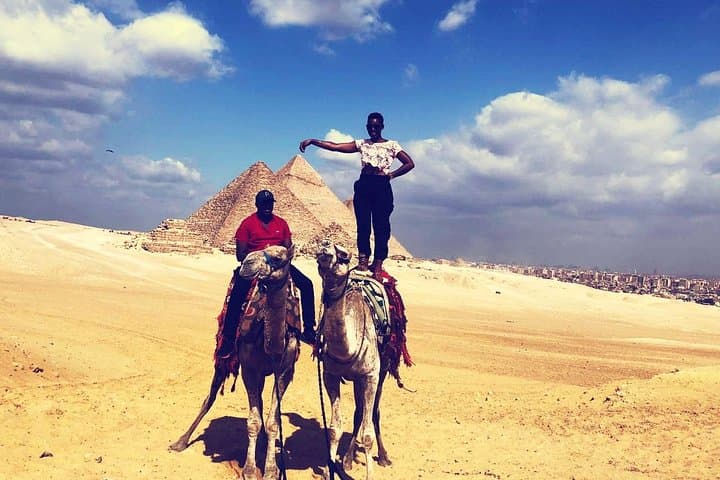
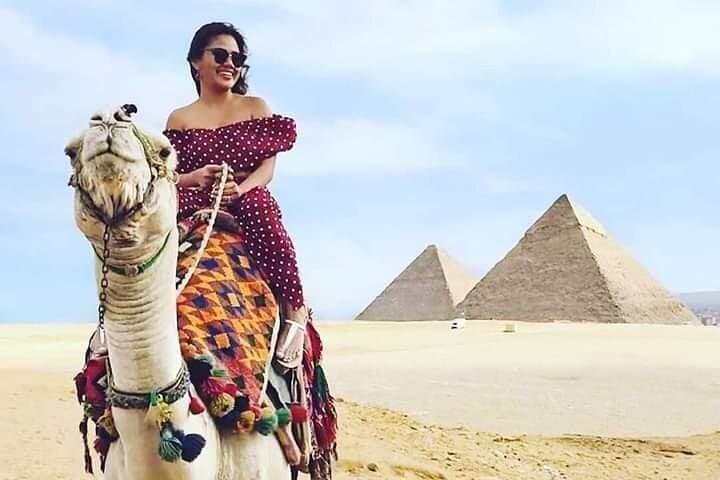
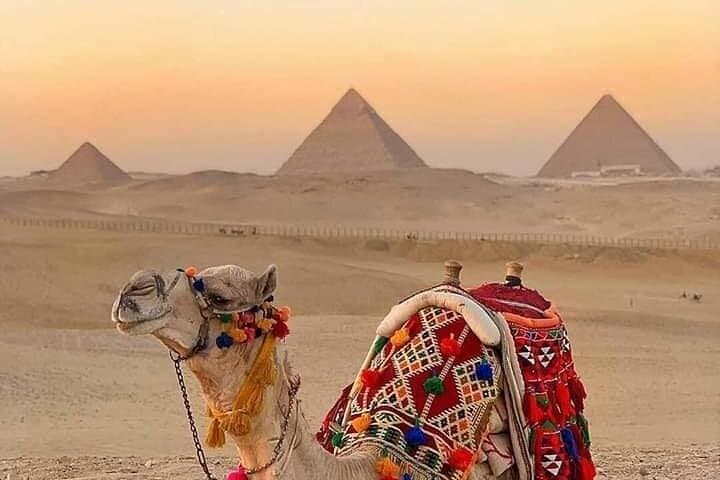
You sit into the camel’s sway as the desert opens: the horizon is a low ribbon of sand, and the pyramids rise like carved mountains, their faces catching the sun. The camel’s slow, deliberate pace gives you time to take in angles and stonework that were once sightlines for pharaohs.
You sit into the camel’s sway as the desert opens: the horizon is a low ribbon of sand, and the pyramids rise like carved mountains, their faces catching the sun. The camel’s slow, deliberate pace gives you time to take in angles and stonework that were once sightlines for pharaohs.
This route circles Cheops (Khufu), Chephren (Khafre) and Mykerinus (Menkaure) and passes the Great Sphinx and the Valley Temple. Geologically these monuments rest on Pleistocene limestone and Eocene formations; wind and occasional sandstorms shaped the surrounding dunes that now frame the complex. Culturally, Giza has been a focal point since the 3rd millennium BCE — a working necropolis that still reveals hieroglyphs, quarry scars and aligning causeways.
Local guides emphasize oral histories and practical details you won’t find in a guidebook: caravan routes, seasonal wind patterns, and how camels were bred and used by Bedouin communities. The landscape isn’t passive — the desert pushes and polishes, the sun dictates rhythm, and the Sphinx watches with an immovable calm.
Practical guidance: rides typically last 60–90 minutes within a 5-hour private tour that includes transfers. Wear breathable layers, a wide-brim hat and sturdy closed shoes for mounting. Bring sunscreen and a refillable water bottle; mornings and late afternoons offer cooler light and thinner crowds. If you prefer, operators can arrange a horse instead of a camel; choose camel for steadiness and local character. Confirm pickup details, and avoid bringing bulky backpacks onto the mounts. Respect restricted zones near excavation sites and follow your guide’s directions to minimize impact and preserve these ancient stones for the next traveler.