THE ADVENTURE COLLECTIVE® · Independent discovery and booking for outdoor travel

Ride a camel around the Giza Plateau on a private 4–5 hour tour that includes Khufu, Khafre and Menkaure pyramids plus the Great Sphinx. Early starts, sun protection and a curious guide turn a classic tourist circuit into an informed, outdoor experience.
Ride a camel around the Giza Plateau on a private 4–5 hour tour that includes Khufu, Khafre and Menkaure pyramids plus the Great Sphinx. Early starts, sun protection and a curious guide turn a classic tourist circuit into an informed, outdoor experience.
You crest the rim of the painted desert and the stones of the Great Pyramid suddenly loom—sunlight catching on stepped weathering as your camel shifts beneath you. The Sphinx watches the approach with the slow patience of millennia; wind pushes sand in fine, bright curtains and the animals seem to accept the rhythm of the place.
Verified experiences and guided adventures in the surrounding area.
Operated by Visitors Egypt Tours · Giza, Cairo Governorate
You crest the rim of the painted desert and the stones of the Great Pyramid suddenly loom—sunlight catching on stepped weathering as your camel shifts beneath you. The Sphinx watches the approach with the slow patience of millennia; wind pushes sand in fine, bright curtains and the animals seem to accept the rhythm of the place.
This private tour threads history, geology and living culture. The three main pyramids—Khufu (Cheops), Khafre (Chephren) and Menkaure (Mykerinus)—date to Egypt’s Old Kingdom, roughly 2600–2500 BCE, built from quarried limestone and encasing stones that once gleamed under the sun. The Sphinx, carved from a natural limestone outcrop, anchors the plateau beside the Valley Temple where ritual and masonry met.
Local guides bring stories that don’t always appear in guidebooks: construction techniques, seasonal Nile cycles that funded labor, and how desert crust and wind shape the monuments today. You’ll pass small vendor clusters and the Solar Boat Museum nearby—faint traces of later cultural layers against the ancient core.
Practical guidance: tours run about 4–5 hours with air-conditioned pickup from Cairo or Giza; admission and camel riding are included. Mounting a camel is simple but not recommended for people with spinal injuries. Go early morning or late afternoon to avoid peak heat; carry water, sun protection, and light, conservative clothing for cultural respect. Expect uneven sandy ground—closed shoes help—and bring small bills for local staff and photo tips. With a private guide, you get flexibility to linger at viewpoints and ask about the area’s geology and conservation challenges.
easy.
4–5 hours.
Basic mobility required: able to mount/dismount a camel and walk short distances on sand and stones.
This tour lists admission as included—confirm the booking voucher and bring your ID for entry.
Most riders of all ages can participate, but it’s not recommended for people with spinal injuries; check with the operator about child age limits.
Typical duration is 4–5 hours with private air-conditioned pickup and drop-off from Cairo/Giza included.
Photography is allowed for visitors, but drone use is restricted and generally prohibited without permits—ask your guide before attempting to fly a drone.
The major pyramids were built during Egypt’s Fourth Dynasty (~2600–2500 BCE) as royal tombs; the Sphinx is a carved limestone figure tied to royal iconography and solar cults.
Visitor numbers and wind-driven erosion stress the plateau; stay on designated paths, avoid touching masonry, and follow your guide's instructions to minimize impact.
Visitors Egypt Tours operates guided outdoor trips and adventures with an emphasis on safety, stewardship, and memorable experiences.
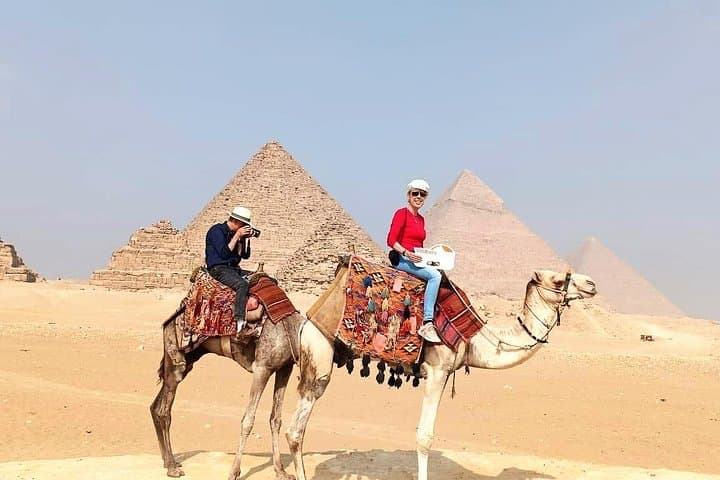
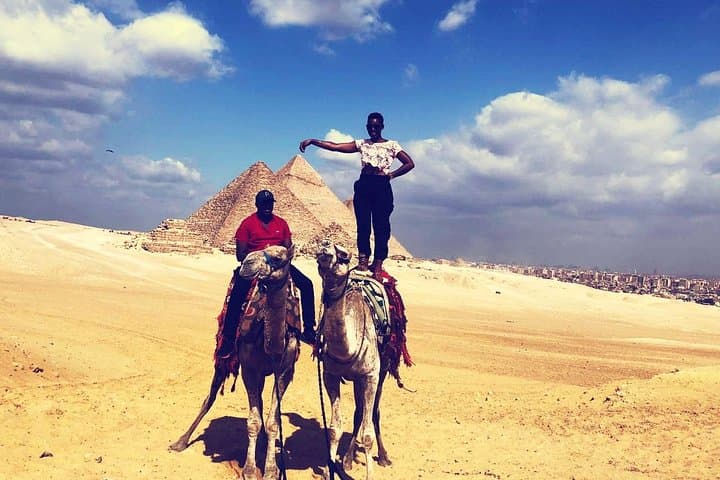
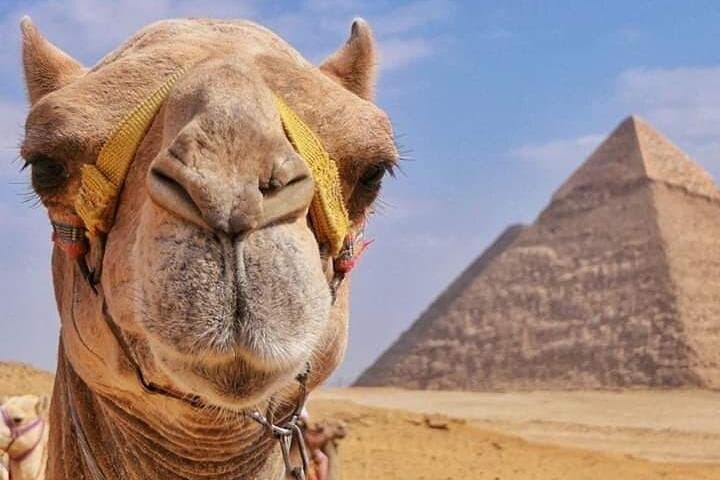
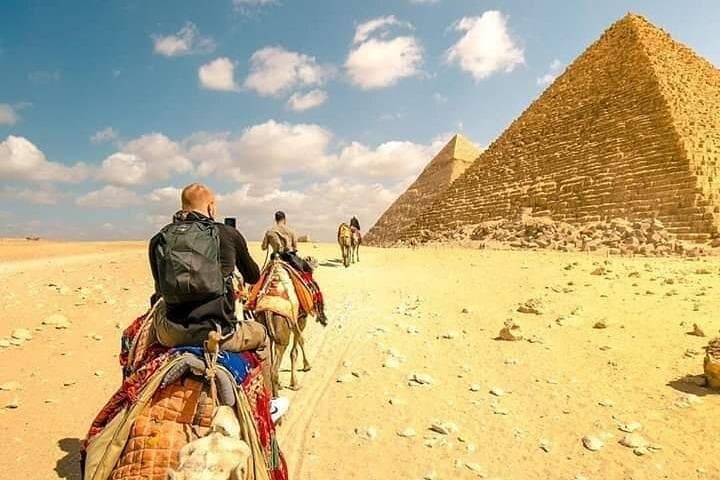
You crest the rim of the painted desert and the stones of the Great Pyramid suddenly loom—sunlight catching on stepped weathering as your camel shifts beneath you. The Sphinx watches the approach with the slow patience of millennia; wind pushes sand in fine, bright curtains and the animals seem to accept the rhythm of the place.
You crest the rim of the painted desert and the stones of the Great Pyramid suddenly loom—sunlight catching on stepped weathering as your camel shifts beneath you. The Sphinx watches the approach with the slow patience of millennia; wind pushes sand in fine, bright curtains and the animals seem to accept the rhythm of the place.
This private tour threads history, geology and living culture. The three main pyramids—Khufu (Cheops), Khafre (Chephren) and Menkaure (Mykerinus)—date to Egypt’s Old Kingdom, roughly 2600–2500 BCE, built from quarried limestone and encasing stones that once gleamed under the sun. The Sphinx, carved from a natural limestone outcrop, anchors the plateau beside the Valley Temple where ritual and masonry met.
Local guides bring stories that don’t always appear in guidebooks: construction techniques, seasonal Nile cycles that funded labor, and how desert crust and wind shape the monuments today. You’ll pass small vendor clusters and the Solar Boat Museum nearby—faint traces of later cultural layers against the ancient core.
Practical guidance: tours run about 4–5 hours with air-conditioned pickup from Cairo or Giza; admission and camel riding are included. Mounting a camel is simple but not recommended for people with spinal injuries. Go early morning or late afternoon to avoid peak heat; carry water, sun protection, and light, conservative clothing for cultural respect. Expect uneven sandy ground—closed shoes help—and bring small bills for local staff and photo tips. With a private guide, you get flexibility to linger at viewpoints and ask about the area’s geology and conservation challenges.