THE ADVENTURE COLLECTIVE® · Independent discovery and booking for outdoor travel

Escape Marrakech for a one‑hour camel trek across the stone plains of Agafay, with clear views of the Atlas Mountains and a taste of Berber hospitality. This short, accessible ride pairs desert scenery with convenient pickup and mint tea.
Escape Marrakech for a one‑hour camel trek across the stone plains of Agafay, with clear views of the Atlas Mountains and a taste of Berber hospitality. This short, accessible ride pairs desert scenery with convenient pickup and mint tea.
A low, dry wind moves across the rock plains as camels file out beneath a clear Saharan sky; the animal’s slow, rolling gait sets a steady rhythm and the Atlas Mountains cut a jagged horizon. Travelers leave the bustle of Marrakech behind in an air‑conditioned vehicle and, after about 45 minutes, arrive on the stony reg of Agafay where a one‑hour camel trek threads across undulating arid hills.
Verified experiences and guided adventures in the surrounding area.
Operated by Safari Desert Tours · Marrakech, Marrakech-Safi
A low, dry wind moves across the rock plains as camels file out beneath a clear Saharan sky; the animal’s slow, rolling gait sets a steady rhythm and the Atlas Mountains cut a jagged horizon. Travelers leave the bustle of Marrakech behind in an air‑conditioned vehicle and, after about 45 minutes, arrive on the stony reg of Agafay where a one‑hour camel trek threads across undulating arid hills.
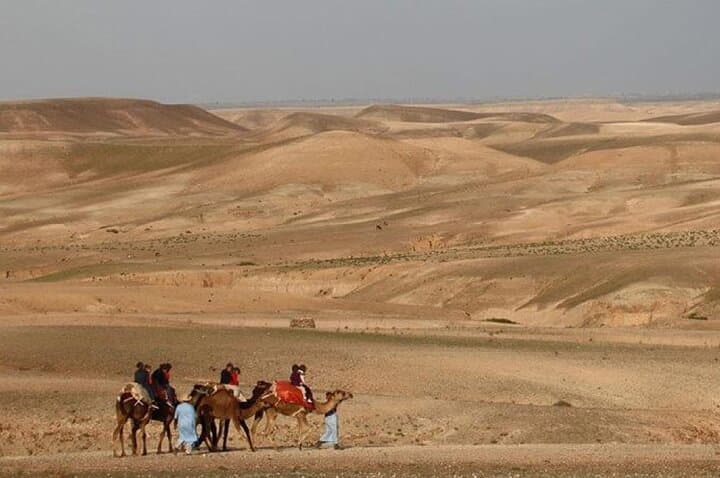
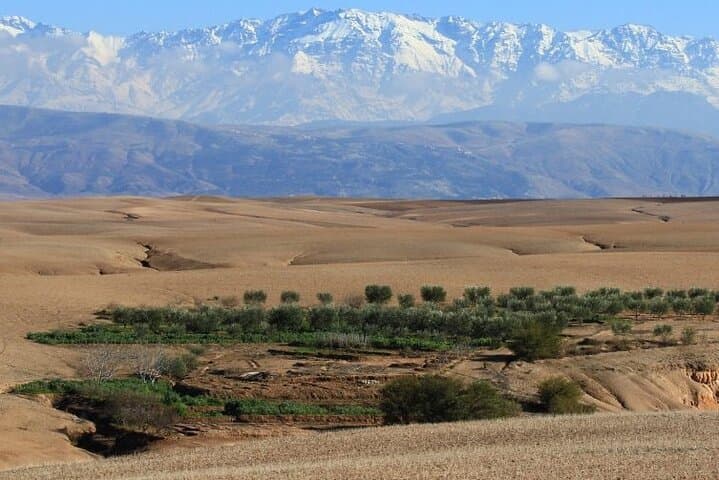
Agafay is not a sand sea but a rocky desert formed by millennia of Atlas erosion, its landscape scored with stone tracks and sparse scrub. The area is dotted with small Berber settlements where residents maintain pastoral traditions and offer mint tea—a cultural touch that links the ride to local hospitality.
Expect broad, open light and a lunar feeling underfoot; the terrain shifts from packed stone to loose scree around small ridgelines, giving varied vantage points for sweeping Atlas views. Wildlife is subtle: lizards sun themselves on rocks while desert birds wheel overhead. Guides lead short detours to panoramic spots and explain local geology and farming practices beyond the city.
Practicalities are straightforward: the tour includes pickup and drop‑off in Marrakech, bottled water, and a berber headscarf; rides are suitable for most fitness levels but are not recommended for pregnant travelers. Wear closed‑toe shoes, protect against sun and dust, and plan this as a late‑afternoon option to catch cooler light and better photos. The experience is compact, tactile, and accessible—an efficient way to step into Morocco’s drylands without overnight logistics.
easy.
3 hours.
Suitable for people in basic physical condition; requires ability to mount/dismount a camel and tolerate short periods seated on an animal.
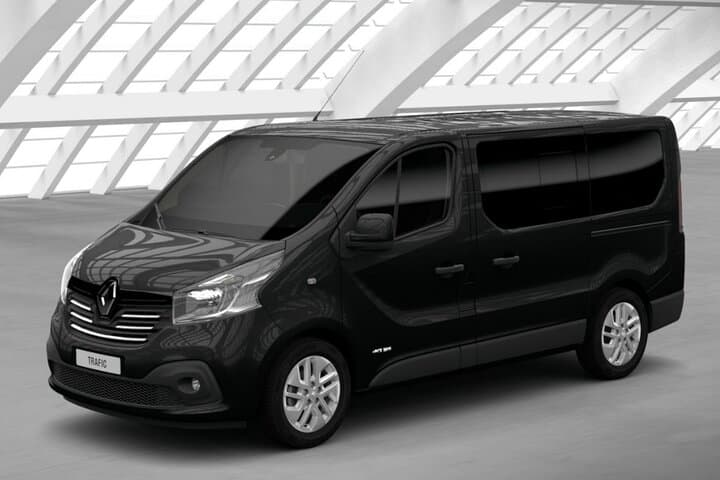
Yes—private, air‑conditioned pickup and drop‑off from Marrakech accommodations is included in the tour.
The camel trek itself lasts about one hour; the full experience including transfers runs approximately three hours.
The tour is family‑friendly but requires mounting a camel and sitting on a saddle; check with the operator about young children or mobility limitations.
Bottled water and a traditional mint tea stop are included as part of the experience.
Agafay is a rocky reg created by erosion from the High Atlas; historically used for grazing and increasingly for short excursions from Marrakech rather than extended desert caravans.
Water is scarce and the fragile soil is vulnerable to erosion—stay on established tracks, pack out waste, and avoid disturbing grazing areas.
Safari Desert Tours operates guided outdoor trips and adventures with an emphasis on safety, stewardship, and memorable experiences.
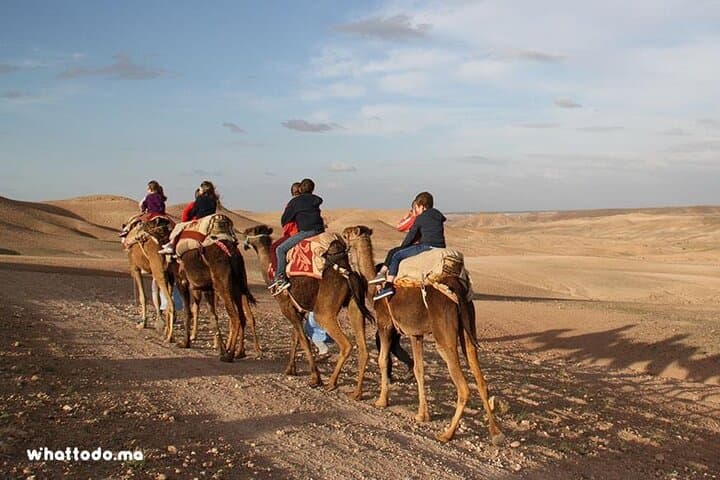
A low, dry wind moves across the rock plains as camels file out beneath a clear Saharan sky; the animal’s slow, rolling gait sets a steady rhythm and the Atlas Mountains cut a jagged horizon. Travelers leave the bustle of Marrakech behind in an air‑conditioned vehicle and, after about 45 minutes, arrive on the stony reg of Agafay where a one‑hour camel trek threads across undulating arid hills.
A low, dry wind moves across the rock plains as camels file out beneath a clear Saharan sky; the animal’s slow, rolling gait sets a steady rhythm and the Atlas Mountains cut a jagged horizon. Travelers leave the bustle of Marrakech behind in an air‑conditioned vehicle and, after about 45 minutes, arrive on the stony reg of Agafay where a one‑hour camel trek threads across undulating arid hills.
Agafay is not a sand sea but a rocky desert formed by millennia of Atlas erosion, its landscape scored with stone tracks and sparse scrub. The area is dotted with small Berber settlements where residents maintain pastoral traditions and offer mint tea—a cultural touch that links the ride to local hospitality.
Expect broad, open light and a lunar feeling underfoot; the terrain shifts from packed stone to loose scree around small ridgelines, giving varied vantage points for sweeping Atlas views. Wildlife is subtle: lizards sun themselves on rocks while desert birds wheel overhead. Guides lead short detours to panoramic spots and explain local geology and farming practices beyond the city.
Practicalities are straightforward: the tour includes pickup and drop‑off in Marrakech, bottled water, and a berber headscarf; rides are suitable for most fitness levels but are not recommended for pregnant travelers. Wear closed‑toe shoes, protect against sun and dust, and plan this as a late‑afternoon option to catch cooler light and better photos. The experience is compact, tactile, and accessible—an efficient way to step into Morocco’s drylands without overnight logistics.