THE ADVENTURE COLLECTIVE® · Independent discovery and booking for outdoor travel

Experience Qatar’s living heritage on a half-day tour through Al Samriya Estate and Al Shahaniya Camel Racetrack. Visit Sheikh Faisal’s museum, see the Leaning Mosque, and watch camels train or race with robotic jockeys.
Experience Qatar’s living heritage on a half-day tour through Al Samriya Estate and Al Shahaniya Camel Racetrack. Visit Sheikh Faisal’s museum, see the Leaning Mosque, and watch camels train or race with robotic jockeys.
A low desert sun cuts across a flat horizon as the convoy turns off the highway toward Al Samriya Estate. Sand crunches under tires, peacocks preen by stone walls, and the Leaning Mosque tilts at an angle that makes visitors look twice — an intentional modern flourish against a classic Islamic silhouette.
Verified experiences and guided adventures in the surrounding area.
Operated by Qatar International Tours · Al Shahaniya, Al-Shahaniya
A low desert sun cuts across a flat horizon as the convoy turns off the highway toward Al Samriya Estate. Sand crunches under tires, peacocks preen by stone walls, and the Leaning Mosque tilts at an angle that makes visitors look twice — an intentional modern flourish against a classic Islamic silhouette.
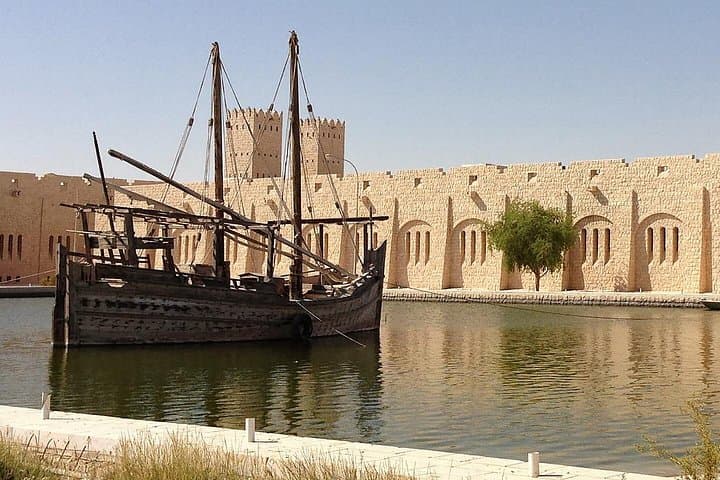
The half-day route threads culture and sport. Sheikh Faisal bin Qassim Al Thani’s private museum sits in a fort-style compound and houses cars, Islamic art, and vernacular objects that chronicle Gulf trade and collecting practices. The Leaning Mosque and minaret are contemporary architectural statements built to contrast the plain desert; nearby, the reserve supports Arabian oryx and peacocks, species tied to Qatar’s conservation story.
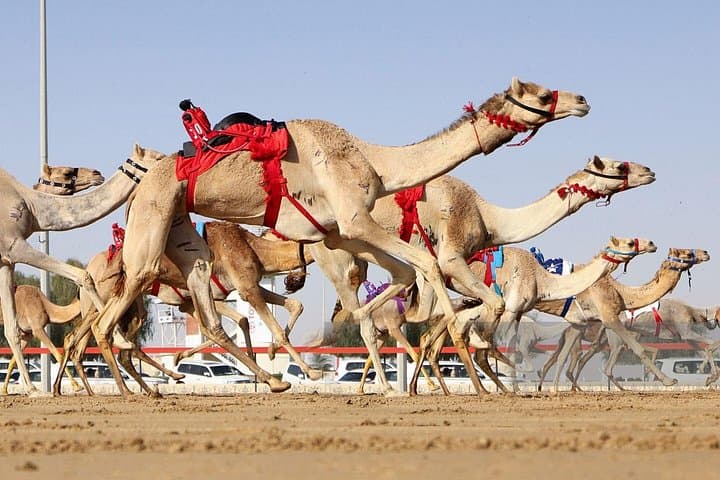
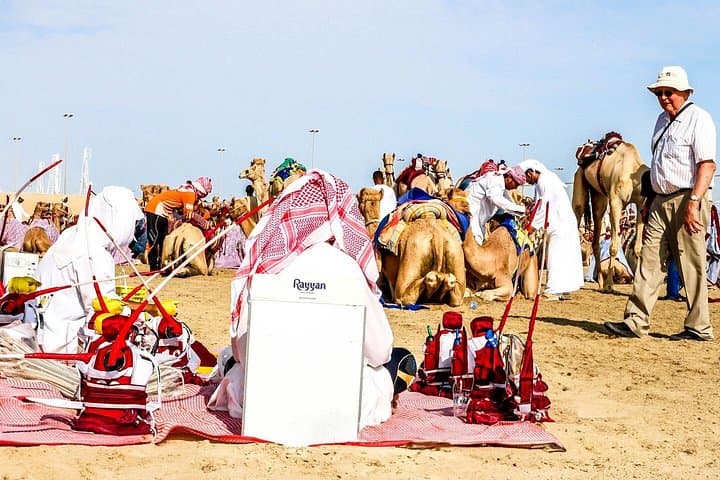
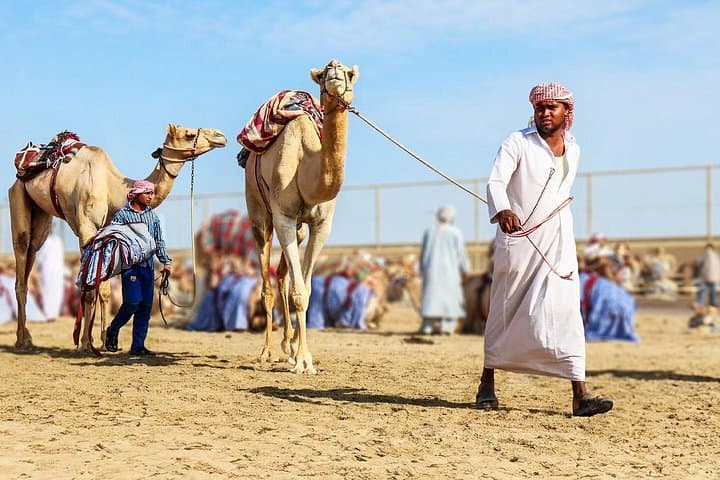
Westward at Al Shahaniya, the camel racetrack pulses with a different energy. From October to April the racing season replaces morning training; robot jockeys zip along the track while trainers monitor pace and breathing. On non-race days, early-morning training offers close-up views of grooming, saddling and the handlers’ routines.
Practical guidance: the itinerary is gentle — short walks, stable visits and drive-by viewing. Expect dusty surfaces, strong sun, and close contact with animals. Bring sun protection, sturdy closed-toe shoes, and a camera with a fast shutter if you want action shots.
Timing matters: arrive early for training when animals and handlers are most active, and schedule visits during the cooler months if you want to see formal races. The experience balances heritage and high-tech spectacle, giving a clear window into one of Qatar’s oldest living sports.
easy.
4 hours.
Suitable for most fitness levels; requires short periods of standing and light walking
Formal racing season runs roughly October through April; outside those months you’ll mostly see training sessions in the mornings.
The tour visits the estate and exterior features; access to the Sheikh Faisal Museum collection may require an additional fee—confirm with the operator.
Yes—races are a cultural spectacle suitable for families, but children should be supervised near animals and vehicles following the track.
Some on-site vendors may accept cards, but small purchases and tips are easier with Qatari riyals on hand.
Camel racing is a longstanding Bedouin tradition in the Gulf; modern practices now combine that history with robotic jockeys developed to replace child riders and professionalize the sport.
Al Samriya’s reserve participates in species stewardship for Arabian oryx and other regional fauna; visitors should minimize disturbance and avoid feeding wildlife.
Qatar International Tours operates guided outdoor trips and adventures with an emphasis on safety, stewardship, and memorable experiences.
A low desert sun cuts across a flat horizon as the convoy turns off the highway toward Al Samriya Estate. Sand crunches under tires, peacocks preen by stone walls, and the Leaning Mosque tilts at an angle that makes visitors look twice — an intentional modern flourish against a classic Islamic silhouette.
A low desert sun cuts across a flat horizon as the convoy turns off the highway toward Al Samriya Estate. Sand crunches under tires, peacocks preen by stone walls, and the Leaning Mosque tilts at an angle that makes visitors look twice — an intentional modern flourish against a classic Islamic silhouette.
The half-day route threads culture and sport. Sheikh Faisal bin Qassim Al Thani’s private museum sits in a fort-style compound and houses cars, Islamic art, and vernacular objects that chronicle Gulf trade and collecting practices. The Leaning Mosque and minaret are contemporary architectural statements built to contrast the plain desert; nearby, the reserve supports Arabian oryx and peacocks, species tied to Qatar’s conservation story.
Westward at Al Shahaniya, the camel racetrack pulses with a different energy. From October to April the racing season replaces morning training; robot jockeys zip along the track while trainers monitor pace and breathing. On non-race days, early-morning training offers close-up views of grooming, saddling and the handlers’ routines.
Practical guidance: the itinerary is gentle — short walks, stable visits and drive-by viewing. Expect dusty surfaces, strong sun, and close contact with animals. Bring sun protection, sturdy closed-toe shoes, and a camera with a fast shutter if you want action shots.
Timing matters: arrive early for training when animals and handlers are most active, and schedule visits during the cooler months if you want to see formal races. The experience balances heritage and high-tech spectacle, giving a clear window into one of Qatar’s oldest living sports.