THE ADVENTURE COLLECTIVE® · Independent discovery and booking for outdoor travel

Ride a camel or horse around the Giza Plateau and view the Great Pyramids up close in a compact 2‑hour tour. Ideal for first‑time visitors seeking dramatic photo angles and a taste of local equestrian tradition.
Ride a camel or horse around the Giza Plateau and view the Great Pyramids up close in a compact 2‑hour tour. Ideal for first‑time visitors seeking dramatic photo angles and a taste of local equestrian tradition.
You step off the air‑conditioned van onto the stony plateau and the pyramids fill the horizon — Cheops’ silhouette cuts the sky while camels shift their weight like slow, patient ships. The sand underfoot crunches; wind draws fine lines across the limestone, daring you to look closer.
Verified experiences and guided adventures in the surrounding area.
Operated by travelconnection001 · Giza, Giza Governorate
You step off the air‑conditioned van onto the stony plateau and the pyramids fill the horizon — Cheops’ silhouette cuts the sky while camels shift their weight like slow, patient ships. The sand underfoot crunches; wind draws fine lines across the limestone, daring you to look closer.
This short ride traces the outer edges of the Giza Plateau, where the three major pyramids — Khufu (Cheops), Khafre (Chephren) and Menkaure (Menkaure) — rise from Miocene limestone laid down millions of years ago. Local camel and horse handlers maintain a living link to Egypt’s millennia‑old transport traditions; nearby markets push scents of jasmine, frankincense and concentrated perfumes, and artisans still craft papyrus and cotton goods the way they have for centuries.
Expect a one‑hour mounted experience within a two‑hour window that includes pickup and drop‑off. Terrain is compacted sand and scattered rock with gentle undulations and negligible elevation gain, but mounting a camel or steadying on a horse requires balance and a moderate level of fitness. Animals are domesticated; handlers lead or tether when needed, and photos are frequent — respect handlers’ instructions and local customs when photographing people.
Practical tips: avoid the midday sun, bring a brimmed hat and sunscreen, wear closed shoes for stability, and take small bills for tips. If you have back problems or are pregnant, choose another option — camel saddles can be jolting. Time your ride near sunrise or late afternoon for cooler temperatures and the best light on ancient stone.
easy.
1–2 hours.
Should be in moderate physical shape — able to mount animals and tolerate bouncy movement for about an hour.
The total tour is about 2 hours, with approximately 45–60 minutes spent mounted on a camel or horse.
Children can participate but may need an adult to hold them on the animal; check age restrictions and safety rules when booking.
Yes — the tour typically includes hotel pickup and drop‑off in Cairo/Giza as stated in the inclusion list.
This activity is not recommended for travelers with spinal injuries or for pregnant guests due to the saddle motion and mounting process.
The Giza Plateau holds tombs and monuments from Egypt’s Old Kingdom; the Great Pyramid of Khufu dates to around 2560 BCE and dominates the plateau’s archaeological landscape.
Respect the protected archaeological zones by staying on designated paths and avoiding climbing on monuments; support local guides who work within preservation rules.
travelconnection001 operates guided outdoor trips and adventures with an emphasis on safety, stewardship, and memorable experiences.
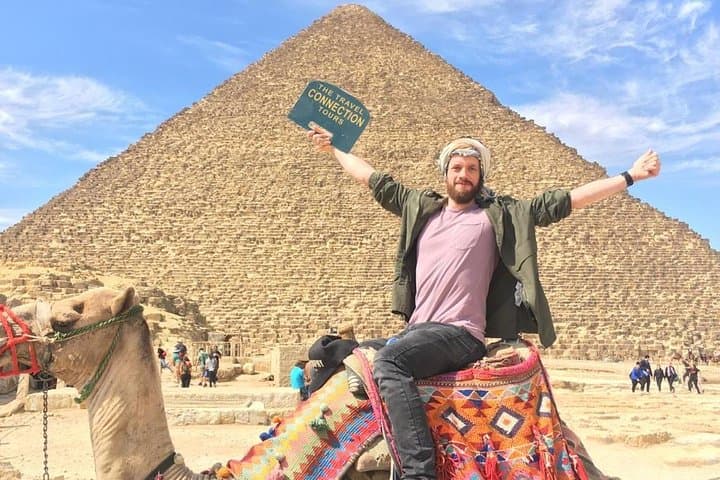
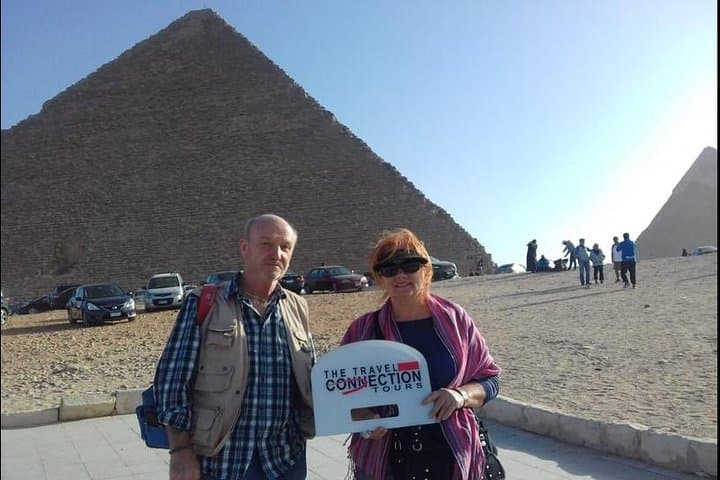
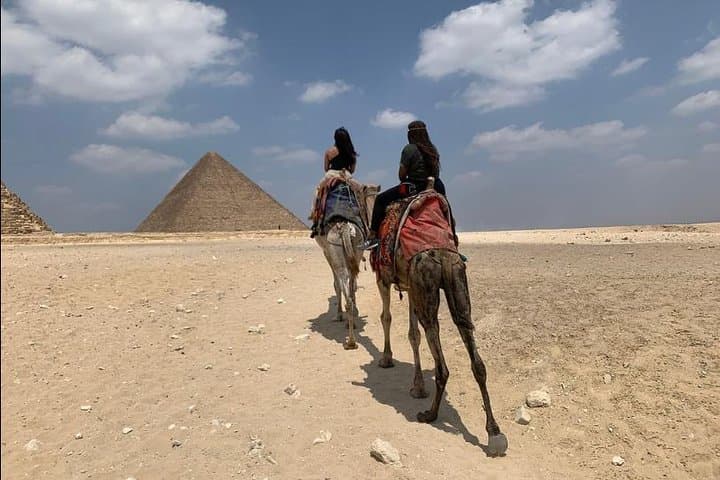
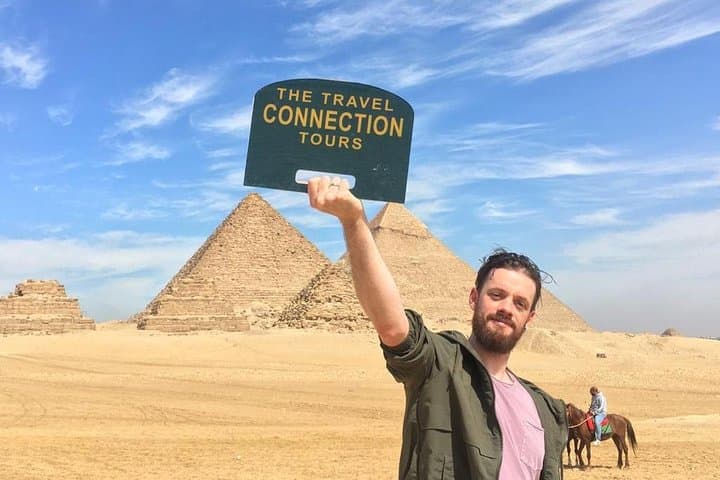
You step off the air‑conditioned van onto the stony plateau and the pyramids fill the horizon — Cheops’ silhouette cuts the sky while camels shift their weight like slow, patient ships. The sand underfoot crunches; wind draws fine lines across the limestone, daring you to look closer.
You step off the air‑conditioned van onto the stony plateau and the pyramids fill the horizon — Cheops’ silhouette cuts the sky while camels shift their weight like slow, patient ships. The sand underfoot crunches; wind draws fine lines across the limestone, daring you to look closer.
This short ride traces the outer edges of the Giza Plateau, where the three major pyramids — Khufu (Cheops), Khafre (Chephren) and Menkaure (Menkaure) — rise from Miocene limestone laid down millions of years ago. Local camel and horse handlers maintain a living link to Egypt’s millennia‑old transport traditions; nearby markets push scents of jasmine, frankincense and concentrated perfumes, and artisans still craft papyrus and cotton goods the way they have for centuries.
Expect a one‑hour mounted experience within a two‑hour window that includes pickup and drop‑off. Terrain is compacted sand and scattered rock with gentle undulations and negligible elevation gain, but mounting a camel or steadying on a horse requires balance and a moderate level of fitness. Animals are domesticated; handlers lead or tether when needed, and photos are frequent — respect handlers’ instructions and local customs when photographing people.
Practical tips: avoid the midday sun, bring a brimmed hat and sunscreen, wear closed shoes for stability, and take small bills for tips. If you have back problems or are pregnant, choose another option — camel saddles can be jolting. Time your ride near sunrise or late afternoon for cooler temperatures and the best light on ancient stone.