THE ADVENTURE COLLECTIVE® · Independent discovery and booking for outdoor travel

Trade the riad for early light on the road to Ourika: a one‑hour camel ride across scrub and palm groves, capped by a Berber tea break. This short excursion pairs accessible desert travel with local hospitality and convenient round‑trip transport from Marrakech.
Trade the riad for early light on the road to Ourika: a one‑hour camel ride across scrub and palm groves, capped by a Berber tea break. This short excursion pairs accessible desert travel with local hospitality and convenient round‑trip transport from Marrakech.
You step down from the minibus into the raw light of the high plains and the desert's edge, the air carrying dust and the scent of palm fronds. Camels wait, calm and sure-footed, while a guide fits the protective scarf over your hair and explains how to mount. The ride itself moves at a measured pace — a slow, rolling rhythm that lets the horizon expand and the shape of the Atlas foothills readjust with every turn.
Verified experiences and guided adventures in the surrounding area.
Operated by Marrakech day Trip · Marrakech, Marrakech-Safi
You step down from the minibus into the raw light of the high plains and the desert's edge, the air carrying dust and the scent of palm fronds. Camels wait, calm and sure-footed, while a guide fits the protective scarf over your hair and explains how to mount. The ride itself moves at a measured pace — a slow, rolling rhythm that lets the horizon expand and the shape of the Atlas foothills readjust with every turn.
The road to Ourika has long been a trade and travel corridor between Marrakech and the Atlas foothills; the landscape here is a mix of arid plateaus, scattered palm groves, and eroded rocky ridges. Berber families still practice traditional hospitality in small villages, offering mint tea and sweet cakes in a low tent — a social ritual that frames this short excursion.
Expect a roughly one‑hour camel ride set inside a three‑hour round trip that includes air‑conditioned transfer from Marrakech, safety briefing, and a tea stop. Terrain is firm dirt tracks and sandy patches; camels follow worn routes rather than steep trails. This is an accessible, low‑impact way to experience North African pastoral life and local mountain views.
Practical guidance: wear closed‑toe shoes and sun protection, accept the provided scarf, and bring a refillable water bottle. If you’re prone to motion sensitivity, sit toward the front of the camel to reduce sway. Morning or late‑afternoon departures offer cooler temperatures and softer light for photos. The tour suits travelers looking for a brief cultural encounter rather than strenuous hiking — simple, tactile, and grounded in place.
easy.
3 hours.
Suitable for most fitness levels; short periods of mounting and sitting upright on a camel are required
The camel portion lasts about one hour; total tour time including transfers and a tea stop is roughly three hours.
Yes — air‑conditioned round‑trip transport from Marrakech or selected riads is included in the tour price.
Yes; infants may need to sit on a caregiver's lap and the operator provides specialised infant seats and stroller access in some cases.
Wear closed‑toe shoes, sun protection, and comfortable layered clothing; the operator supplies a sun protection scarf for each guest.
The Ourika road connects Marrakech with Berber villages in the High Atlas; for centuries the valley was a route for seasonal herders and small‑scale trade.
Stay on established paths and avoid feeding animals; local operators encourage low‑impact visits to preserve grazing areas and water sources.
Marrakech day Trip operates guided outdoor trips and adventures with an emphasis on safety, stewardship, and memorable experiences.
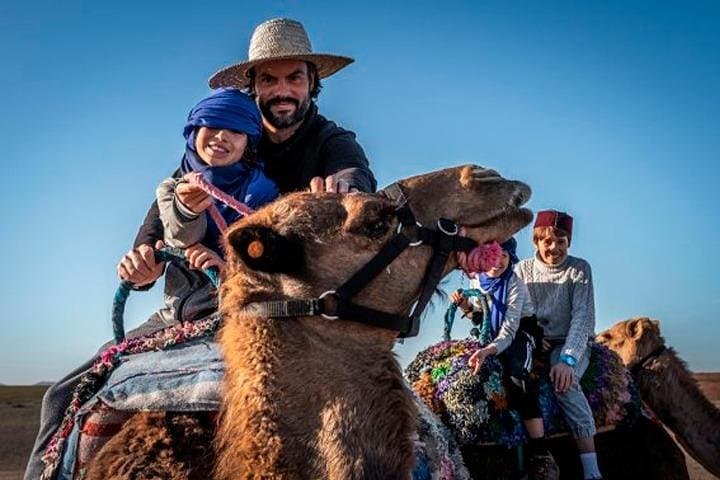
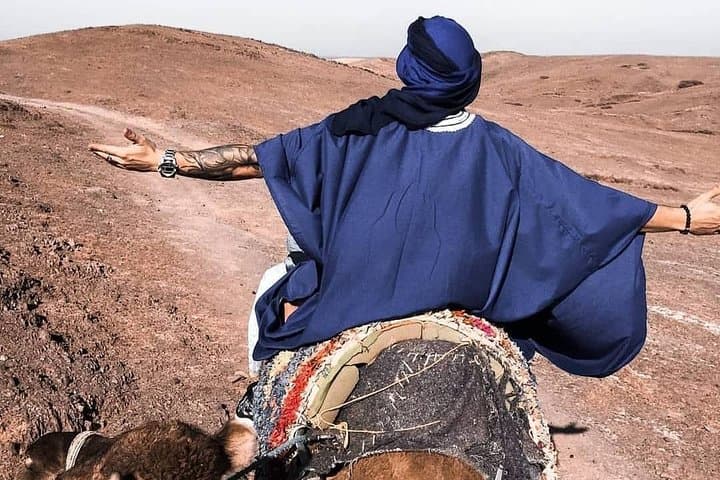
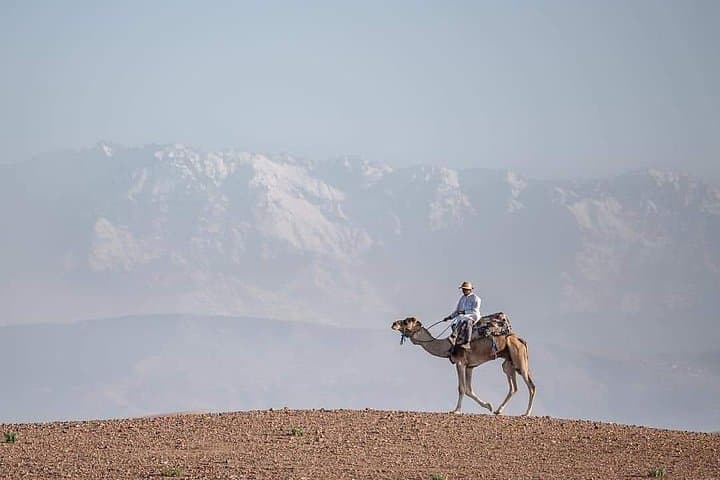
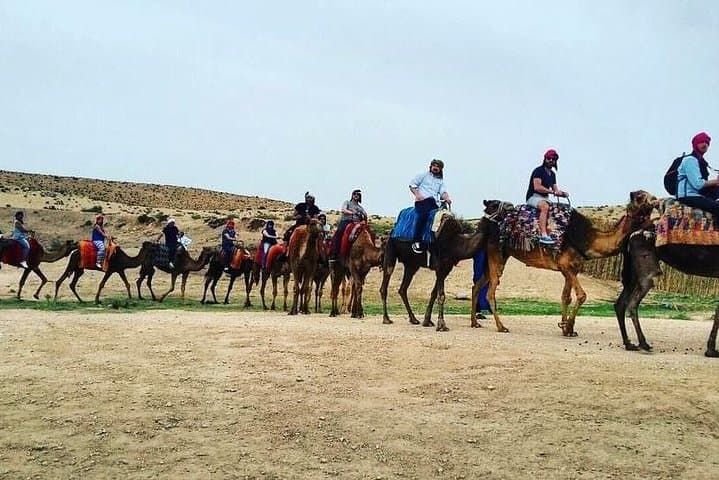
You step down from the minibus into the raw light of the high plains and the desert's edge, the air carrying dust and the scent of palm fronds. Camels wait, calm and sure-footed, while a guide fits the protective scarf over your hair and explains how to mount. The ride itself moves at a measured pace — a slow, rolling rhythm that lets the horizon expand and the shape of the Atlas foothills readjust with every turn.
You step down from the minibus into the raw light of the high plains and the desert's edge, the air carrying dust and the scent of palm fronds. Camels wait, calm and sure-footed, while a guide fits the protective scarf over your hair and explains how to mount. The ride itself moves at a measured pace — a slow, rolling rhythm that lets the horizon expand and the shape of the Atlas foothills readjust with every turn.
The road to Ourika has long been a trade and travel corridor between Marrakech and the Atlas foothills; the landscape here is a mix of arid plateaus, scattered palm groves, and eroded rocky ridges. Berber families still practice traditional hospitality in small villages, offering mint tea and sweet cakes in a low tent — a social ritual that frames this short excursion.
Expect a roughly one‑hour camel ride set inside a three‑hour round trip that includes air‑conditioned transfer from Marrakech, safety briefing, and a tea stop. Terrain is firm dirt tracks and sandy patches; camels follow worn routes rather than steep trails. This is an accessible, low‑impact way to experience North African pastoral life and local mountain views.
Practical guidance: wear closed‑toe shoes and sun protection, accept the provided scarf, and bring a refillable water bottle. If you’re prone to motion sensitivity, sit toward the front of the camel to reduce sway. Morning or late‑afternoon departures offer cooler temperatures and softer light for photos. The tour suits travelers looking for a brief cultural encounter rather than strenuous hiking — simple, tactile, and grounded in place.