THE ADVENTURE COLLECTIVE® · Independent discovery and booking for outdoor travel

Ride through Marrakech’s Palmeraie at a gentle camel pace, pause for mint tea with an Amazigh family, and watch the High Atlas change color. This two-hour excursion is family-friendly, accessible, and timed for morning or evening light.
Ride through Marrakech’s Palmeraie at a gentle camel pace, pause for mint tea with an Amazigh family, and watch the High Atlas change color. This two-hour excursion is family-friendly, accessible, and timed for morning or evening light.
The camel rocks forward and the palm grove opens—rows of tall palms cut into the flat light, and the High Atlas stands like a jagged horizon. In the cool of morning or the slow heat of evening, the Palmeraie’s palms cast long ribs of shade while the camel’s gait sets the pace for observation and quiet conversation.
Verified experiences and guided adventures in the surrounding area.
Operated by The Alternative Morocco · Marrakech, Marrakesh-Safi
The camel rocks forward and the palm grove opens—rows of tall palms cut into the flat light, and the High Atlas stands like a jagged horizon. In the cool of morning or the slow heat of evening, the Palmeraie’s palms cast long ribs of shade while the camel’s gait sets the pace for observation and quiet conversation.
This palm oasis is part cultivated landscape, part living history: date palms planted generations ago on alluvial soils and watered by traditional khettara irrigation systems. The ride threads between plantations and small sand ridges, offering clear views to the Atlas and a stop at an Amazigh family’s low home for mint tea—an everyday ritual that anchors the tour in local culture.
Geologically the area is an interface between Marrakech’s basin and the rising Atlas; wind and irrigation shape soft dunes and packed paths rather than technical terrain. Wildlife is subtle—lizards sun themselves on stones, passerine birds flit between trunks—and guides maintain steady control of the camels, which are accustomed to visitors.
Practical realities: rides last about two hours with short walking breaks, and operators provide pickup in air-conditioned vehicles. Expect gentle slopes, sandy tracks, and remounting assistance; families and less-fit travelers can participate. Bring sun protection, a refillable water bottle, and closed shoes for stability. Evening departures deliver cooler temperatures and long light for photos; mornings offer clearer air for mountain vistas. Respect the animals and the host family’s space—tips and a polite greeting go a long way. With modest planning, this is an accessible way to experience Marrakech’s palm landscape and a glimpse of Amazigh hospitality.
easy.
2 hours.
Suitable for most fitness levels; requires basic mobility to mount and dismount camels
Yes; camels used on public rides are trained for tourists and guides assist with mounting. Young children may need to sit on laps and seniors should confirm mobility needs with the operator.
Pickup and return in an air-conditioned vehicle are listed as included—confirm pickup point and timing when booking.
The listing notes wheelchair-accessible transport and surfaces, but participants must be able to mount a camel; contact the operator to discuss accommodations before booking.
A small monetary tip and respectful behavior are appropriate; bringing a modest gift like local sweets is appreciated but not required.
The Palmeraie has been shaped over centuries by date cultivation and traditional irrigation methods; it has long supported local Amazigh and farming communities.
Water is scarce in the region, so operators are encouraged to minimize waste and follow local rules; support small local families directly and avoid leaving litter.
The Alternative Morocco operates guided outdoor trips and adventures with an emphasis on safety, stewardship, and memorable experiences.
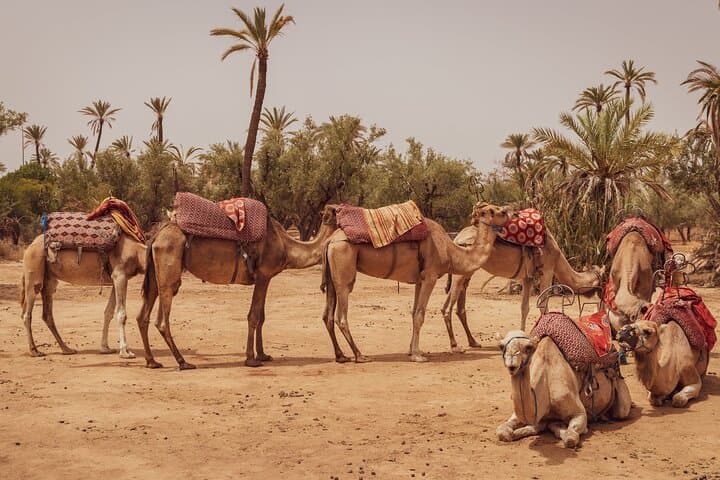


The camel rocks forward and the palm grove opens—rows of tall palms cut into the flat light, and the High Atlas stands like a jagged horizon. In the cool of morning or the slow heat of evening, the Palmeraie’s palms cast long ribs of shade while the camel’s gait sets the pace for observation and quiet conversation.
The camel rocks forward and the palm grove opens—rows of tall palms cut into the flat light, and the High Atlas stands like a jagged horizon. In the cool of morning or the slow heat of evening, the Palmeraie’s palms cast long ribs of shade while the camel’s gait sets the pace for observation and quiet conversation.
This palm oasis is part cultivated landscape, part living history: date palms planted generations ago on alluvial soils and watered by traditional khettara irrigation systems. The ride threads between plantations and small sand ridges, offering clear views to the Atlas and a stop at an Amazigh family’s low home for mint tea—an everyday ritual that anchors the tour in local culture.
Geologically the area is an interface between Marrakech’s basin and the rising Atlas; wind and irrigation shape soft dunes and packed paths rather than technical terrain. Wildlife is subtle—lizards sun themselves on stones, passerine birds flit between trunks—and guides maintain steady control of the camels, which are accustomed to visitors.
Practical realities: rides last about two hours with short walking breaks, and operators provide pickup in air-conditioned vehicles. Expect gentle slopes, sandy tracks, and remounting assistance; families and less-fit travelers can participate. Bring sun protection, a refillable water bottle, and closed shoes for stability. Evening departures deliver cooler temperatures and long light for photos; mornings offer clearer air for mountain vistas. Respect the animals and the host family’s space—tips and a polite greeting go a long way. With modest planning, this is an accessible way to experience Marrakech’s palm landscape and a glimpse of Amazigh hospitality.