THE ADVENTURE COLLECTIVE® · Independent discovery and booking for outdoor travel

Spend a half-day switching between tranquil camel trekking and adrenaline-fueled quad riding on the dunes around Douz. Local guides provide gear and cultural touches while you experience the Sahara’s shifting rhythms.
Spend a half-day switching between tranquil camel trekking and adrenaline-fueled quad riding on the dunes around Douz. Local guides provide gear and cultural touches while you experience the Sahara’s shifting rhythms.
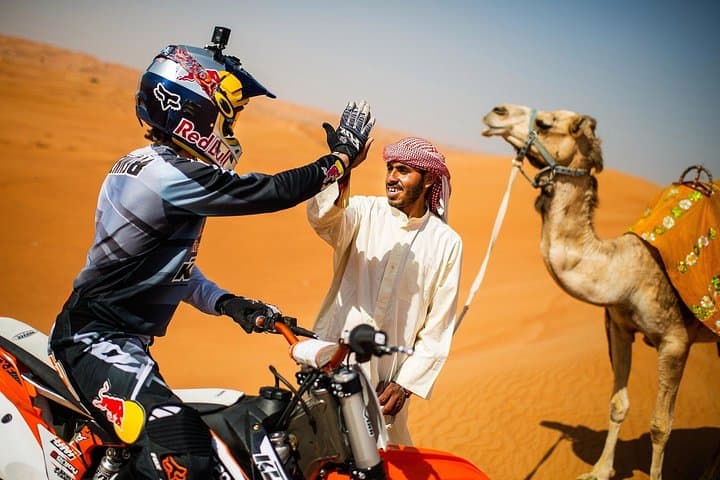
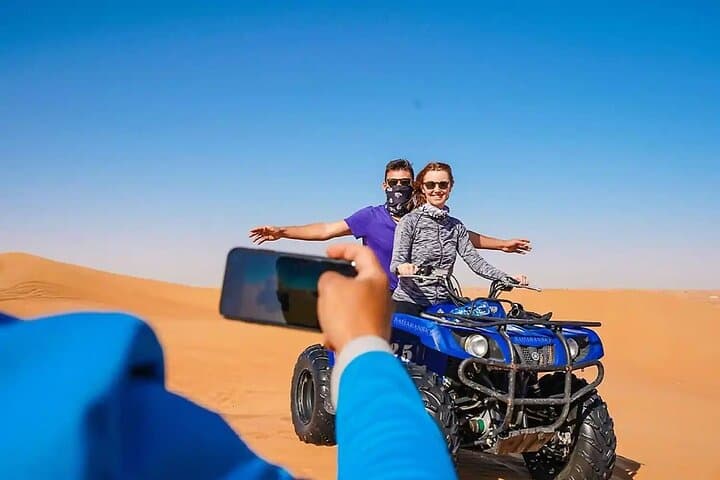
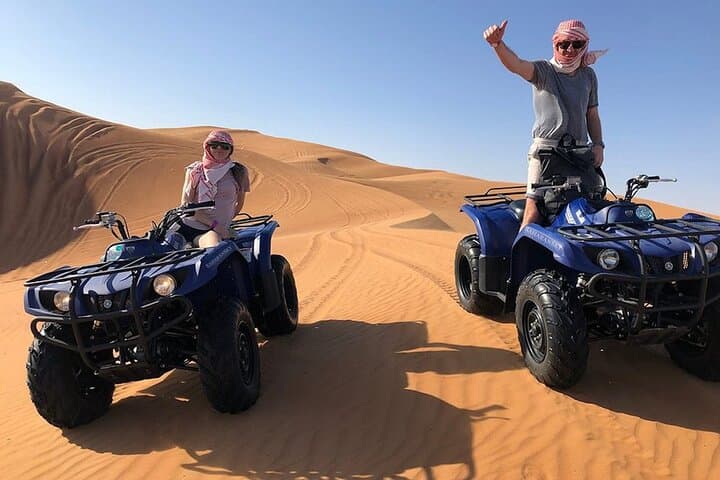
The sun leans low over rippled sand as you climb onto a dromedary’s broad back, the dune’s wind shaping each crest like a slow-moving wave. Moments later the scene shifts: engine notes replace the camel’s soft shuffles as a quad skids up a slope, throwing a plume of ochre that seems to dare you forward.
Verified experiences and guided adventures in the surrounding area.
Operated by SAHARANSKY · Douz, Kebili Governorate
The sun leans low over rippled sand as you climb onto a dromedary’s broad back, the dune’s wind shaping each crest like a slow-moving wave. Moments later the scene shifts: engine notes replace the camel’s soft shuffles as a quad skids up a slope, throwing a plume of ochre that seems to dare you forward.
Douz sits at the southern edge of Tunisia’s Sahara and has long been a crossroads for Berber and Arab caravan routes; the nearby dunescapes are wind-sculpted deposits of Pleistocene and Holocene sands overlaying ancient lakebeds. The area’s palm groves and salt flats (chotts) speak to a landscape that alternates between generous and austere. Locally, Berber hospitality remains tangible — hosts offer cheich (turbans) and djellaba robes, a cultural touch that links modern excursions to centuries of desert travel.
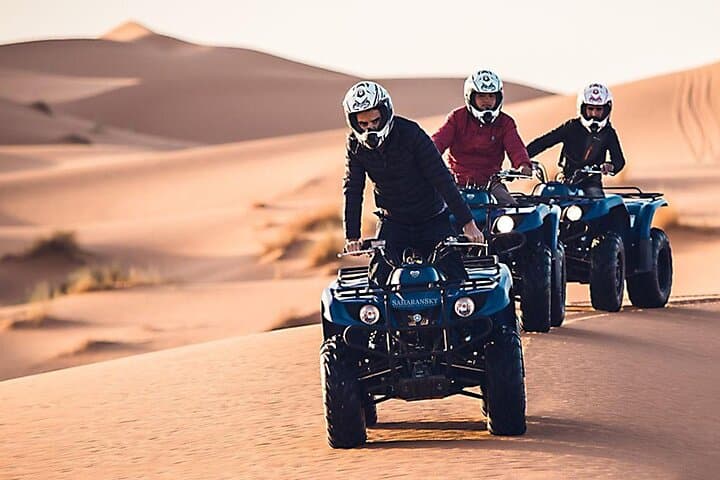
On this half-day combo you’ll split time between slow, contemplative camel travel and an active off-road quad segment. Guides provide helmets, goggles, and short instruction for quad handling; camels come with mounted saddles and assistance. Expect sandy tracks, occasional soft patches that demand momentum, and panoramic viewpoints over nearby chotts.
Practical notes: wear closed-toe shoes and long sleeves for sun and sand protection, bring at least 1L water beyond the complimentary bottle, and plan for late afternoon light if you want the best photos. Respect marked routes to reduce dune erosion and follow guides’ directions during quad runs — the desert’s moods change quickly, and a cautious approach preserves both safety and landscape.
moderate.
4 hours.
Suitable for most reasonably fit travelers; requires ability to mount camels and handle short off-road quad bursts.
No — guides give basic instruction and fit helmets; riders should be comfortable with throttle control and following a guide’s pace.
Children can join but must be accompanied by an adult; operators often set age or size limits for safety on quads and camels.
Closed-toe shoes, long sleeves, sunglasses, and a scarf or bandana to protect from sand; dress in breathable fabrics for hot days.
This activity is sold as all sales final per operator policy, so confirm plans before booking and check pickup details with the provider.
Douz is known as a gateway to the Sahara and was traditionally a caravan stop on trans-Saharan routes; local Berber communities maintain cultural practices linked to desert life.
Quad riding can accelerate dune erosion if off-route; stick to marked tracks and follow guide instructions to minimize impact and noise disturbance.
SAHARANSKY operates guided outdoor trips and adventures with an emphasis on safety, stewardship, and memorable experiences.
The sun leans low over rippled sand as you climb onto a dromedary’s broad back, the dune’s wind shaping each crest like a slow-moving wave. Moments later the scene shifts: engine notes replace the camel’s soft shuffles as a quad skids up a slope, throwing a plume of ochre that seems to dare you forward.
The sun leans low over rippled sand as you climb onto a dromedary’s broad back, the dune’s wind shaping each crest like a slow-moving wave. Moments later the scene shifts: engine notes replace the camel’s soft shuffles as a quad skids up a slope, throwing a plume of ochre that seems to dare you forward.
Douz sits at the southern edge of Tunisia’s Sahara and has long been a crossroads for Berber and Arab caravan routes; the nearby dunescapes are wind-sculpted deposits of Pleistocene and Holocene sands overlaying ancient lakebeds. The area’s palm groves and salt flats (chotts) speak to a landscape that alternates between generous and austere. Locally, Berber hospitality remains tangible — hosts offer cheich (turbans) and djellaba robes, a cultural touch that links modern excursions to centuries of desert travel.
On this half-day combo you’ll split time between slow, contemplative camel travel and an active off-road quad segment. Guides provide helmets, goggles, and short instruction for quad handling; camels come with mounted saddles and assistance. Expect sandy tracks, occasional soft patches that demand momentum, and panoramic viewpoints over nearby chotts.
Practical notes: wear closed-toe shoes and long sleeves for sun and sand protection, bring at least 1L water beyond the complimentary bottle, and plan for late afternoon light if you want the best photos. Respect marked routes to reduce dune erosion and follow guides’ directions during quad runs — the desert’s moods change quickly, and a cautious approach preserves both safety and landscape.