THE ADVENTURE COLLECTIVE® · Independent discovery and booking for outdoor travel

Two hours on camel or horse across Agadir’s coastal dunes and eucalyptus groves—an easy ride that pairs wind-swept views with local history. Ideal for visitors who want a low-impact introduction to Morocco’s southern landscapes.
Two hours on camel or horse across Agadir’s coastal dunes and eucalyptus groves—an easy ride that pairs wind-swept views with local history. Ideal for visitors who want a low-impact introduction to Morocco’s southern landscapes.
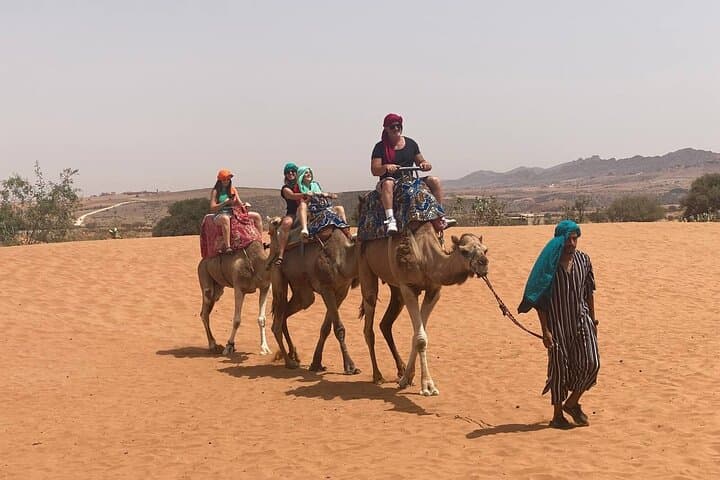
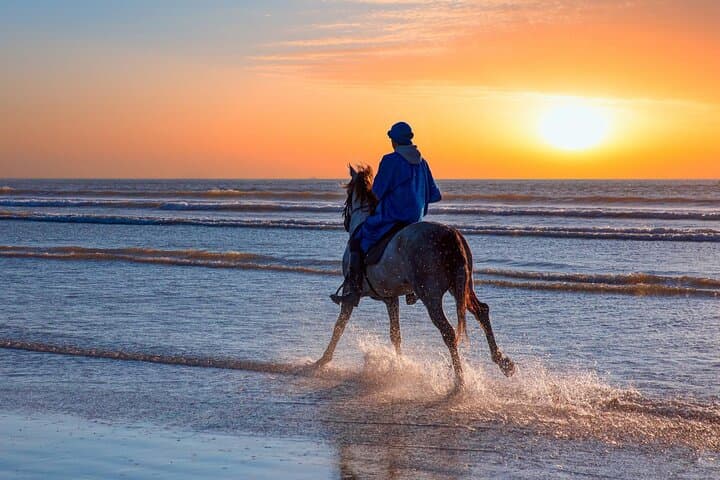
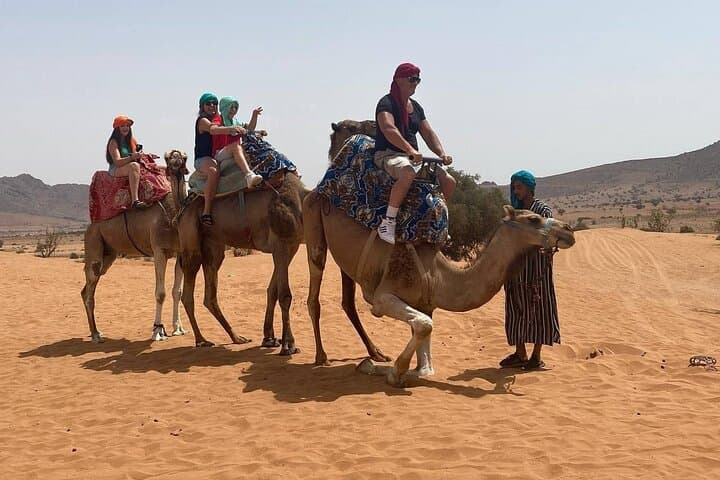
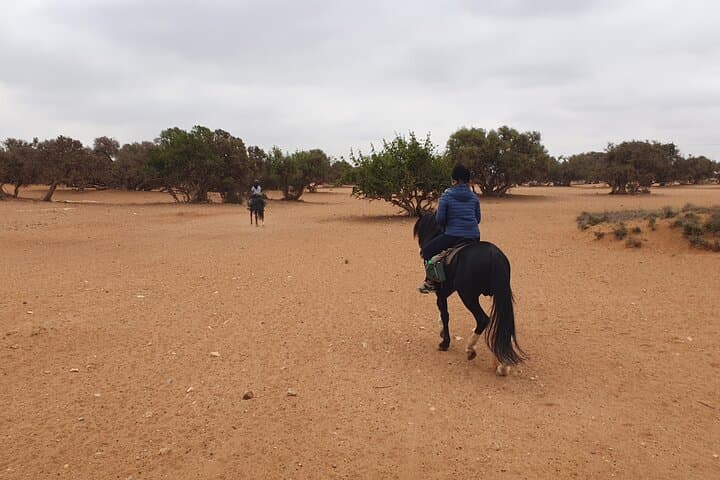
A slow sway, the soft creak beneath a camel's ribs or the steady rhythm of a horse's gait, puts you immediately on the coast-edge of Agadir where sand meets scrubby eucalyptus.
Verified experiences and guided adventures in the surrounding area.
Operated by Abdo Tour Agadir · Agadir, Souss-Massa
A slow sway, the soft creak beneath a camel's ribs or the steady rhythm of a horse's gait, puts you immediately on the coast-edge of Agadir where sand meets scrubby eucalyptus.
This two-hour outing threads between low coastal dunes, groves of introduced eucalyptus, and the banks of the Oued Souss. Geologically, the sand here is young—windblown coastal deposits shaped by Atlantic breezes—and the plain opens toward the Souss valley, historically a caravan corridor and agricultural heartland of southern Morocco.
Camels and horses each carry cultural weight: the dromedary evokes Saharan transport and nomadic life, while horses have long been used by local riders and farmers. Guides often point out irrigation channels, small Berber plots, and tell brief stories of regional life, giving context to the landscape you move through.
Practical guidance: plan for 2 hours on mostly flat but uneven sand and packed trails; expect some mounted time and brief periods on foot. Footwear with ankle support and closed toes is recommended. Sun is the dominant factor—bring layered sun protection and water. The operator provides air-conditioned transport to the meeting point; note the tour is not recommended for pregnant travelers or those with back or heart issues.
Timing matters: morning and late afternoon rides deliver cooler temperatures and stronger light for photos. Respect the dunes—stay on the route, follow your guide, and carry out small trash. This is an easy, sensory ride that blends coastal wind, the smell of eucalyptus, and a compact lesson in southern Moroccan landscape and transport traditions.
easy.
2 hours.
Suitable for most fitness levels; basic balance and the ability to mount/dismount are required.
No—this is designed for beginners; guides give a short orientation and controls are simple for both camels and horses.
Yes—air-conditioned vehicle transport to the meeting point is included in the tour price.
Families are welcome but check age or weight restrictions with the operator; children must be supervised and may need an adult to lead the animal.
This specific tour states all sales are final; confirm details at booking and note weather-related cancellations may apply.
The Souss plain has long been a corridor between the Atlantic coast and inland oases; camels and horses were essential to trade and local agriculture.
Stick to established routes to protect fragile dune vegetation; bring out all trash and follow guide instructions to reduce erosion and disturbance.
Abdo Tour Agadir operates guided outdoor trips and adventures with an emphasis on safety, stewardship, and memorable experiences.
A slow sway, the soft creak beneath a camel's ribs or the steady rhythm of a horse's gait, puts you immediately on the coast-edge of Agadir where sand meets scrubby eucalyptus.
A slow sway, the soft creak beneath a camel's ribs or the steady rhythm of a horse's gait, puts you immediately on the coast-edge of Agadir where sand meets scrubby eucalyptus.
This two-hour outing threads between low coastal dunes, groves of introduced eucalyptus, and the banks of the Oued Souss. Geologically, the sand here is young—windblown coastal deposits shaped by Atlantic breezes—and the plain opens toward the Souss valley, historically a caravan corridor and agricultural heartland of southern Morocco.
Camels and horses each carry cultural weight: the dromedary evokes Saharan transport and nomadic life, while horses have long been used by local riders and farmers. Guides often point out irrigation channels, small Berber plots, and tell brief stories of regional life, giving context to the landscape you move through.
Practical guidance: plan for 2 hours on mostly flat but uneven sand and packed trails; expect some mounted time and brief periods on foot. Footwear with ankle support and closed toes is recommended. Sun is the dominant factor—bring layered sun protection and water. The operator provides air-conditioned transport to the meeting point; note the tour is not recommended for pregnant travelers or those with back or heart issues.
Timing matters: morning and late afternoon rides deliver cooler temperatures and stronger light for photos. Respect the dunes—stay on the route, follow your guide, and carry out small trash. This is an easy, sensory ride that blends coastal wind, the smell of eucalyptus, and a compact lesson in southern Moroccan landscape and transport traditions.