THE ADVENTURE COLLECTIVE® · Independent discovery and booking for outdoor travel

Ride camels or horses across the Giza Plateau for a 3–4 hour private tour that loops past the Great Pyramid, Sphinx and Valley Temple. Expect panoramic desert views, guided history from a local expert and practical tips for timing, footwear and sun protection.
Ride camels or horses across the Giza Plateau for a 3–4 hour private tour that loops past the Great Pyramid, Sphinx and Valley Temple. Expect panoramic desert views, guided history from a local expert and practical tips for timing, footwear and sun protection.
You step out of the air‑conditioned van and the desert takes over—warm air brushing against stone, sand whispering under padded hooves as the Great Pyramid rises ahead like an ancient ship. Camels and horses line the plateau, patient and sure; your guide sorts tack, points to the Sphinx, and the ride begins with the pyramids marching across the skyline.
Verified experiences and guided adventures in the surrounding area.
Operated by Visitors Egypt Tours · Giza, Giza
You step out of the air‑conditioned van and the desert takes over—warm air brushing against stone, sand whispering under padded hooves as the Great Pyramid rises ahead like an ancient ship. Camels and horses line the plateau, patient and sure; your guide sorts tack, points to the Sphinx, and the ride begins with the pyramids marching across the skyline.
This short loop crosses the painted desert that frames the Giza Plateau, passing Cheops (Khufu), Chephren (Khafre) and Mykerinus (Menkaure), the Valley Temple and the Great Sphinx. These funerary monuments date to the Fourth Dynasty (c. 2600–2500 BCE) and sit on limestone bedrock shaped by the Nile’s ancient floodplain—now wind‑sculpted dunes. Local guides pair archaeological context with folklore, offering stories and practical cues you won’t find in guidebooks.
Culturally, the visit sits at the meeting point of modern Cairo and pharaonic history: vendors, Bedouin families, and preservation teams all operate under the watchful eyes of antiquities authorities. Expect compact uneven footing, short sandy climbs and wide, exposed views where the sun becomes a tactile presence.
Practical guidance: plan for 3–4 hours including transfers, wear closed shoes and sun protection, bring water and a small daypack. Mounting is assisted and the pace is gentle, but notify the operator about back issues or pregnancy—camel saddles can be awkward. Respect signage: climbing the pyramids is prohibited. Time your ride for early morning or late afternoon for cooler light and clearer photos.
easy.
3–4 hours.
Suitable for most fitness levels; you should be able to mount with minimal assistance and sit in a saddle for up to two hours.
The guided ride portion typically lasts 1–2 hours within a 3–4 hour private tour that includes transfers and time for photos.
Most people can participate; the tour is marked suitable for all fitness levels but not recommended for those with serious back or spinal injuries or for pregnant travelers.
This tour’s itinerary lists admission included; confirm when booking if official site fees are covered for your party.
Early morning and late afternoon offer cooler temperatures and softer light for photography; sunrise is less crowded but requires an earlier pickup.
The three major pyramids date to Egypt’s Fourth Dynasty (c. 2600–2500 BCE) and served as royal tombs for Khufu, Khafre and Menkaure; the plateau was once a riverine limestone shelf shaped by the Nile.
Archaeological preservation is active here—stay on marked paths, avoid touching carvings and heed local signage to reduce erosion and impact on fragile structures.
Visitors Egypt Tours operates guided outdoor trips and adventures with an emphasis on safety, stewardship, and memorable experiences.

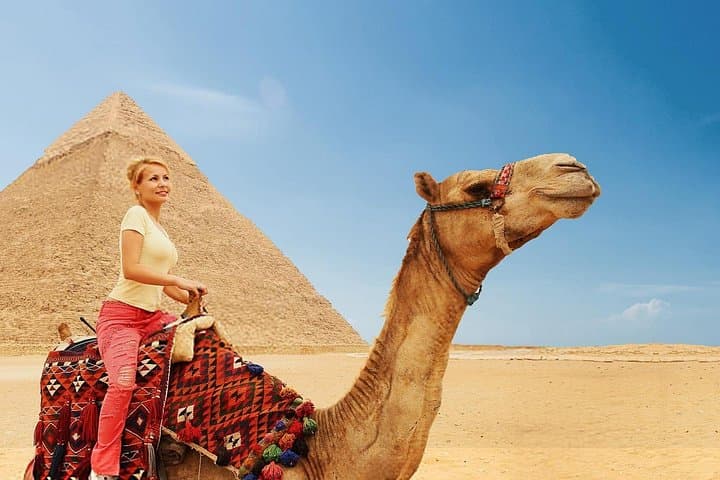
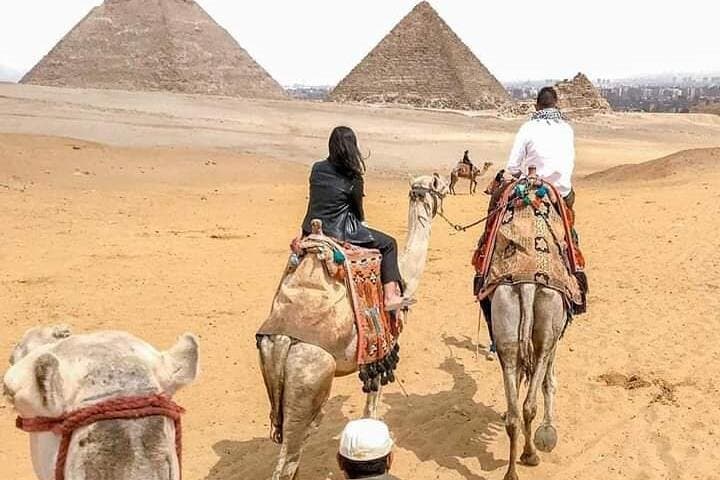
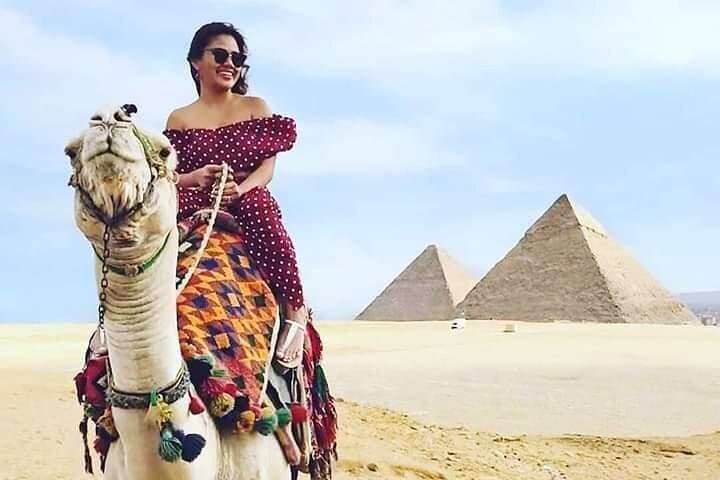
You step out of the air‑conditioned van and the desert takes over—warm air brushing against stone, sand whispering under padded hooves as the Great Pyramid rises ahead like an ancient ship. Camels and horses line the plateau, patient and sure; your guide sorts tack, points to the Sphinx, and the ride begins with the pyramids marching across the skyline.
You step out of the air‑conditioned van and the desert takes over—warm air brushing against stone, sand whispering under padded hooves as the Great Pyramid rises ahead like an ancient ship. Camels and horses line the plateau, patient and sure; your guide sorts tack, points to the Sphinx, and the ride begins with the pyramids marching across the skyline.
This short loop crosses the painted desert that frames the Giza Plateau, passing Cheops (Khufu), Chephren (Khafre) and Mykerinus (Menkaure), the Valley Temple and the Great Sphinx. These funerary monuments date to the Fourth Dynasty (c. 2600–2500 BCE) and sit on limestone bedrock shaped by the Nile’s ancient floodplain—now wind‑sculpted dunes. Local guides pair archaeological context with folklore, offering stories and practical cues you won’t find in guidebooks.
Culturally, the visit sits at the meeting point of modern Cairo and pharaonic history: vendors, Bedouin families, and preservation teams all operate under the watchful eyes of antiquities authorities. Expect compact uneven footing, short sandy climbs and wide, exposed views where the sun becomes a tactile presence.
Practical guidance: plan for 3–4 hours including transfers, wear closed shoes and sun protection, bring water and a small daypack. Mounting is assisted and the pace is gentle, but notify the operator about back issues or pregnancy—camel saddles can be awkward. Respect signage: climbing the pyramids is prohibited. Time your ride for early morning or late afternoon for cooler light and clearer photos.